
Today, August 31, the Philippines celebrates National Heroes Day, a day dedicated to remembering the Filipinos whose courage, sacrifice and service helped shape the nation. Across the country, the names of Jose Rizal, Andres Bonifacio, Emilio Aguinaldo, Apolinario Mabini and other familiar figures will once again be invoked in ceremonies, speeches and messages of remembrance. But here in Mindanao, perhaps we should also ask a more local question: Who are the heroes whose courage was forged on our soil?
For generations, the national story of heroism has often been told through names and events that are familiar to every Filipino student. But Mindanao has its own long and complicated history of resistance, sacrifice, leadership and nation-building. There were sultans who defended their territories against colonial expansion, revolutionaries who fought Spanish rule in western Mindanao, guerrilla commanders who organized resistance against the Japanese during World War II, politicians who stood against authoritarian rule, women who challenged colonial authority and defended the political interests of their people, and ordinary Filipinos who gave their lives without ever becoming household names.
The National Historical Commission of the Philippines has preserved the memory of several of these personalities through historical markers and official records in different parts of Mindanao. Their stories are reminders that Mindanao was never simply a distant chapter in Philippine history. Mindanao was—and remains—one of the places where Philippine history was made.
So, as the country observes National Heroes Day today, Mindanao Sentinel looks beyond the usual names to remember 10 heroes and groups of heroes whose stories deserve greater attention. This is not an official government ranking, but an editorial selection based on historical significance, sacrifice, contribution and enduring connection to Mindanao. Some were born on the island, while others became permanently associated with its history because of the battles they fought, communities they built or sacrifices they made here.
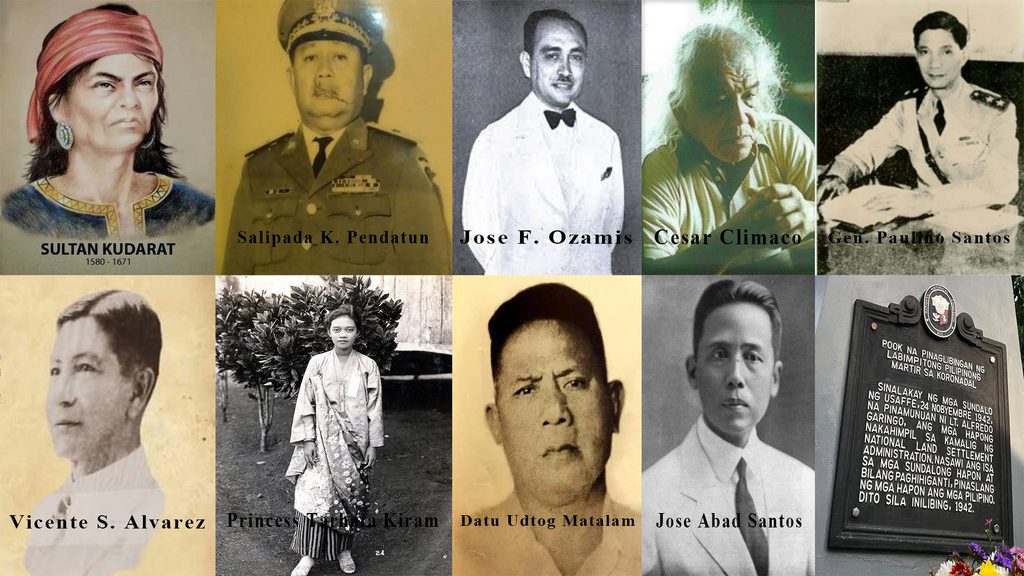
Sultan Dipatuan Kudarat: The Defender of Mindanao
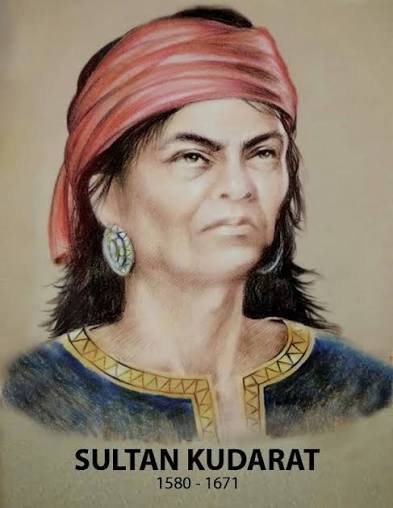
If there is one historical figure who can immediately challenge the idea that Mindanao’s history began with Spanish colonization, it is Sultan Dipatuan Kudarat. The seventh Sultan of Maguindanao, Kudarat ruled from approximately 1619 to 1671 and became one of the most prominent leaders of resistance against Spanish expansion in Mindanao.
The National Historical Commission of the Philippines records that Kudarat united Muslim leaders and formed an alliance with the Sultanate of Sulu while resisting Spanish expansion between 1635 and 1645. His influence extended across a large portion of Mindanao, including areas corresponding to present-day Davao, Cotabato and Zamboanga. His importance, however, went beyond the battlefield. Kudarat understood that fragmented communities were vulnerable to outside domination, and his efforts to bring Muslim leaders together demonstrated a sophisticated form of political and military organization at a time when the concept of a unified Philippine nation had yet to emerge.
In 1645, Kudarat entered into a peace agreement with Spanish authorities, helping establish a period of relative stability in parts of Mindanao. His name lives on in Sultan Kudarat province, historical markers and the collective memory of Bangsamoro communities. His legacy is particularly important because it reminds Filipinos that Mindanao already had established political structures, powerful leaders and organized resistance to foreign expansion long before the Philippine Republic came into existence.
Perhaps his greatest historical significance is therefore not simply that he fought the Spanish, but that he demonstrated Mindanao’s capacity for political leadership and resistance at a time when colonial powers were attempting to expand their control over the island. Mindanao already had leaders defending its political independence long before the Philippines became a republic.
Salipada K. Pendatun: Soldier, Guerrilla and Statesman
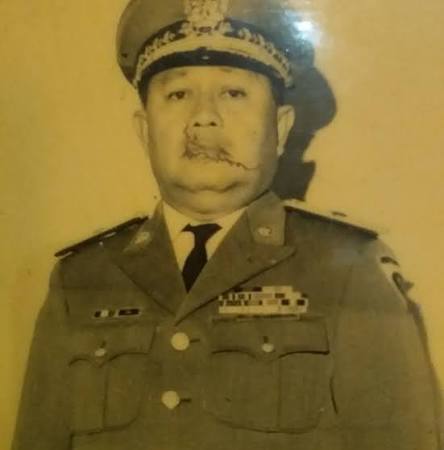
Born in Pikit, Cotabato, in 1912, Salipada K. Pendatun lived a life that crossed the boundaries between soldier, guerrilla commander and statesman. A lawyer by profession, Pendatun entered public service before the Second World War and was commissioned as a third lieutenant in the Philippine Army Reserve Force.
When Japanese forces invaded the Philippines, Pendatun and Datu Udtog Matalam organized guerrilla resistance in Cotabato. The NHCP identifies Pendatun as a World War II hero and records his role in establishing the Bolo Battalion in the Cotabato Basin, which later became known as the Bukidnon-Cotabato Force. The organization of resistance in the region demonstrated the important role played by local Mindanao leaders in fighting the Japanese occupation, particularly at a time when communications and coordination between resistance groups across the country were severely disrupted by war.
Pendatun’s story did not end with the liberation of the Philippines. After the war, he became governor of Cotabato and later served as a senator, congressional representative, presidential adviser and Speaker Pro Tempore. His transition from guerrilla commander to statesman makes his story particularly significant because it reflects the many ways in which wartime experiences shaped the political leadership of postwar Mindanao.
Today, his name remains attached to Camp Brigadier General Salipada K. Pendatun in Parang, Maguindanao. It is more than the name of a military installation; it is an institutional reminder of a Mindanaoan who fought first with arms and later through public service. His legacy connects two forms of service to the country—resistance during war and governance during peace.
Jose F. Ozamiz: The Politician Who Chose the Guerrillas
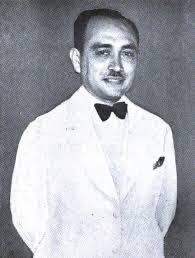
The story of Jose F. Ozamiz is one of the clearest examples of a public servant choosing principle over personal security. Born in Aloran, Misamis Occidental, in 1898, Ozamiz became a lawyer and entered public service. He served as governor of Misamis Occidental and later held positions in the Philippine Legislature, Constitutional Convention and National Assembly.
By the time World War II began, Ozamiz had already established himself as an important political figure and could have pursued another term in the national legislature. Instead, he joined the guerrilla movement and eventually went to Australia to join American forces. His decision placed him directly in the path of the Japanese occupation and ultimately cost him his life.
The Japanese captured Ozamiz, and he was imprisoned at Fort Santiago and Bilibid before being taken to the Manila Chinese Cemetery, where he was executed on August 30, 1944. His remains were later recovered and formally buried. For the people of Misamis Occidental, Ozamiz is therefore more than the man whose surname became attached to one of the province’s most prominent cities. His name is linked to a public servant who abandoned political security and personal safety in favor of resistance.
His story presents a difficult question that remains relevant even decades after the war: when power, position and personal safety become incompatible with principle, what are people willing to sacrifice? Ozamiz chose resistance and paid for that decision with his life. Remembering him today is therefore not merely an exercise in recalling wartime history; it is also a reminder that public service carries responsibilities that can sometimes demand extraordinary courage.
Cesar Climaco: The Mayor Who Refused to Be Silent
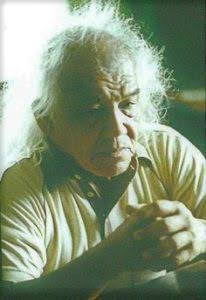
In modern Mindanao history, few political figures are as recognizable as Cesar Cortes Climaco of Zamboanga City. Born in Zamboanga City in 1916, Climaco worked his way into public life before becoming a lawyer and eventually one of the city’s most influential political figures. His career included service in local government as well as several positions in the national government.
It was during the martial-law period, however, that his reputation as a defender of democracy became particularly pronounced. The NHCP records that Climaco opposed martial law and the Marcos dictatorship from 1972 to 1984. He famously allowed his hair to grow as a symbolic act of protest, turning a personal appearance into a highly visible political statement during a period when open opposition to the government carried significant risks.
When Climaco was elected to the Batasang Pambansa in 1984, he refused to take his seat in opposition to the Marcos government. Later that year, on November 14, he was assassinated. His death transformed him into one of the enduring symbols of Zamboanga’s political history.
Climaco’s story matters because democracy is often discussed in abstract terms, particularly when viewed from the distance of history. For Climaco, however, democracy was personal. It was something he was willing to defend even when doing so endangered his career and eventually his life. His legacy continues to resonate in Zamboanga because his political opposition was not simply expressed through speeches or electoral campaigns; it became a defining part of his public life.
General Paulino Santos: The Man Behind a City
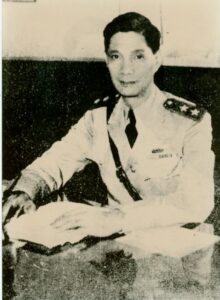
Not every hero carries a rifle. Some carry a map, a plan and a vision of what a community could become. General Paulino Santos represents that kind of heroism.
Born in Camiling, Tarlac, in 1890, Santos became a military officer and eventually rose to become Chief of Staff of the Philippine Army. His career included military command, corrections, public administration and involvement in national development. His Mindanao legacy is particularly substantial.
Santos helped improve education, agriculture and communications in Lanao, established the Davao Penal Colony and later headed the National Land Settlement Administration. Under his leadership, six settlements were established in what is now South Cotabato. One of the areas associated with these settlement efforts eventually developed into what is now General Santos City, which was named in his honor.
Today, General Santos is one of Mindanao’s major economic centers, known for its fisheries, agriculture, commerce and industry. Yet behind the modern city is an older story of settlement, migration, agriculture and government planning. Santos therefore represents a different kind of nation-building: the attempt to establish communities and economic activity in areas that would eventually become important population centers.
His inclusion in a discussion of Mindanao heroes also broadens the meaning of heroism. National remembrance often focuses on people who fought wars or died for political causes, but building institutions and communities can also leave an enduring mark on a nation. Santos’ legacy can be seen not only in historical records but in the name of one of Mindanao’s most important cities.
Vicente S. Alvarez: Zamboanga’s Revolutionary Commander
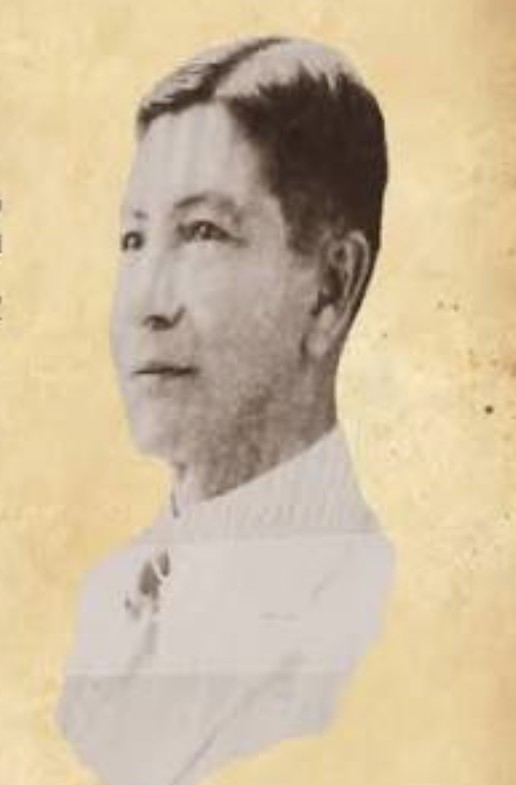
The Philippine Revolution was not confined to Luzon. Mindanao had its own revolutionary leaders, battles and political struggles, and one of the most important figures in the revolutionary history of western Mindanao was Vicente S. Alvarez.
Born in 1862, Alvarez became involved with the Katipunan and established its Zamboanga chapter. When Spanish colonial authority weakened at the end of the 19th century, Alvarez led revolutionary forces in Zamboanga. The NHCP records that he commanded revolutionary forces in Zamboanga and Basilan in 1899 and was later appointed brigadier general by President Emilio Aguinaldo.
His involvement did not end with the defeat of Spanish forces. Alvarez subsequently fought during the Philippine-American War and was captured in 1902. His career illustrates how the struggle for independence did not simply transition from Spanish rule to peaceful nation-building. In many parts of the country, including Mindanao, local revolutionary forces faced another conflict as American forces established control over the Philippines.
Alvarez’s story is important because the Philippine Revolution is frequently taught through events centered in Luzon. Yet Mindanaoans were not passive observers of the country’s struggle for independence. They organized, fought and negotiated within their own communities and political circumstances. Alvarez stands as one of the figures who make that broader national story visible.
Prinsesa Tarhata Kiram: A Moro Woman Who Challenged Colonial Power
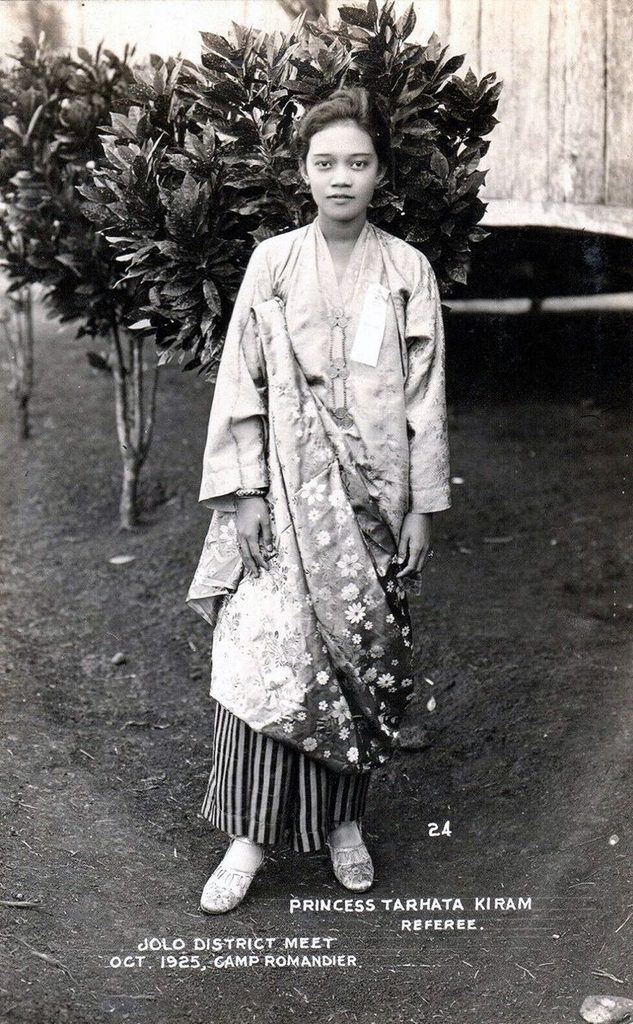
Perhaps one of the most fascinating and underappreciated figures in Mindanao’s modern history is Prinsesa Tarhata Kiram of Sulu. Born in Sulu in 1904, Tarhata Kiram was the niece and adopted daughter of Sultan Jamalul Kiram II. She became one of the earliest Muslim Filipino women to receive education abroad, studying in the United States.
Her education, however, did not make her a passive observer of colonial politics. When she returned to Sulu, Kiram became involved in political affairs and resistance. In 1927, she and her husband, Datu Tahil, became involved in a Tausug uprising against American colonial authorities. She also opposed the Bacon Bill, which sought to separate Mindanao and Sulu from the rest of the Philippines.
Her political involvement continued for decades. She advocated for Muslim interests and participated in political discussions concerning Sulu and Mindanao. She was also a composer, with “Jolo Farewell” associated with her name. Historical records and cultural heritage documentation in Sulu continue to preserve sites and memories connected to her life.
Her story is significant not simply because she was a princess, but because she demonstrates that women in Mindanao were active participants in political history. Too often, historical narratives portray women as witnesses to major political events rather than as actors who shaped those events themselves. Tarhata Kiram provides a powerful counterexample.
Her life also demonstrates the complexity of Mindanao’s history. Her story involves education, colonialism, political resistance, identity and the struggle over the future of Sulu and Mindanao. Remembering her therefore gives National Heroes Day a broader perspective—one that recognizes the contributions of Moro women alongside the better-known male figures of Philippine history.
Datu Udtog Matalam: The Other Name Behind Cotabato’s Wartime Resistance
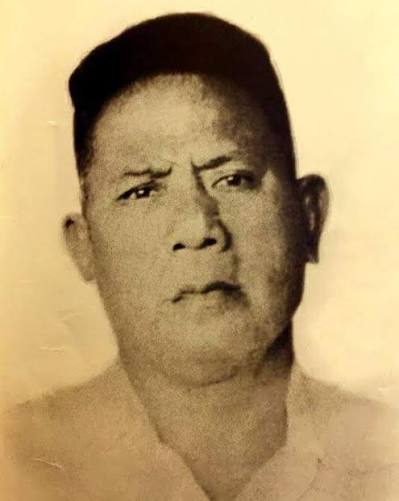
When the story of Cotabato’s guerrilla resistance during World War II is told, Salipada Pendatun’s name often comes first. But another name deserves to be remembered alongside him: Datu Udtog Matalam.
Historical records identify Matalam as a key figure who, together with Pendatun, helped organize resistance against Japanese forces in Cotabato. Their guerrilla organization became part of the broader resistance movement that challenged Japanese occupation in Mindanao. At a time when local communities were facing military occupation, economic disruption and the threat of reprisals, organizing an armed resistance required both political influence and considerable personal risk.
Matalam later became one of the most influential political figures in the old, undivided Cotabato province. His historical legacy, like that of many political leaders who operated during periods of enormous social change, is complex. His career cannot be reduced to a single chapter or a simple label.
That complexity, however, should not be a reason to erase him from history. Instead, it is a reason to study him more carefully. History is rarely made by perfect people. It is made by individuals who make decisions amid war, political upheaval, competing interests and changing circumstances. Matalam’s role in organizing wartime resistance makes him an important part of Mindanao’s World War II story, even as his broader political legacy deserves continued historical examination.
Jose Abad Santos: A National Hero Whose Final Stand Was in Mindanao
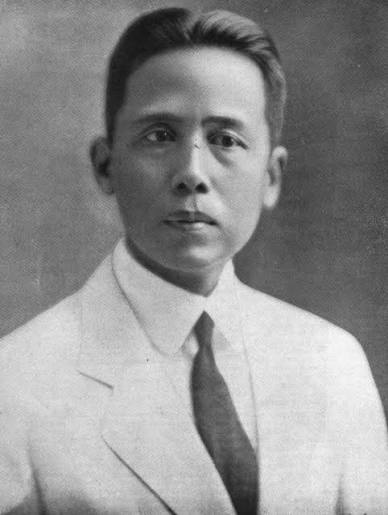
Not every hero on this list was born in Mindanao. Some became part of Mindanao’s history because the island was where their courage was ultimately tested. Jose Abad Santos, former Chief Justice of the Supreme Court, belongs to that category.
After Japanese forces captured him during World War II, Abad Santos was brought to Malabang, Lanao. There, Japanese authorities demanded his cooperation with the occupation government. He refused to collaborate. On May 2, 1942, he was executed.
His death became one of the most powerful examples of wartime resistance and refusal to collaborate with an occupying force. His story has long been remembered at the national level, but the geographical reality of his final stand is particularly important to Mindanao. It was in Lanao that the occupying authorities confronted him with the choice between cooperation and resistance.
Including Abad Santos in a Mindanao-centered remembrance does not mean claiming him as an exclusively local hero. Rather, it recognizes that Mindanao was the place where his principles were put to their ultimate test. His final stand is therefore also part of Mindanao’s wartime history and of the island’s contribution to the broader story of Philippine resistance during World War II.
The Seventeen Martyrs of Koronadal: Heroes Without Famous Names
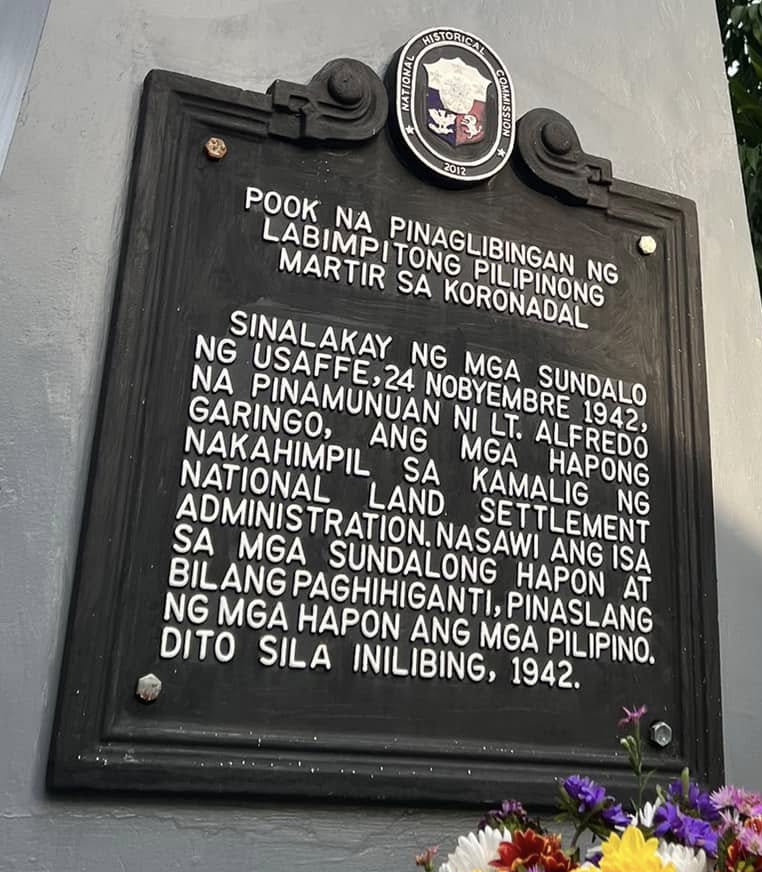
Perhaps the most important entry in this list is not a famous general, politician or sultan, but a group of ordinary Filipinos whose names have largely disappeared from public memory. The Seventeen Filipino Martyrs of Koronadal were killed during the Japanese occupation in 1942, becoming among the lesser-known wartime casualties commemorated in Mindanao.
According to the National Historical Commission of the Philippines, USAFFE soldiers led by Lt. Alfredo Garingo attacked Japanese forces stationed at a National Land Settlement Administration facility in Koronadal on November 24, 1942. One Japanese soldier was killed in the attack. In retaliation, Japanese forces killed 17 Filipinos, whose remains were subsequently buried at the site. The NHCP now recognizes the location in Koronadal, South Cotabato, with a historical marker commemorating the 17 victims.
Their story carries a particularly powerful lesson for National Heroes Day because they did not hold the titles normally associated with the word “hero.” They were not presidents, senators or generals. They did not command armies or write laws. They were ordinary Filipinos caught in the violence of a war that had reached their community, yet their lives were ultimately sacrificed amid the struggle between occupying forces and Filipino resistance.
Their story forces us to reconsider how heroism is remembered. Philippine history understandably gives considerable attention to the leaders who commanded armies, organized revolutions or occupied important government positions. But wars are also endured by ordinary people whose names rarely make it into textbooks. Their deaths may not change the course of a war, but they remain part of the human cost of defending freedom.
The 17 Martyrs of Koronadal therefore deserve a place in Mindanao’s remembrance of National Heroes Day—not necessarily because each of them can be individually classified as a national hero under any formal government designation, but because their collective sacrifice represents the countless ordinary Filipinos who suffered and died during the country’s darkest years. Heroism is not always measured by rank, position or fame. Sometimes, it is remembered simply because someone paid the ultimate price when history came knocking at their doorstep.
The Heroes We Remember—and the Heroes We Forget
There is a larger question behind these stories. Why do so many Filipinos know Rizal and Bonifacio, but know little about Kudarat, Pendatun, Climaco, Alvarez, Ozamiz or Tarhata Kiram?
Part of the answer lies in the way Philippine history has traditionally been taught. For generations, the national story has often been presented through events centered in Manila and Luzon, with major developments in the Visayas and Mindanao sometimes receiving less attention. This does not mean that Mindanao’s history has been completely ignored, but it does mean that many local stories have struggled to achieve the same place in the national consciousness as the stories of figures whose names appear repeatedly in textbooks and national commemorations.
But Mindanao was never secondary. It had established political systems before colonial rule. It had sultanates and Indigenous communities with their own governance structures. It resisted Spanish expansion, participated in the Philippine Revolution, produced guerrilla leaders during World War II and produced politicians who fought for democracy. It also produced ordinary people who died in wars that were not of their choosing.
The historical record is there. The challenge is making those stories part of everyday public memory. A historical marker can stand for decades while generations of residents pass by without knowing the story behind it. A city can carry a hero’s name while its students know little about the person. A monument can stand in a public plaza while people photograph everything around it except the history it represents.
That is where National Heroes Day should become more than a holiday. It should become a question: Who are the heroes of our own community?
National Heroes Day Should Also Be Local
There is nothing wrong with remembering Rizal. There is nothing wrong with honoring Bonifacio. There is nothing wrong with teaching the national heroes whose names have become synonymous with the struggle for freedom. But patriotism should not require Mindanaoans to look only toward Manila.
A child in Cotabato should know who Sultan Kudarat was. A student in Maguindanao should know why Salipada Pendatun’s name appears on a military camp. A young person in Zamboanga should know why Cesar Climaco became a symbol of resistance to dictatorship and why Vicente Alvarez mattered during the revolution. A student in Misamis Occidental should know why Jose Ozamiz is remembered as a wartime martyr. A young person in South Cotabato should know that 17 Filipinos were killed in Koronadal during the darkest years of World War II. And across Sulu, young people should know the extraordinary story of Tarhata Kiram—not simply as a princess, but as a woman who challenged colonial authority and became involved in the political struggles of her people.
These stories do not compete with the national narrative. They complete it.
A Filipino history that does not adequately tell the stories of Mindanao is an incomplete history of the Philippines. The island’s past cannot be reduced to conflict, insurgency, elections, natural resources or contemporary political struggles. Long before today’s headlines, Mindanao was already home to political systems, communities, leaders, resistance movements and cultural traditions that shaped the country’s historical trajectory.
Remembering Mindanao’s heroes is therefore not about dividing Philippine history into separate regional versions. It is about recognizing that the national story was built from many places, many communities and many experiences.
Heroism Is Not a Monopoly of the Past
There is another reason to localize National Heroes Day. The word “hero” can become so attached to statues and history books that we forget what heroism actually means.
Kudarat’s heroism was resistance. Pendatun’s was service and sacrifice. Ozamiz’s was choosing the guerrillas over political security. Climaco’s was standing against dictatorship. Alvarez’s was revolutionary struggle. Tarhata Kiram’s was defending the political and cultural interests of her people. Paulino Santos’ was nation-building. The Seventeen Martyrs’ was sacrifice in the face of war. Abad Santos’ was refusing to surrender his principles to an occupying force.
Their circumstances were different. Their politics were different. Their communities were different. Their identities were different. Yet their stories share an essential quality: they were willing to place something larger than themselves above their own safety, comfort or personal interest.
That is a definition of heroism worth preserving.
It is also a definition that should challenge present generations. National Heroes Day is not only an occasion to admire people who lived decades or centuries ago. It is an opportunity to ask whether the values associated with heroism—courage, integrity, service, sacrifice and concern for others—still have a place in public life today.
Mindanao Does Not Need to Borrow Heroes
Perhaps the most important message this National Heroes Day is this: Mindanao does not need to borrow heroes from the national imagination.
The island has produced its own. They came from sultanates and revolutionary movements, from guerrilla camps and government offices, from public plazas and remote communities, and from Muslim, Christian and Indigenous communities. They were men and women. Some were commanders, some were politicians, some were community leaders, and some were simply people caught in the machinery of war.
Their histories are part of the history of the Philippines.
Remembering them is not an attempt to create a separate history for Mindanao. It is an attempt to make the national history more complete.
Today, as flags are raised and ceremonies are held across the country, perhaps the most meaningful tribute Mindanao can offer is not merely to repeat the familiar names. It is to look around—at the old monument, the historical marker, the street named after someone, the plaza where a statue stands, the cemetery where a martyr rests or the place where an old battle happened—and ask who that person was, what they sacrificed, what they believed in and why their story may have faded from public memory.
Because National Heroes Day should not only remind us of the heroes we already know. It should challenge us to discover the heroes we have been walking past all along.
This National Heroes Day, let Mindanao remember its own.