
A Nation Connected by Wheels and Hope
For more than a century, Philtranco was never just a bus company. It was a moving home, a rolling lifeline, and a bridge of hope that carried dreams, tears, prayers, and reunions across mountains, seas, and generations. From dusty provincial roads to modern expressways, from war-torn years to times of peace, its buses faithfully served Filipinos day and night. For many families, especially in Mindanao and the Visayas, a Philtranco trip meant another chance—to study, to work, to reunite, to survive. It was the first bus company to connect Luzon, Visayas, and Mindanao through land and sea travel, making it possible for ordinary Filipinos to cross islands long before affordable air travel became common.

The First Bridge Between Three Island Groups
Long before budget airlines and online booking systems, Philtranco provided the country’s most reliable inter-island land transport network. Passengers from Mindanao could travel by bus, cross seas by ferry, and continue by land through the Visayas all the way to Luzon. For those who could not afford plane tickets, this system was a lifeline. Farmers, laborers, students, vendors, and migrant workers relied on Philtranco to reach Manila and other cities. In many Mindanao communities, riding a Philtranco bus was a rite of passage—a first step toward education, employment, and a better future.
Born in 1914, Shaped by History
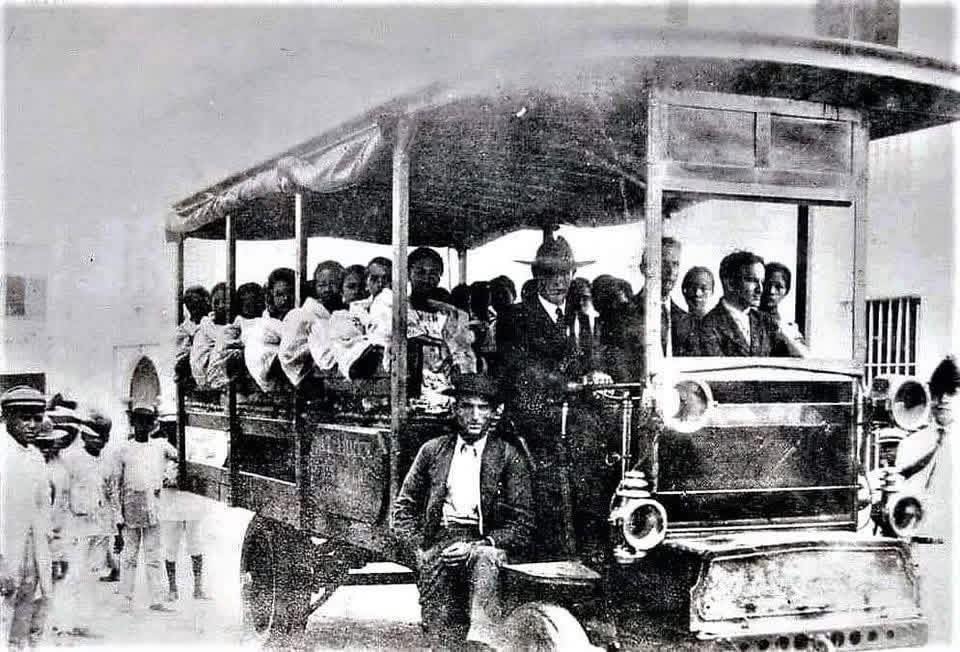
Philtranco’s roots trace back to July 14, 1914, when it was founded as the A.L. Ammen Transportation Company (ALATCO) in Iriga, Camarines Sur. What began as a simple route between Iriga and Naga gradually expanded across Bicol and neighboring provinces. Through the decades, it evolved into Alatco Transportation Company, Pantranco South Express, and eventually Philtranco Service Enterprises Inc. in 1984. It survived wars, political upheavals, economic crises, and technological change. Few Filipino institutions have lasted this long. For more than a hundred years, its red-and-gray buses became familiar symbols of travel, resilience, and homecoming.
“With Heavy Hearts”: The Painful Decision to Close
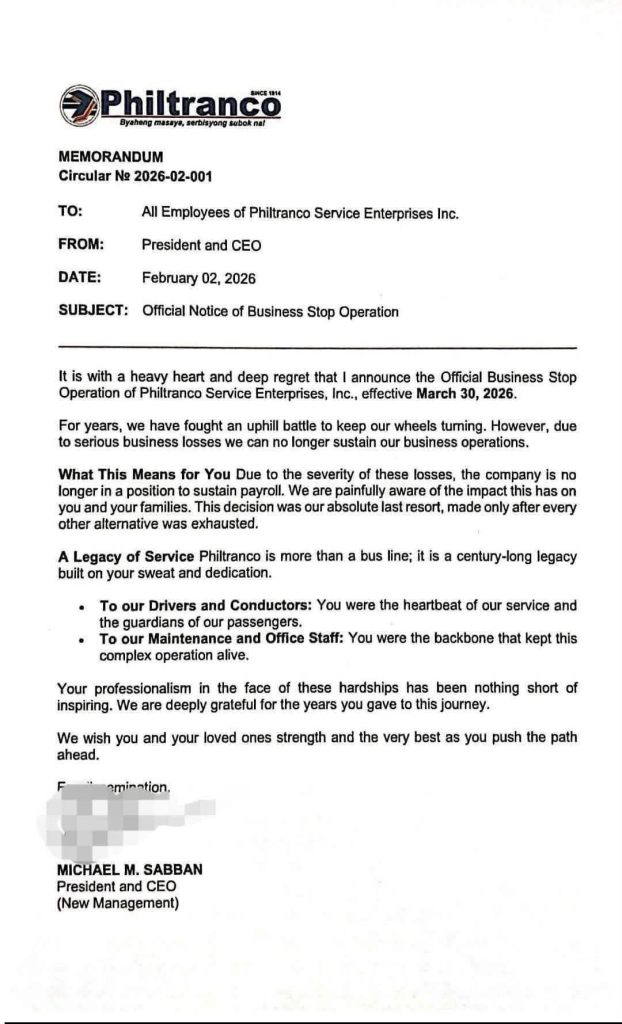
On February 2, 2026, President and CEO Michael M. Sabban released a heartbreaking memorandum announcing that Philtranco would permanently cease operations on March 30, 2026. He expressed “heavy heart and deep regret,” explaining that the company had been fighting an uphill battle for years. Rising fuel costs, maintenance expenses, declining passenger numbers, and stiff competition from airlines and modern bus companies led to severe financial losses. Despite exhausting all possible alternatives, management admitted that continuing operations had become impossible. The decision, according to the memo, was a last resort.
The Human Cost Behind the Shutdown
Beyond the closure of a historic company, the decision brings deep pain to hundreds of employees and their families. Drivers, conductors, mechanics, dispatchers, and office staff—many of whom spent decades with Philtranco—now face an uncertain future. For some, the company was their only employer since youth. In his message, Sabban honored them as the true foundation of the company, calling the drivers and conductors its “heartbeat” and the maintenance and office staff its “backbone.” These workers were more than employees; they were protectors of passengers, problem-solvers on the road, and silent partners in every journey.
Stories Carried on Every Seat
Every Philtranco bus carried more than luggage. It carried stories. Mothers leaving for domestic work, students chasing diplomas, farmers bringing goods to the city, soldiers returning home, and families rushing to emergencies all shared the same narrow aisles and worn seats. Some slept through overnight trips, some whispered prayers, some cried quietly, and some laughed with strangers who became friends. For many Mindanaoan travelers, these long journeys were exhausting but meaningful, because they led to opportunity and reunion. Philtranco gave dignity to travel and meaning to distance.
A Slow and Silent Decline
Even before the official announcement, signs of decline were already visible. By 2024, several terminals had closed, and some routes were transferred to other operators. Passengers noticed fewer buses, limited schedules, and shrinking destinations. Still, many believed Philtranco would survive, as it had survived countless crises before. For more than a century, it had always found a way to keep moving. This time, however, the challenges proved too heavy.
More Than a Company, A National Memory
Philtranco was not merely a transport business; it was part of the country’s social and economic fabric. It helped shape migration patterns, enabled labor mobility, strengthened family ties, and supported regional development. Teachers reached classrooms, nurses reached hospitals, workers reached factories, and students reached universities because a Philtranco bus was available. Its contribution to national growth cannot be measured in profits alone, but in lives changed and opportunities created.
The Final Stop and a Grateful Farewell
As March 30, 2026 draws near, terminals grow quieter and engines prepare for their last run. Routes that once pulsed with life will soon exist only in memory. For many Filipinos—especially in Mindanao and the Visayas—this is not just the loss of transportation. It is the loss of a companion, a witness, and a trusted bridge between islands and generations. Everything may indeed come to an end, but some endings deserve to be honored.
For 111 years of service, millions of safe journeys, countless reunions, and decades of sacrifice, the nation owes Philtranco its gratitude. It did not merely carry passengers. It carried dreams, struggles, and hopes across the seas and highways of the Philippines. As its wheels finally stop, its legacy will continue to travel—forever—in the stories of the people it served.