
The debate over the future of the Agus-Pulangi Hydroelectric Power Complex should not be reduced to a simple question of whether the aging facilities need rehabilitation. Of course they do. After decades of operation, the complex requires continuing investment, modernization and careful management to ensure that it remains capable of providing reliable electricity to Mindanao. But the more important question is whether the need for rehabilitation should automatically become a justification for placing one of the region’s most important strategic public assets under private control.
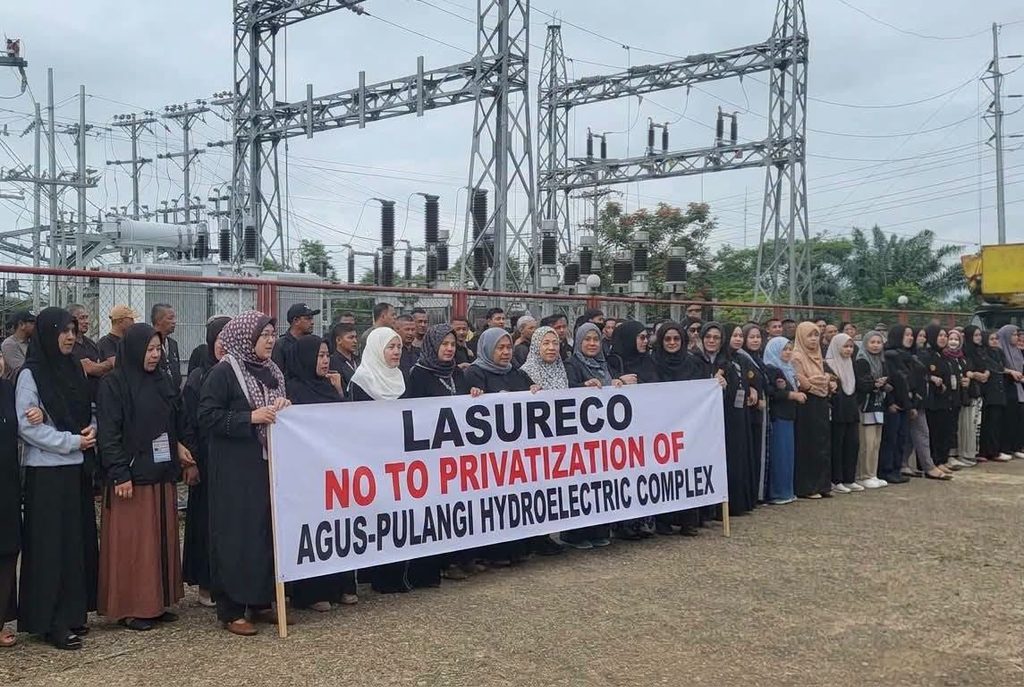
It should not.
Agus-Pulangi is far more than a collection of aging power plants. It is a publicly built and publicly owned energy system that has served Mindanao for decades. Its seven hydropower plants stretch across areas connected to Marawi City and Lake Lanao, Lanao del Sur, Lanao del Norte, Iligan City and Bukidnon, with a combined installed capacity of around 1,000 megawatts. The Agus system draws from Lake Lanao and the Agus River, while the Pulangi system depends on the Pulangi River and its surrounding watershed, including areas involving ancestral domains. Its significance therefore goes well beyond electricity generation. It is simultaneously an energy system, a water system, an environmental system and a community system upon which millions of people depend.
That is precisely why the renewed push to subject Agus-Pulangi to privatization, concession, public-private partnership, Independent Power Producer Administrator-like arrangements or other forms of long-term private participation deserves careful public scrutiny. According to the explanatory material prepared for the Movement Against Privatization of NPC Agus-Pulangi Hydroelectric Complex, these proposals have emerged amid arguments that the complex is aging and that rehabilitation supposedly requires massive private investment. But the same material raises the fundamental question of whether rehabilitation automatically requires privatization.
The central argument being advanced by proponents of private participation is understandable: the facilities are old, rehabilitation will require substantial resources, and government may need outside capital and expertise. But this reasoning leaves an important question unanswered. Why must rehabilitation necessarily lead to privatization? Why should an aging public asset be transferred, concessioned or placed under long-term private operational control simply because it requires investment?
Aging infrastructure is not an unusual phenomenon. Roads age. Bridges age. Airports age. Water systems age. Transmission facilities age. Power plants age. The normal government response to aging infrastructure should be assessment, rehabilitation, modernization and improved management—not the automatic surrender of ownership or long-term control.
The figures cited in the explanatory material make this question even more difficult to ignore. National Power Corporation data cited in the document show that Agus-Pulangi generated 4,492.90 gigawatt-hours in 2014 and 4,491.30 GWh in 2024, representing a decline of only about 1.60 GWh, or roughly 0.04 percent, over ten years. During the same period, the cited net income increased from ₱8.55 billion to ₱9.20 billion.
If these figures are independently confirmed, they tell us something important. Agus-Pulangi may be aging, but it is not a dead or economically useless asset. It continues to generate electricity and revenue. That does not mean its problems should be ignored, nor does it prove that rehabilitation can be financed entirely from existing income. It does, however, challenge the assumption that private ownership or long-term private control is the only viable path toward modernization.
The question government should therefore be asking is not simply where to find private money. It should be asking how the revenues generated by Agus-Pulangi can be strategically used, together with appropriate government financing and other responsible funding mechanisms, to rehabilitate the complex while preserving its public character.
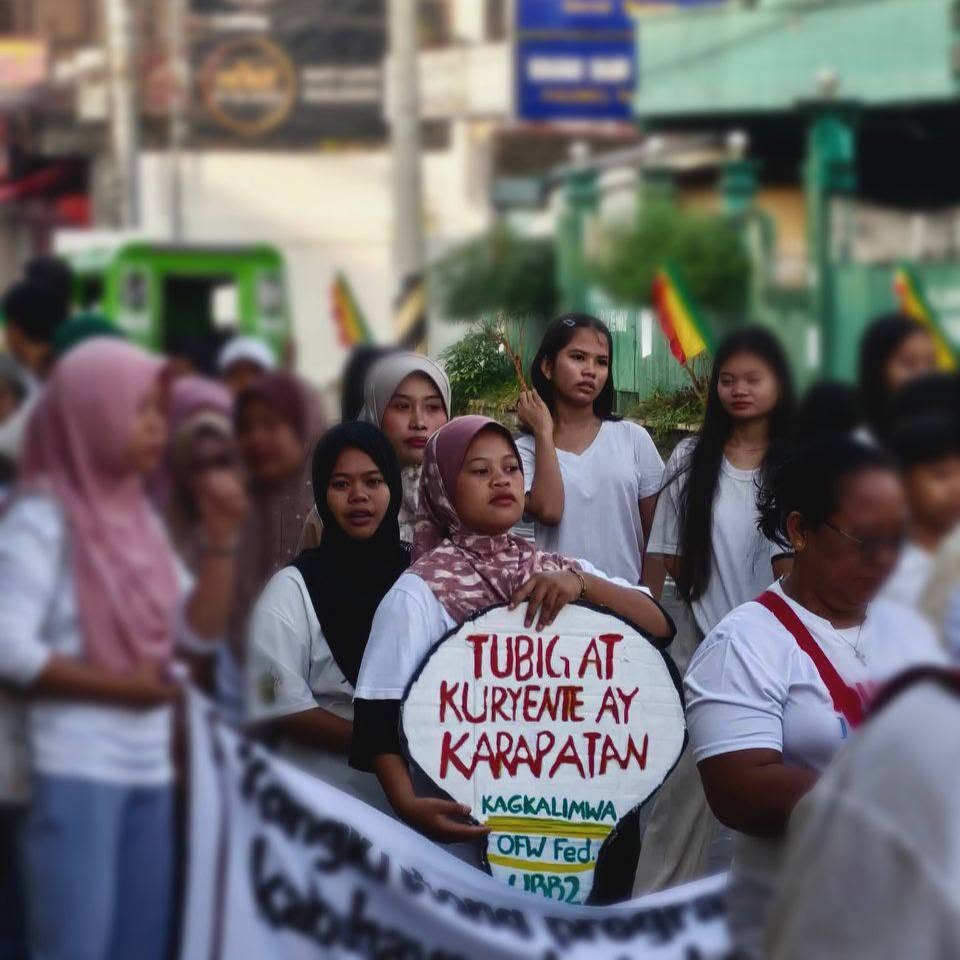
The distinction is critical because private investment is never simply free money. A private company invests because it expects to recover its capital, operating expenses, financing costs and profit. Those costs must ultimately be recovered through the commercial operation of the asset. In the power sector, this inevitably raises questions about who will eventually shoulder the financial burden.
Consumers cannot be treated as an afterthought.
The explanatory material points out that electricity affects practically every aspect of economic and household life, including food prices, transportation, irrigation, water systems, schools, hospitals, jobs, businesses and household survival. It argues that Agus-Pulangi has historically helped keep electricity costs lower because its plants were publicly built, government-owned and already paid for, while water serves as the natural resource used for generation.
This public advantage should not be casually surrendered.
The Philippines already faces serious electricity affordability concerns. When power becomes more expensive, the burden does not fall only on electric consumers. It spreads throughout the economy as businesses face higher operating costs, farmers pay more for production and irrigation, small enterprises struggle with overhead expenses, and households are forced to devote more of their income to basic utilities.
This is why Agus-Pulangi matters so much.
The complex represents one of Mindanao’s major publicly owned renewable energy resources. In a country already dealing with rising fuel prices, energy instability, climate pressures and a high cost of living, government should be extremely careful before adding private capital recovery and profit requirements to a system that has the potential to provide a public benefit for decades to come. The explanatory material specifically warns that privatization or concessioning could introduce additional private profit, financing costs and tariff recovery into a system that should instead help stabilize electricity prices in Mindanao.
The material also cites the Pantabangan-Masiway hydropower case, where the generation rate is said to have increased from approximately ₱2.11 per kilowatt-hour before privatization to around ₱4.80 per kWh afterward, an increase of about 127 percent. That comparison should be independently verified and examined in its full contractual, regulatory and market context before conclusions are drawn about causation. But even as a policy warning, it raises an important question: if privatization can result in substantially higher costs under certain circumstances, what safeguards would prevent similar risks from affecting consumers in Mindanao?
The public should not be asked to accept a long-term privatization arrangement on the promise that private investment will solve today’s rehabilitation problem without being shown what that arrangement could mean for electricity prices tomorrow.
There is another reason why Agus-Pulangi should be treated differently from an ordinary commercial asset: its dependence on the environment and the communities surrounding it.
Hydropower cannot exist without water. The Agus system depends on Lake Lanao, its watershed and the stability of the Agus River. The Pulangi system depends on the Pulangi River and the broader ecological system that sustains its water flows. Forest degradation, watershed destruction, sedimentation, changing rainfall patterns and climate-related disruptions can ultimately affect the reliability and productivity of hydropower generation.
This means genuine rehabilitation cannot be limited to turbines, generators and concrete structures. It must also include watershed protection, ecosystem restoration, sedimentation management, climate resilience and meaningful participation by local governments, BARMM institutions, Indigenous Peoples, local communities and civil society.
The people living within and around these watersheds cannot simply be classified as affected communities to be consulted after decisions have already been made. They are stakeholders and, in many cases, co-stewards of the natural systems upon which Agus-Pulangi depends.
That is another reason why the debate over ownership matters.
A purely commercial approach tends to measure an asset primarily by financial performance and return on investment. A public asset must be measured against a broader standard. Does it provide affordable electricity? Does it contribute to energy security? Does it protect the environment? Does it respect communities and ancestral domains? Does it strengthen regional development? Does it preserve a strategic resource for future generations?
These questions are not obstacles to efficiency. They are part of the public interest.
None of this means that public ownership should be used to excuse poor management. In fact, the opposite is true. If Agus-Pulangi suffers from inefficiency, inadequate maintenance, bureaucratic delays, outdated systems or weak accountability, government must confront those problems directly. Public ownership should come with public accountability.
The answer to poor public management should be better public management.
The answer to aging infrastructure should be rehabilitation.
The answer to outdated equipment should be modernization.
The answer to insufficient technical capacity should be the acquisition of technical expertise.
And the answer to financial constraints should be a serious examination of public financing options before the government concludes that long-term private control is unavoidable.
The explanatory material argues that rehabilitation could potentially be phased over five to seven years, with individual plants upgraded sequentially while other plants continue generating electricity and revenue. Because Agus-Pulangi operates as a cascade system, this approach deserves serious technical and financial examination.
If a phased rehabilitation strategy is technically feasible, then the public debate should focus on whether that strategy can be financed and implemented effectively rather than assuming from the beginning that privatization is inevitable.
The government should also be required to disclose the complete financial picture. If proponents of privatization argue that government cannot afford rehabilitation, the public deserves to see the numbers behind that conclusion. What are the projected rehabilitation costs? How much revenue does Agus-Pulangi generate? What resources are available to PSALM and the government? What financing options have been studied? What would a private concession cost consumers over its entire life? How much profit would the private operator be entitled to earn? Who would carry operational, environmental and financial risks? What would happen to electricity rates?
These are not technical questions that should be left exclusively to government agencies and private investors. They are matters of public interest.
The explanatory material points to billions in PSALM receivables, cash equivalents, continuing Agus-Pulangi profitability and the possibility of phased rehabilitation as factors that should be examined in determining whether public financing remains viable. These claims should be tested against current official financial records, but they underscore the need for a transparent comparison between public rehabilitation and privatization.
Government should put both options on the table and let the numbers speak. If public rehabilitation is more expensive, explain why. If private rehabilitation is more efficient, demonstrate it. If privatization will lower electricity costs, show the contractual mechanism. If it will protect consumers, put those protections in writing. If private investors will assume substantial risks, disclose those risks. And if the public will ultimately shoulder the cost, the public has a right to know.
This is particularly important because privatization does not necessarily require an outright sale. A concession, PPP, IPPA-like arrangement or rehabilitation-operate-transfer structure can leave government as the nominal owner while giving a private entity substantial operational and financial control for many years. The distinction between ownership and control therefore becomes extremely important.
A government agency may still own the facility on paper while the economic benefits of operating it increasingly flow to private hands. That possibility deserves careful examination before any agreement becomes irreversible.
Mindanao has every reason to be cautious about decisions involving strategic infrastructure. The explanatory material invokes the experience of the National Steel Corporation in Iligan and the concession of the country’s transmission system as examples that have contributed to concerns about the long-term consequences of transferring strategic economic functions into private hands. These cases are not identical to Agus-Pulangi and should not be treated as direct precedents, but they nevertheless demonstrate why privatization decisions must be evaluated not only according to immediate investment commitments but according to their long-term economic consequences.
A concession lasting decades can outlive several administrations. The officials who negotiate it today may no longer be in government when its most consequential financial and social effects become apparent. The public, however, will continue to live with the agreement.
That is why the Agus-Pulangi issue requires Congressional scrutiny and meaningful public consultation.
The explanatory material cites pending measures in Congress, including House Bill 7879 and related legislation such as HB 4733, which advocates say seek stronger protection for Agus-Pulangi against privatization or privatization-equivalent arrangements. It also calls for intervention in the ongoing PSALM-initiated process, suspension of privatization-related actions pending review and consultation, and stronger legislative protection for the complex.
Whether these particular legislative measures ultimately become law is a matter for Congress to decide. But the principle behind greater scrutiny is difficult to dismiss.
Agus-Pulangi is too important to be decided merely as another transaction.
It is a question of energy sovereignty. It is a question of electricity affordability. It is a question of environmental stewardship. It is a question of community rights. And ultimately, it is a question of whether government is willing to preserve strategic public assets for the benefit of future generations.
Mindanao has enormous renewable energy potential, but potential alone does not guarantee energy security. The region needs reliable infrastructure, responsible management and institutions capable of protecting both its natural resources and its people. Agus-Pulangi is one of the existing assets that can contribute to that future.
The complex should therefore be rehabilitated, modernized and made more efficient. Its management should be subjected to greater transparency and accountability. Its watersheds should be protected. Communities and Indigenous Peoples should have meaningful participation in decisions affecting the resources upon which they depend. And government should explore every credible public financing and modernization option before transferring long-term control to private interests.
Keeping Agus-Pulangi public does not mean keeping it unchanged. It means recognizing that public ownership carries a responsibility to improve the asset rather than abandon it.
The Philippines has spent generations building strategic infrastructure for the public good. When those assets become old, the obligation of government should be to repair them, modernize them and make them work better—not to assume that their age makes them disposable.
Agus-Pulangi is not simply an old power complex waiting for a private investor. It is an existing public investment that continues to produce electricity, generate revenue and support Mindanao’s economy. Its watersheds connect energy policy with environmental protection. Its facilities connect infrastructure policy with electricity affordability. Its communities connect energy development with questions of rights, participation and social responsibility.
The decision before government, therefore, is much bigger than a rehabilitation contract. It is a decision about who should control one of Mindanao’s most important energy resources and who should benefit from it for decades to come.
That decision should not be rushed. It should not be driven by the assumption that private capital is automatically better than public investment. And it should not be made without allowing the people of Mindanao to see the numbers, examine the alternatives and understand the long-term consequences.
The appropriate course is therefore clear: Agus-Pulangi should be rehabilitated and modernized, while its management is made more transparent, efficient and accountable. The watersheds that sustain its operations must be protected, and the communities and Indigenous Peoples connected to the resource must have meaningful participation in decisions affecting their environment and livelihoods. Most importantly, however, the complex should remain under public ownership and continue to serve its long-term public purpose.
Electricity is not merely another commodity in the marketplace. For millions of Filipinos, it is an essential foundation of daily life and economic activity, powering homes, schools, hospitals, farms, factories, businesses and livelihoods. When electricity becomes unreliable or unaffordable, the consequences are felt throughout society, particularly by families and communities that have the least capacity to absorb higher costs.
Agus-Pulangi therefore cannot be viewed simply as an aging infrastructure asset awaiting a financial solution. It is a strategic public resource with consequences that extend across generations. If it continues to have the capacity to provide reliable renewable electricity to Mindanao, the government’s responsibility should not be to find the quickest way to transfer its long-term control to private interests. Its responsibility is to protect, rehabilitate and modernize the complex so that it can continue serving the public for generations to come.
The debate should consequently move beyond the false choice between privatization and deterioration. Mindanao deserves neither. It deserves a modern, efficient, financially sustainable and publicly accountable Agus-Pulangi. It deserves an energy system in which revenues generated from a strategic public resource are used responsibly, watersheds are protected, communities are respected and consumers are not unnecessarily burdened by additional costs.
The government should therefore take the time to fully examine the alternatives before proceeding with any privatization, concession, PPP or similar arrangement. The public deserves complete information on rehabilitation costs, financing options, projected electricity rates, investment recovery mechanisms, concession periods, expected returns, environmental obligations and the allocation of risks between government, private operators and consumers. Congress should exercise its oversight function, and communities throughout Mindanao should be given a meaningful opportunity to participate in a decision that could affect the region’s energy security for decades.
There is nothing inherently wrong with seeking private expertise or contracting private companies to undertake specialized rehabilitation work. But technical assistance and private contracting are fundamentally different from surrendering long-term operational and economic control of a strategic public asset. Government can engage engineers, contractors, technology providers and financial institutions without necessarily giving away the public character of Agus-Pulangi.
The challenge, therefore, is not whether Agus-Pulangi can be made modern again. It can and must be. The real challenge is whether government has the political will, institutional capacity and financial discipline to undertake that modernization while preserving the public interest. If management needs reform, reform it. If equipment needs replacement, replace it. If financing mechanisms need to be developed, develop them. If agencies need stronger coordination, strengthen that coordination. But do not make privatization the inevitable answer to problems that government itself has the responsibility to solve.
Agus-Pulangi represents decades of public investment and remains one of Mindanao’s most important renewable energy resources. It should be treated not as an obsolete burden to be transferred but as a strategic asset whose value will become even more important as the country confronts energy insecurity, climate change, rising electricity costs and growing demand for reliable power.
The decision before the government is therefore not simply about who will rehabilitate a group of aging power plants. It is about who will control the resource, who will benefit from the electricity it produces, who will bear the costs of its rehabilitation and what kind of energy system Mindanao will inherit in the decades ahead.
That decision demands caution, transparency and public participation. Above all, it demands recognition that some assets are too strategically important to be treated merely as commercial opportunities.
Agus-Pulangi is one of them.
It should remain public, but public ownership must be accompanied by serious investment, competent management, rigorous accountability and a long-term commitment to modernization. Its watersheds must be protected, its surrounding communities must be respected, and its revenues must be managed in a way that strengthens rather than weakens Mindanao’s energy security.
Electricity is not merely another commodity whose value can be measured by the immediate return it produces for an operator. It is a foundation of economic activity and social welfare. For millions of Filipinos, the reliability and affordability of electricity determine whether businesses can operate, whether farmers can produce, whether hospitals can function, whether schools can serve their students and whether families can afford the basic necessities of modern life.
That is why the future of Agus-Pulangi must be approached with a responsibility that extends beyond the next administration or the next investment cycle. A private concession may provide capital today, but government must determine whether the long-term financial, economic, environmental and social consequences will serve the public interest decades from now.
Mindanao has already contributed enormous natural resources to the country’s development. Its rivers, watersheds and energy resources should not be viewed merely as opportunities for extracting short-term commercial returns. They are part of the region’s future and, in the case of Agus-Pulangi, part of the country’s energy security.
The government should therefore resist the temptation to treat privatization as the easiest answer to a difficult rehabilitation challenge. The harder path may be to reform public management, mobilize public financing, improve institutional coordination and invest patiently in modernization. But if that harder path allows Mindanao to retain long-term control over a strategic renewable energy resource, it may also be the path that best protects consumers and future generations.
Agus-Pulangi does not need to be rescued from public ownership. It needs to be rescued from neglect, underinvestment and weak management.
That distinction is fundamental.
The goal should not be to preserve an aging power complex exactly as it is. The goal should be to transform Agus-Pulangi into a modern, efficient, resilient and accountable public energy system capable of serving Mindanao well into the future.
The government has a responsibility to ensure that the lights remain on today without compromising the ability of future generations to keep them on tomorrow. For Agus-Pulangi, that responsibility means preserving public ownership while investing seriously in its rehabilitation and modernization.
Mindanao does not need to surrender its power future in order to repair its past. It needs government to have the courage to invest in that future, the discipline to manage the resource properly and the foresight to understand that some public assets are simply too important to hand over for the sake of solving an immediate financial problem.
Agus-Pulangi is one of those assets. It was built to serve the public, it continues to generate power for Mindanao, and its waters and surrounding ecosystems connect its future to the future of communities across the region. Its rehabilitation should therefore be pursued with urgency, but its public character should be protected with equal determination.
The choice before the country is not between an old Agus-Pulangi and a privatized Agus-Pulangi. There is another option: a modern, efficient, transparent, accountable and publicly owned Agus-Pulangi that continues to provide renewable electricity while protecting the watersheds, communities and consumers that depend on it.
That is the future Mindanao deserves, and it is a future worth defending.