
The looming climate crisis exposes a fundamental question of governance: Why do some communities invest in systems designed to prevent a disaster from becoming a catastrophe, while others risk depending on emergency assistance once the damage is already unfolding?
The Philippines is running out of time to prepare for what could become one of the most consequential climate emergencies of 2026 and 2027. As a strong El Niño intensifies toward a potentially very strong phase, the country faces the prospect of prolonged dry spells, declining water availability, mounting agricultural losses, worsening heat and increasing pressure on electricity supplies.
The Philippine Atmospheric, Geophysical and Astronomical Services Administration (PAGASA) warned in September that the ongoing El Niño was expected to intensify into a very strong event and persist through the first half of 2027. Subsequent climate advisories have maintained the warning, emphasizing the increased likelihood of below-normal rainfall, dry spells and drought in affected areas. The precise severity and geographic distribution of those impacts will depend on evolving weather conditions, but the warning is already serious enough to demand decisive action.
Against this backdrop, Davao City offers a revealing contrast—not because it is immune to El Niño, but because it has invested in water infrastructure, source diversification and conservation policies before the worst effects of the forecast event have materialized.
The contrast raises an uncomfortable question for the national government: Why should communities have to wait for a water emergency before receiving the tools and infrastructure needed to survive one?
Davao’s advantage was built before the crisis
Davao City did not acquire its present water-security advantage overnight. One of its most consequential investments was the ₱13.3-billion Davao City Bulk Water Supply Project, a public-private partnership between the Davao City Water District (DCWD) and Apo Agua Infrastructura Inc.
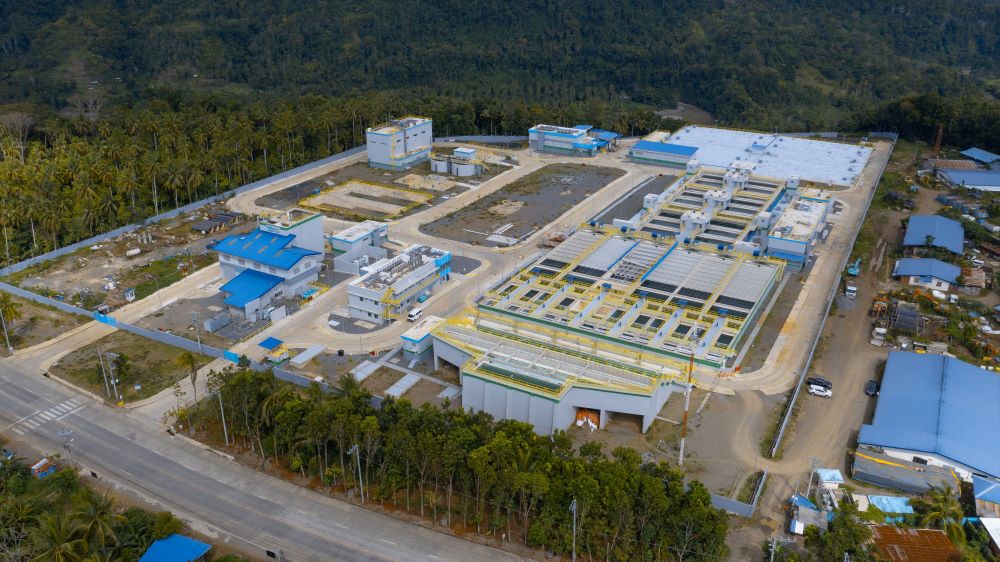
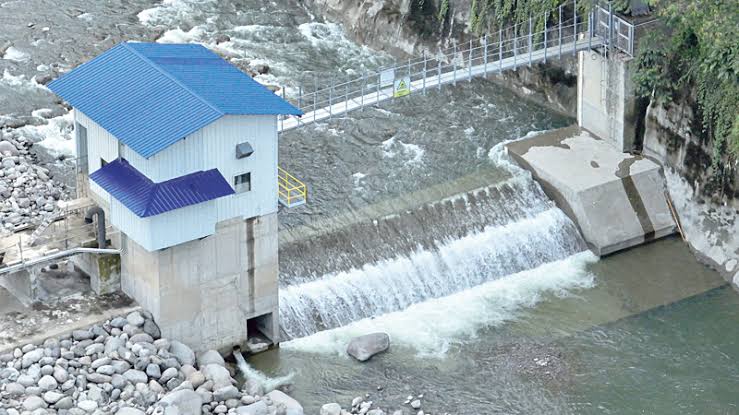
The system draws from the Panigan–Tamugan River and has a treatment capacity of 300 million liters per day. Commercial operations began in December 2023, followed by its official inauguration in February 2024. It represented a strategic shift away from the city’s previous heavy dependence on groundwater toward a system that could draw much of its supply from treated surface water.
The importance of that investment becomes clearer in the context of the approaching drought.
According to the DCWD, the city’s combined water-production capacity stands at 728 million liters per day. Current demand was reported at approximately 376 million liters daily in January 2026, while the utility said in May that demand was using about 52 percent of available production capacity. The remaining capacity provides a substantial operational buffer for additional connections and potential supply disruptions.
These figures matter, but they must be interpreted correctly. The reported 48 percent surplus is a difference between production capacity and present demand, not a guarantee that 48 percent of the city’s water will remain available during a severe drought. Actual resilience depends on how much raw water remains in the river, how much groundwater can safely be recovered, the condition of treatment and distribution facilities, energy availability, and the rate at which consumption and service connections grow.
Nevertheless, Davao has something many vulnerable communities would welcome: a substantial supply buffer and more than one source of water.
DCWD has also reported that approximately 80 percent of its deep-well sources are on standby while surface water supplies much of the system’s needs. That arrangement provides a potential contingency option if river supply declines, although the volume that can be safely and reliably recovered during an extended drought must not be assumed without updated technical assessments.
The strategic lesson is straightforward. A city that develops alternative sources before an emergency has more options than one that must search for water only after its principal source begins to fail.
The real difference: preparing the system, not just the household
The contrast between Davao and the national government’s recently publicized bucket-filtration initiative is striking.
In October, President Ferdinand Marcos Jr. urged Filipinos to conserve water and collect rainwater as part of preparations for El Niño. The Department of Social Welfare and Development subsequently announced plans to deploy portable water-filtration kits that can be attached to ordinary buckets, allowing households to treat collected water for drinking.
There is nothing inherently wrong with these kits. Portable filters can be useful during disasters when households must rely on alternative water sources, provided the equipment is appropriate for the contaminants involved and used correctly. Emergency water treatment can protect lives, particularly where regular water services have been interrupted.
But a filter and a water supply system solve fundamentally different problems.
A filter can improve the quality of water that passes through it. It cannot create water where none is available. Nor can a household-sized device replace the daily volume required by a densely populated city, sustain a hospital network, support industrial operations or irrigate thousands of hectares of farmland.
That distinction should be at the center of the national conversation.
A bucket filter belongs in the emergency-response toolbox. It should not become the defining symbol of a country’s drought-preparedness strategy.
The criticism, therefore, is not that the government is distributing a useful emergency tool. It is that the public deserves a much larger and more transparent account of the measures being taken to secure water at its source, maintain reservoirs and aquifers, reduce distribution losses, provide alternative supplies and protect vulnerable communities.
The timing also deserves scrutiny. PAGASA’s September warning had already indicated that a very strong El Niño could persist into the first half of 2027. The national administration’s highly visible emphasis on buckets and household filtration followed in mid-October.
That sequence does not, by itself, prove that the government did nothing earlier. National agencies may have ongoing contingency plans, regional interventions and infrastructure programs. But if those measures exist, the government should explain them clearly, publish their implementation status and demonstrate how they will meet the needs of communities facing prolonged shortages.
Preparedness should be measured by what the country has put in place before the crisis, not merely by what officials announce when the danger becomes politically visible.
Davao versus the national picture: a lesson in the value of foresight
Comparing Davao City with the rest of the Philippines requires more than declaring one winner. Water systems differ in their sources, population sizes, geography, rainfall patterns, infrastructure and operating constraints. A city supplied by a major reservoir faces different risks from a municipality dependent on shallow wells or small springs.
Even so, Davao illustrates several principles that national policy should be applying more consistently.
First, diversify water sources. Davao’s bulk-water system supplements groundwater with a major treated surface-water source. Other cities and municipalities need locally appropriate combinations of reservoirs, protected watersheds, groundwater, rainwater harvesting, reuse and interconnections where feasible.
Second, protect sources before shortages occur. Treatment plants cannot compensate for a river whose flow falls below operational requirements, just as wells cannot provide unlimited water without consequences. Watershed protection, pollution control, regulation of competing extraction and continuous monitoring must be treated as core water infrastructure—not optional environmental activities.
Third, build reserve capacity. Spare production capacity can absorb demand growth and provide flexibility during disruptions. But reserve capacity is useful only when the raw water, treatment facilities, distribution network and power supply can support it. National planning should therefore measure not only installed capacity, but also drought-period yields, dependable supply, system losses and actual household access.
Fourth, make conservation structural. Public appeals to turn off taps are important, but they cannot substitute for regulations, efficient plumbing, rainwater harvesting, reuse of suitable non-potable water and incentives that reduce unnecessary demand.
These are not exclusively Davao solutions. They are principles that should inform a nationwide strategy adapted to local conditions.
Metro Manila, for example, has historically depended heavily on the Angat system for its water supply. A decline in dependable reservoir inflows can put pressure on a vast urban population, making source diversification, demand management and contingency planning particularly important. The solution is not to copy Davao’s infrastructure mechanically, but to ensure that every major urban center has a credible plan for operating through a prolonged reduction in water availability.
The same urgency applies to smaller communities, where households may have fewer alternatives, utilities may have limited financial resources and farmers may depend on rainfall or vulnerable irrigation systems. National policy should prioritize these communities according to exposure, poverty, water insecurity and the practical availability of alternatives.
Davao’s advantage is meaningful precisely because it demonstrates what advance investment can achieve. It should become a benchmark for examining the gaps elsewhere, not an excuse to assume that every other locality has the same resources or circumstances.
Water security begins with protecting the watershed
Davao’s investment in bulk-water infrastructure is only one part of the story. Its long-term value depends on the health of the Panigan–Tamugan watershed that supplies it.
A modern treatment facility cannot manufacture river flow. If drought reduces inflows, degradation damages the catchment or competing uses place additional pressure on available water, the system’s installed capacity may no longer reflect the amount of water it can reliably deliver.
This is where environmental governance becomes inseparable from disaster preparedness.
Davao’s Rainwater Ordinance, City Ordinance No. 0298-09, adopted in 2009, established a framework for the harvesting, storage and utilization of rainwater. Its implementing rules were intended to incorporate rainwater catchment systems into development and construction requirements. The city also has a strong policy interest in protecting the Panigan–Tamugan watershed, which serves as the source of its bulk-water supply.
Such measures reflect a principle that should be central to every local government: water security begins long before water reaches a household tap.
However, the existence of an ordinance does not automatically prove full compliance, adequate storage or measurable water savings. The city should publish current information on how many buildings comply, how much rainwater is captured, how watershed conditions are changing and whether illegal extraction or land-use violations threaten the supply.
Rainwater harvesting also has limitations during prolonged drought. Its contribution depends on rainfall, catchment area, storage capacity and demand. A tank that fills during a wet month may provide a useful reserve, but it cannot sustain indefinite consumption if the dry period continues.
The most effective strategy combines source protection, diversified supply, responsible groundwater management, demand reduction and carefully planned emergency reserves.
This is the deeper lesson of Davao’s experience: infrastructure and environmental protection are not competing priorities. They are interdependent parts of the same water-security system.
The uncomfortable national question: Where was the long-term plan?
The criticism of national preparedness becomes sharper when placed against the scale of the damage already being reported.
As of early October, the National Disaster Risk Reduction and Management Council reported that 106 cities and municipalities had declared a state of calamity because of El Niño. More than 104,000 families, or approximately 388,000 people, had been affected, while agricultural damage and production losses were estimated at ₱5.56 billion in the reported update. The figures illustrate that this is no longer merely a future threat. The country is already dealing with its consequences.
This is where the national government’s response deserves the hardest scrutiny.
If the government has known for months that El Niño could intensify, were vulnerable water systems stress-tested before the dry period? Were water districts required to publish contingency plans? Were groundwater reserves assessed, irrigation schedules adjusted and emergency supplies positioned before communities began experiencing shortages? Were farmers given timely assistance to shift planting schedules or protect crops? Were local governments provided with funds to repair water systems, develop alternative sources and prepare for prolonged disruptions?
These questions are more important than the optics of any single press briefing.
The government has a legitimate responsibility to respond to emergencies with whatever practical tools are available. But the distribution of household filters and the collection of rainwater should complement—not replace—investment in resilient water infrastructure, watershed protection, irrigation, storage and agricultural adaptation.
It is also necessary to distinguish between the timing of a public announcement and the timing of government action. A late announcement does not prove that all preparations were late. The administration should be judged against published budgets, procurement records, project completion rates, measurable outcomes and the actual delivery of assistance.
That is precisely why a transparent national preparedness scorecard is needed now.
The bucket is not the problem. The absence of a bigger answer is.
The controversy surrounding the President’s advice to collect rainwater in buckets has become a convenient political symbol. But focusing exclusively on the remark risks missing the more consequential issue.
Buckets are not inherently foolish. Rainwater harvesting can be useful, and portable filters can make some alternative water sources safer for drinking. Households need practical advice they can act on immediately.
The failure would be to mistake those household measures for a comprehensive drought strategy.
Rainwater collection depends on rainfall. During a prolonged dry spell, a household may exhaust its stored supply long before the weather improves. A filter cannot replenish an aquifer, restore a depleted reservoir or maintain irrigation deliveries. Nor can a family reasonably be expected to compensate for a failing public water system indefinitely by manually collecting, storing and treating water.
There are also public-health considerations. Stored water must be kept in clean, covered containers, and filtration systems must be used according to their specifications. Not every filter removes every chemical contaminant, dissolved substance or pathogen. Safe drinking water requires appropriate source selection, treatment and handling.
The national government should therefore explain the role of its filtration program in a wider system of emergency water delivery, testing, storage and distribution. Which communities will receive the kits? How many households will be covered? Where will they obtain water when rainfall is insufficient? What arrangements exist for replenishment, maintenance and technical guidance?
Without answers to these questions, even a useful intervention risks becoming a highly visible but narrowly effective response to a much larger problem.
The public needs more than demonstrations showing that dirty water can be filtered. It needs assurance that safe water will remain available in sufficient quantities.
Davao is ahead, but it is not invulnerable
It would be a mistake, however, to turn Davao’s advantage into an exaggerated claim that the city has defeated El Niño.
The Panigan–Tamugan River remains vulnerable to declining rainfall and reduced flows. The city’s growing population and expanding service connections will increase demand. The 728-million-liter daily production capacity reported by DCWD is not proof that the same volume can be sustained under every drought scenario.
Nor does placing deep wells on standby guarantee that every aquifer will be fully recharged or that every well can be operated indefinitely without environmental consequences.
The city must demonstrate that its contingency sources are dependable under prolonged dry conditions. It must also ensure that its distribution network reaches communities that have historically experienced unreliable service. Aggregate production figures can conceal unequal access, localized interruptions, low pressure and the financial burden of alternative water supplies on poorer households.
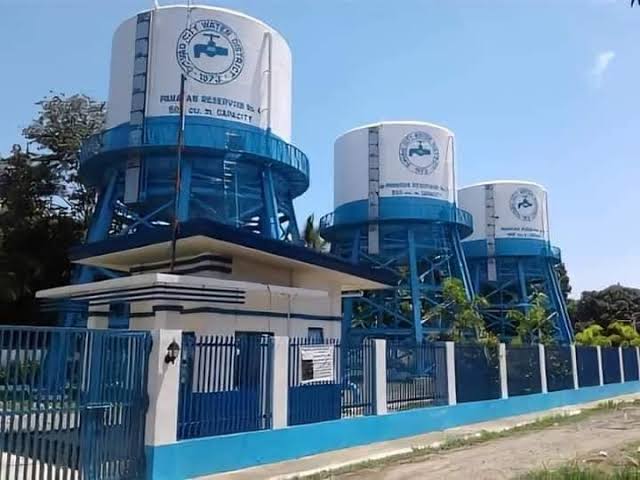
The experience of Panacan illustrates why this matters. Residents in parts of the area had endured decades of unreliable water access before the bulk-water project improved service. The project demonstrates the potential benefits of infrastructure, but it also reminds us that major investments must translate into equitable and dependable delivery at the household level.
Davao must now answer a new question: Can it preserve its advantage when the climate puts its water sources under sustained pressure?
That requires continuous monitoring of river flows and aquifer levels, clear thresholds for activating standby wells, regular reporting of production and demand, protection of the watershed, and a credible system for prioritizing hospitals, schools, low-income communities and other essential users during a serious disruption.
It also requires addressing agriculture separately. A city may have enough treated water for its current urban demand while farmers in surrounding areas face crop stress, inadequate irrigation or reduced income. Municipal water security and regional food security are connected, but one does not automatically guarantee the other.
The city has a head start. Its responsibility is to turn that head start into measurable resilience.
What the national government should do now
The country cannot build a Davao-scale bulk-water project everywhere before the next dry spell. Different localities require different solutions, and major infrastructure takes years to plan, finance and construct. But that is an argument for acting earlier—not for settling for emergency measures when a forecast crisis is approaching.
Five actions should become immediate priorities.
First, publish a national water-security assessment. Every water district and local government should identify its principal sources, dependable supply during drought, current demand, system losses, groundwater condition and emergency alternatives. The public should know which communities are at greatest risk and what measures are being implemented.
Second, direct resources toward the most vulnerable areas. The 106 localities already under a state of calamity should receive targeted support based on the severity of their water and agricultural needs. Emergency water deliveries, repairs to existing systems, temporary storage, safe treatment facilities and alternative sources should be deployed where they are needed—not distributed according to political visibility.
Third, accelerate durable infrastructure. Government agencies should disclose which water projects can be completed before the peak of the forecast event, which will take longer and what interim measures will bridge the gap. Small-scale reservoirs, rainwater systems, groundwater rehabilitation, leakage reduction and appropriate reuse facilities can complement larger projects. The right mix must be based on local hydrology and actual demand.
Fourth, protect farmers and food supplies. Water allocation, irrigation scheduling, drought-resistant crops where appropriate, crop insurance and timely financial assistance should be coordinated before losses become irreversible. Food-security measures must be evaluated by their actual ability to prevent production losses and protect farmers’ livelihoods, not simply by the amount of money announced.
Fifth, establish public accountability. The government should regularly report the number of communities with adequate emergency supplies, the operational status of critical water infrastructure, the volume of water available, agricultural losses, assistance delivered and unresolved gaps. Announcements should be matched with verifiable results.
These measures would shift the national response from a collection of isolated interventions toward a coordinated climate-resilience program.
The lesson is political as much as technical
Davao’s water-security experience offers a powerful lesson because it demonstrates what sustained investment can accomplish before a crisis reaches its peak.
The bulk-water project was planned and developed over several years. Its significance lies not only in its treatment capacity, but in its contribution to source diversification, reduced dependence on groundwater and improved service for communities previously affected by unreliable supply. Its integrated water-and-energy design also shows how infrastructure can address connected vulnerabilities rather than treating each problem in isolation.
President Ferdinand Marcos Jr. himself recognized the project’s strategic importance when he inaugurated it in February 2024, describing the need to reduce reliance on groundwater and improve water security through foresight and investment.
That makes the present national challenge especially difficult to dismiss as unforeseeable.
The country has seen the consequences of water shortages during previous El Niño events. It has experienced agricultural losses, interruptions in supply and the hardship imposed on households forced to secure water through expensive or unreliable alternatives. The current forecast provides another opportunity to reduce those risks.
Yet preparedness cannot be measured by the number of press conferences, public reminders or emergency kits distributed. It must be measured by how many people retain access to safe water, how much agricultural production is protected, how well critical services continue operating and how quickly vulnerable communities recover.
The question is not whether the government should distribute filters or encourage rainwater collection. It should do both where appropriate.
The question is whether these measures are part of a sufficiently ambitious plan—or whether the country is once again asking households to shoulder the burden of a crisis that public institutions had the opportunity to prepare for.
From survival to resilience
Super El Niño should force the Philippines to reconsider how it defines disaster preparedness.
A bucket can be a lifeline when a family has no other immediate option. A portable filter can make a difference when safe water is otherwise unavailable. But neither should be the ultimate ambition of a government confronting a potentially prolonged climate emergency.
The ambition must be a country where water districts have dependable alternative sources, watersheds are protected, farmers have reliable drought plans, emergency systems are funded before shortages occur and local governments can show the public exactly how they intend to keep essential services operating.
Davao City is not a perfect model, nor can its circumstances be replicated everywhere. But its investment in bulk water, groundwater management and rainwater policy offers a compelling benchmark against which national preparedness can be examined.
The city has bought itself options through years of investment. Other communities deserve the same seriousness of planning, even if their solutions must be smaller, less expensive or designed around entirely different sources.
The national government still has time to strengthen its response, but that time is not unlimited. The forecast window extends into 2027, while water infrastructure, agricultural recovery and watershed rehabilitation require sustained effort.
If the government waits until reservoirs are critically low, wells fail, crops wither and households queue for emergency deliveries, the cost of inaction will be borne most heavily by people least able to afford it.
A bucket may help a family survive a shortage. A resilient water system helps prevent that shortage from becoming a catastrophe.
That is the difference between emergency assistance and preparedness, between reacting to a crisis and governing ahead of it.
And as Super El Niño approaches, the Philippines must decide which standard it is prepared to meet.