
MATI CITY — On a Mother’s Day by the Sea, Ola Fernandez Carries Both Life and Loss, and Still Chooses Hope
At dawn, when most of Mati City is still wrapped in sleep, Dahican Beach breathes first.
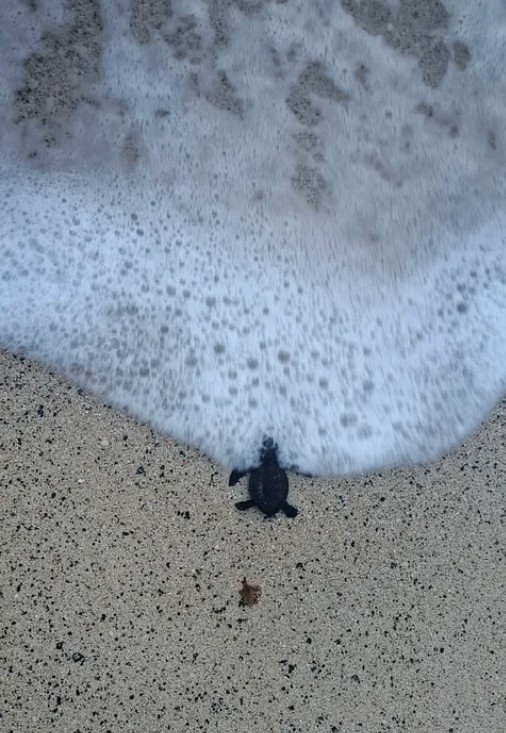

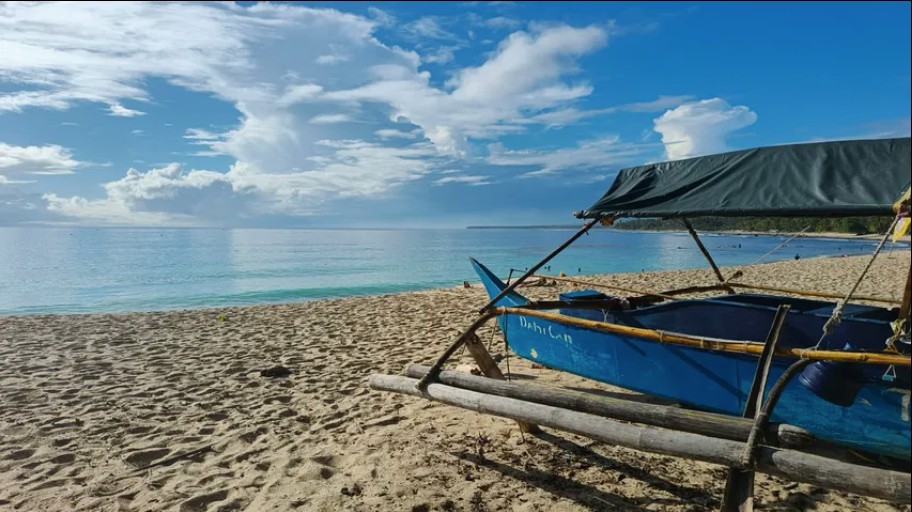
The waves of Dahican Beach roll in steady rhythms, brushing the shore as if repeating a prayer the coast has long memorized. For decades, this stretch of sand has been known for surfboards, skimboards, and the quiet return of sea turtles. But for women like Ola Fernandez, it has also become something more personal: a place where motherhood, survival, and sacrifice quietly meet.
This Mother’s Day, her story reads less like celebration and more like endurance.
Ola Fernandez is 50 years old—mother of three, a breast cancer survivor, a surf instructor, and one of the quiet guardians of Dahican’s fragile marine life. But titles do little to explain her days. She wakes not to rest, but to responsibility: to her children, to her community, and to the turtles that return to nest along the same shore she now calls both workplace and witness stand.
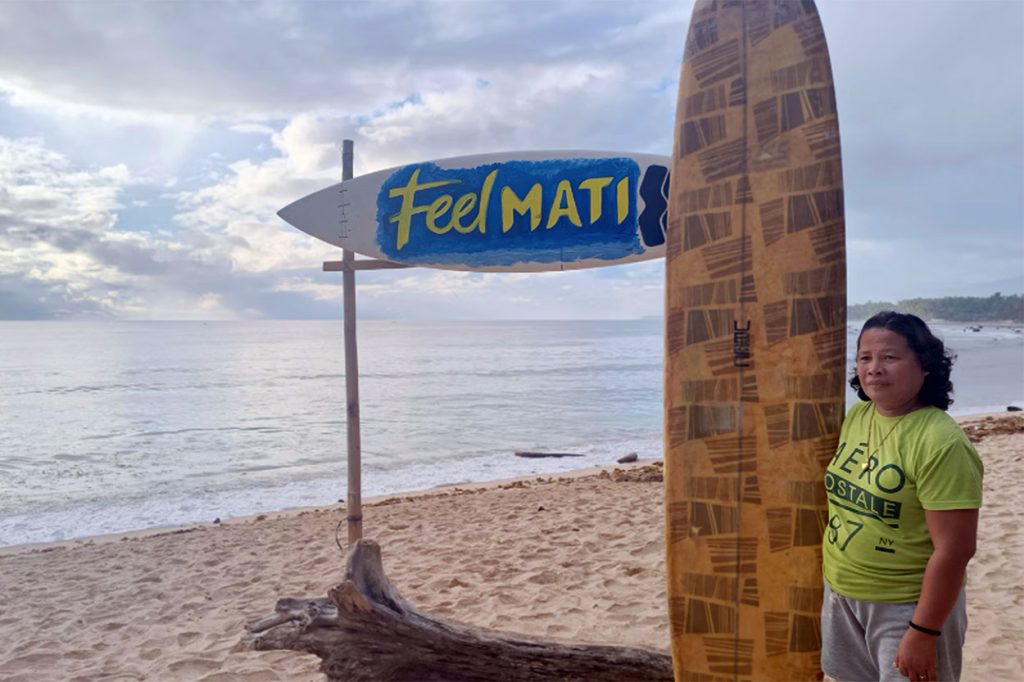
“Daghan na ang nangundang,” she says softly about fishing in their community. Many have stopped.
The sea that once fed families in Dahican no longer gives as it once did. Out of roughly 18,756 residents, thousands still depend on fishing, but catches have grown smaller, more uncertain. Provincial data from the Philippine Statistics Authority show a steady decline in fisheries production in Davao Oriental in recent years—numbers that, on paper, confirm what coastal families already feel in their stomachs.
The water has changed. So has life.
For Ola, survival is no longer tied to fishing alone. It is stitched together through small, shifting sources: surf lessons on good days, renting out mats and chairs to tourists, and the fragile income of a coastline that now depends on weather, fuel prices, and the mood of the heat.
Some days, she earns around ₱500 teaching visitors how to ride the waves. Other days, there are no visitors at all.
Even paradise, she has learned, has its silence.
Yet behind the struggle is a second life she helps protect.
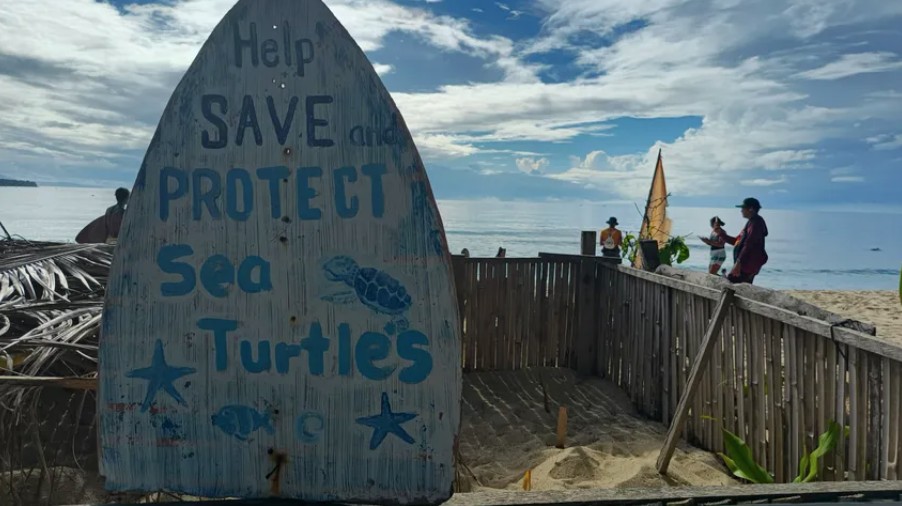
Dahican—named from “dahik,” referring to turtle nesting grounds—has become a sanctuary for marine turtles. Volunteers from groups like Amihan sa Dahican – Balod sa Paglaum, Inc. estimate that tens of thousands of eggs are laid along its shore each year. But only a fraction survive.
Every night during nesting season, Ola and other women walk the beach—not as tourists, but as watchers of life itself. They guard hatcheries, document nests, and remind strangers to leave nothing behind but footprints.
“Leave no trash,” they say. Not as policy, but as plea.
Their work is supported by partners such as Davao Oriental State University, coastal resource management groups, and environmental organizations like Interfacing Development Interventions for Sustainability (IDIS). But much of the burden remains local—carried by women who return home after patrols to cook, care, and continue life as if nothing extraordinary had happened.
Ola knows that rhythm well. She has lived through illness that nearly took her, raised children largely on her own, and watched the coastline change faster than she could explain it. When she speaks of survival, it is not metaphor. It is memory.
Her voice softens when she talks about the past—about fishing days when the sea was generous, and about the rice subsidy her group once received that helped them sustain conservation work. That support is gone now. Assistance comes in waves: sometimes present, sometimes absent, never certain.
Still, she returns to the shore.
Because for Ola, motherhood is not only what she gives her children. It is what she extends to everything fragile enough to need protection—turtles, community, even hope itself.
On quiet nights, she watches hatchlings struggle toward the water, small bodies moving toward an uncertain ocean. Most will not survive. She knows this. But she also knows that survival was never about certainty.
It was always about possibility.
“As long as there is one percent,” she says, looking out where sea meets sky, “we still have hope.”
And in Dahican, where waves keep arriving no matter what the tide has taken, that hope sounds a lot like a mother who refuses to stop showing up.