
CAGAYAN DE ORO CITY — While Typhoon “Domeng” (international name: Jangmi) continues to move over the waters east northeast of Batanes, state weather forecasters warned that localized thunderstorms will continue to affect large parts of Mindanao over the next 24 hours, bringing possible flash floods and landslides in vulnerable areas.
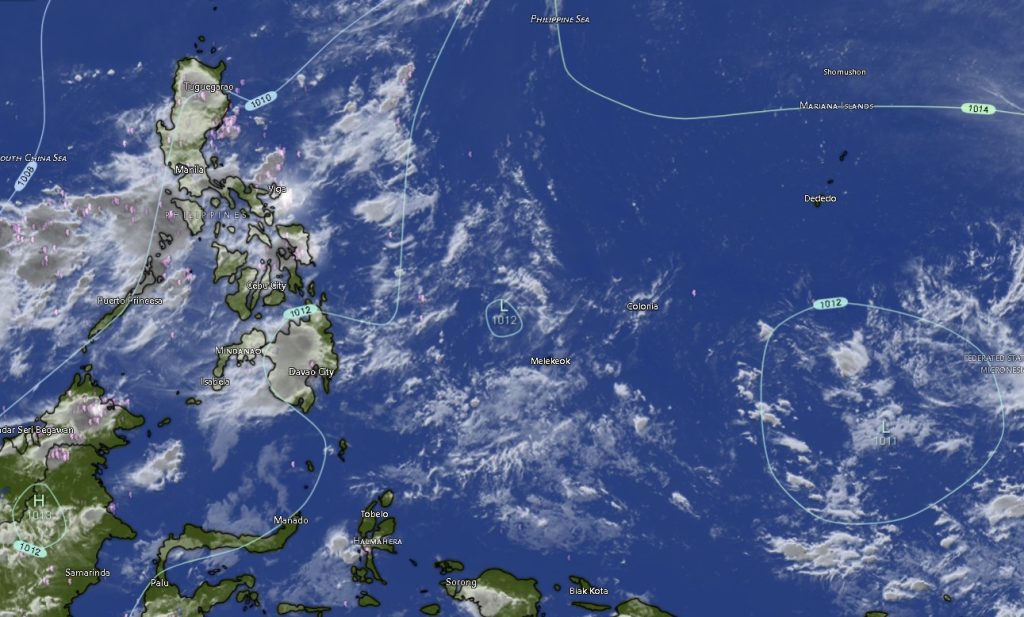
In its 5:00 a.m. regional weather forecast issued Tuesday, June 2, the Philippine Atmospheric, Geophysical and Astronomical Services Administration (PAGASA) Mindanao Regional Services Division (MINPRSD) said the typhoon was last spotted about 650 kilometers east northeast of Itbayat, Batanes.
Domeng was packing maximum sustained winds of 130 kilometers per hour near the center and gusts reaching up to 160 kilometers per hour while moving north northwestward at 15 kilometers per hour.
Although the typhoon remains far from Mindanao and is not directly affecting the island, PAGASA said localized thunderstorms triggered by warm and humid weather conditions will continue to bring partly cloudy to cloudy skies with isolated rain showers and thunderstorms across the region.
Forecasters warned residents to remain alert for sudden heavy downpours that may trigger flash floods and landslides, particularly in low-lying communities, mountainous areas, and locations with saturated soil conditions.
“Mindanao will have partly cloudy to cloudy skies with isolated rainshowers or thunderstorms due to localized thunderstorms,” PAGASA said in its advisory.
The weather bureau added that winds across Mindanao will generally remain light to moderate coming from the south to southwest, while coastal waters will stay slight to moderate with wave heights ranging from 0.6 to 2.1 meters.
Zamboanga Peninsula
In the Zamboanga Peninsula, including Zamboanga City, Zamboanga del Norte, Zamboanga del Sur, Zamboanga Sibugay, and Isabela City, residents can expect intermittent cloudy skies with scattered rain showers or thunderstorms throughout the day and evening.
Temperature levels in the region are forecast to range between 24°C and 34°C, with Zamboanga City expected to experience the highest daytime temperature.
Northern Mindanao
The provinces of Bukidnon, Camiguin, Lanao del Norte, Misamis Occidental, and Misamis Oriental will also experience similar weather conditions, with isolated thunderstorms likely during the afternoon and evening hours.
Bukidnon is expected to record some of the coolest temperatures in Mindanao, ranging from 21°C to 31°C, while coastal provinces may experience warmer and more humid conditions.
Davao Region
Metro Davao and the provinces of Davao del Norte, Davao del Sur, Davao Oriental, Davao de Oro, and Davao Occidental will continue to experience unstable weather conditions with chances of isolated rain showers and thunderstorms.
PAGASA said temperatures in the Davao Region may range from 23°C to 34°C, with hot and humid conditions likely before thunderstorms develop later in the day.
SOCCSKSARGEN and BARMM
In SOCCSKSARGEN, including North Cotabato, South Cotabato, Sultan Kudarat, and Sarangani, cloudy periods accompanied by rain showers and thunderstorms are also expected.
The Bangsamoro Autonomous Region in Muslim Mindanao (BARMM), including Cotabato City, Basilan, Lanao del Sur, Sulu, Tawi-Tawi, Maguindanao del Norte, and Maguindanao del Sur, will likewise experience similar weather disturbances caused by localized thunderstorms.
Caraga Region
The Caraga Region, particularly Agusan del Norte, Agusan del Sur, Surigao del Norte, Surigao del Sur, and Dinagat Islands, may continue to experience hot daytime weather followed by afternoon or evening thunderstorms.
Surigao del Sur and Agusan del Norte are expected to register some of the highest temperatures in the region, reaching up to 35°C.
PAGASA advised the public, especially fisherfolk and small sea vessels, to continue monitoring weather advisories despite generally moderate sea conditions.
Residents are also encouraged to take precautionary measures during thunderstorms, including avoiding flood-prone areas and remaining vigilant for lightning, strong winds, and sudden heavy rainfall.
For updates and emergency weather bulletins, the public may visit the official PAGASA website or contact the agency through its hotline numbers.