
The projected rainfall deficits and above-normal temperatures from October 2026 to March 2027 should be treated as an urgent warning. Governments, communities, farmers, water utilities, and disaster managers must begin preparing before a potential drought becomes a full-blown livelihood and public health crisis.
Mindanao must not wait until its rivers begin to shrink, farm fields turn brown, water supplies become unreliable, and farmers start counting their losses before taking the threat of El Niño seriously.
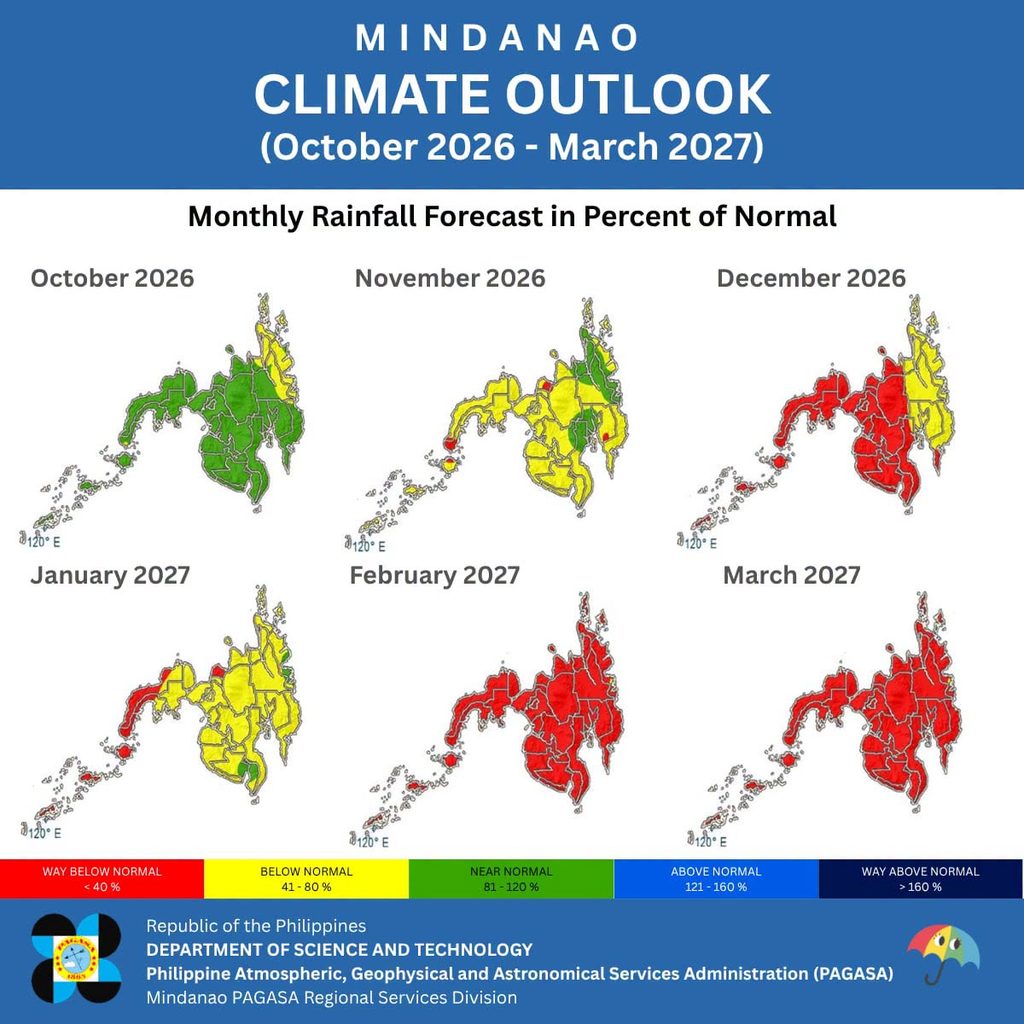
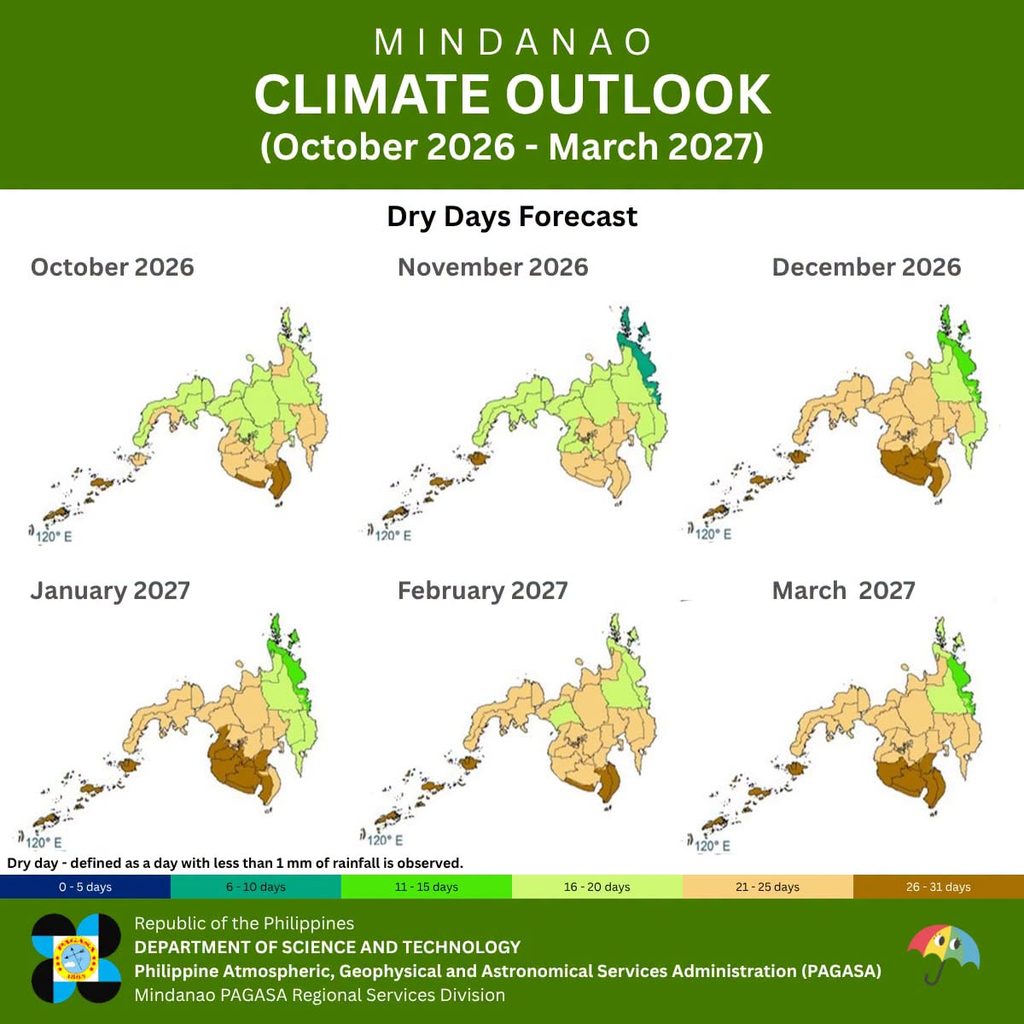
The climate outlook for October 2026 to March 2027 presents a warning that deserves immediate attention. Across much of Mindanao, below-normal rainfall is expected to persist toward the end of 2026, with more severe rainfall deficits projected from January to March 2027. Dry days may become more frequent, temperatures are expected to be warmer than usual in many areas, and meteorological drought could develop in several parts of the island by March.
These are not merely numbers on a climate bulletin. They are potential warnings of disrupted planting schedules, declining agricultural production, mounting irrigation demands, increased pressure on water sources, livestock losses, higher household expenses, and greater exposure to dangerous heat.
The danger is not that every part of Mindanao will experience the same conditions or that every forecast impact is inevitable. The danger is that the region may be approaching a period of prolonged water stress without having done enough to prepare.
If the warning is clear now, why should the response come only when the damage is already visible?
Mindanao’s leaders and institutions must treat the coming months as a preparation window, not a period for complacency. Every week between now and the projected dry months matters.
The Warning Is Already on the Table
The climate outlook points to a potentially difficult progression.
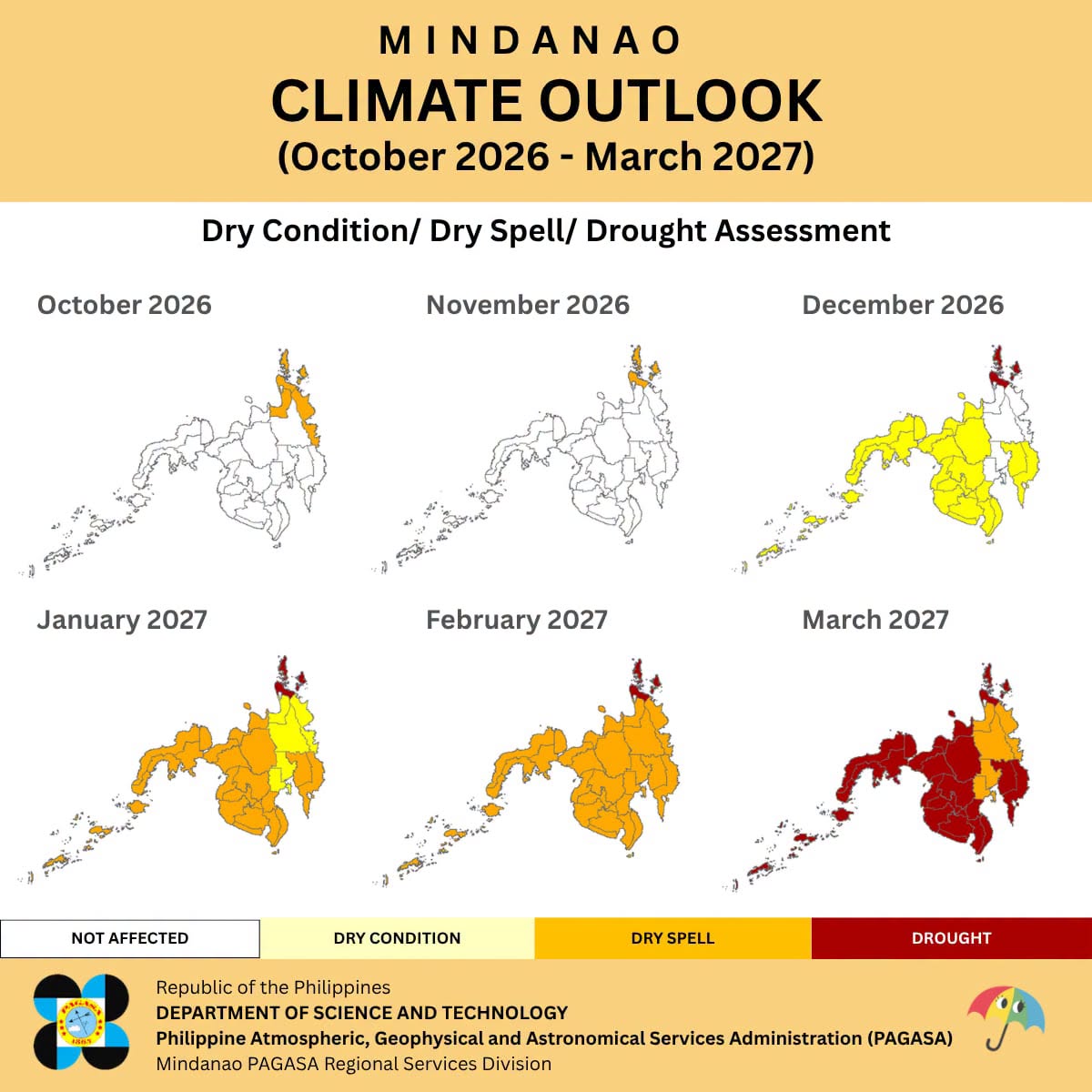
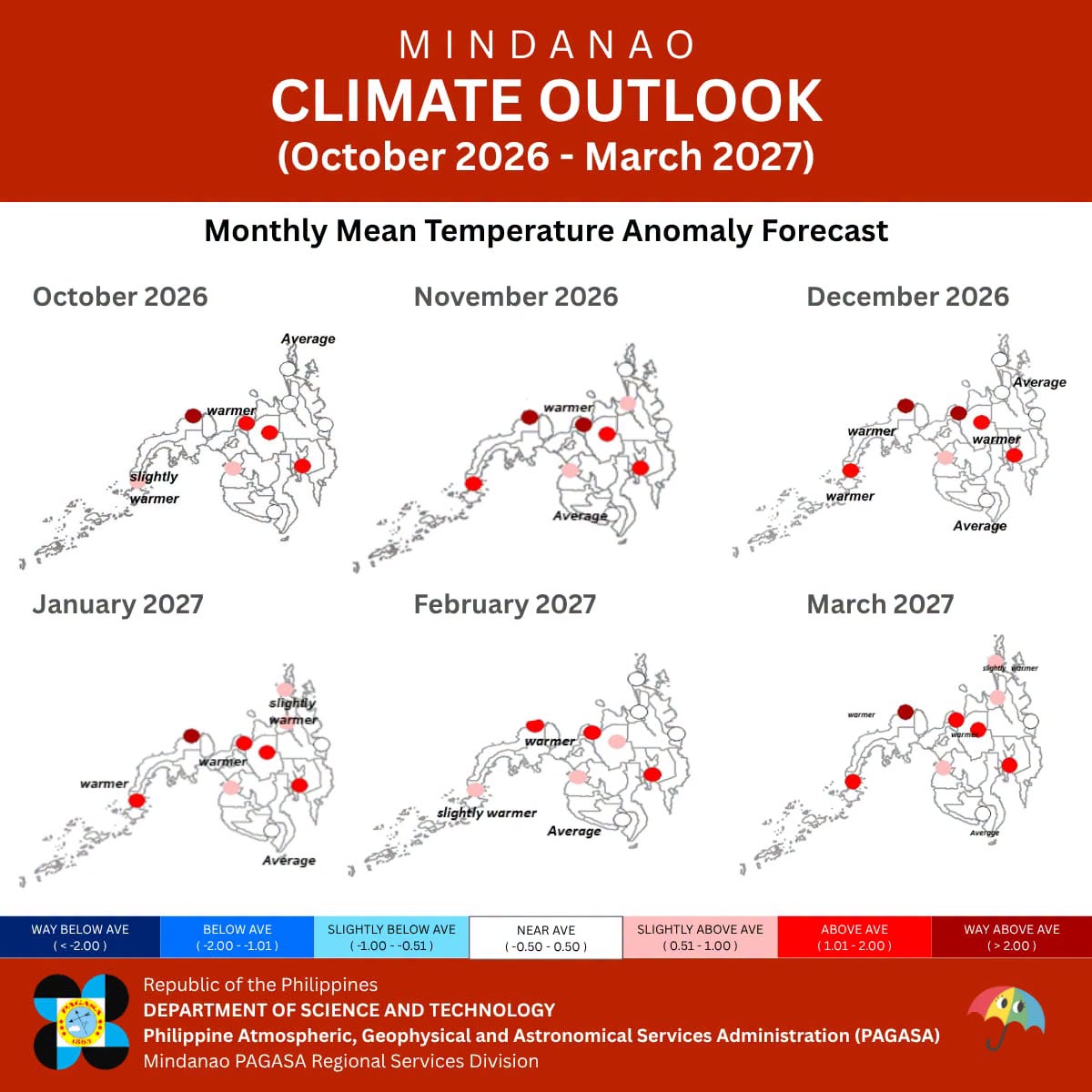
From October to December 2026, many areas of Mindanao are expected to receive below-normal rainfall. From January to March 2027, rainfall deficiencies are projected to become more pronounced and widespread. In this outlook, way below-normal rainfall means receiving 40% or less of the usual rainfall for a particular month.
The outlook also indicates a possible increase in dry days, defined as days receiving less than one millimeter of rain. Dry conditions and dry spells may become more widespread from December onward, while meteorological drought is projected in several areas by March.
At the same time, temperatures are expected to be slightly warmer to warmer than usual across most areas of Mindanao during the outlook period.
This combination is particularly concerning. Less rainfall means less opportunity to replenish rivers, reservoirs, farm ponds, and other water sources. Higher temperatures can accelerate evaporation and increase the amount of water needed by crops, animals, and people. When these conditions persist, the pressure on already vulnerable communities can intensify.
However, an important distinction must be made: meteorological drought measures a deficiency in rainfall. It does not automatically establish how much water remains in a particular reservoir, how dry a farm’s soil has become, or how much groundwater is available. Those conditions must be monitored separately.
That distinction should not weaken the warning. It should tell authorities precisely what they need to measure next.
The Philippine Atmospheric, Geophysical and Astronomical Services Administration (DOST-PAGASA) remains the primary national source for official climate outlooks and updates. Its seasonal outlook should guide preparations, while local rainfall records, streamflow measurements, reservoir levels, groundwater monitoring, agricultural assessments, and water-utility data should determine the interventions needed in each locality.
A forecast identifies a risk. Good governance turns that information into action.
Why “Super El Niño” Should Not Be Dismissed as Just Another Weather Event
The warning is no longer limited to a general possibility of El Niño developing.
In its September 23, 2026, climate advisory, PAGASA warned of an intensifying “very strong” El Niño expected to persist into the first half of 2027. Its October 7 advisory further confirms that the agency is continuing to monitor the event. Read PAGASA’s El Niño advisories.
The World Meteorological Organization (WMO), in a September 3, 2026, update, likewise warned that El Niño was expected to intensify into a very strong event, with substantial implications for global rainfall and temperature patterns and associated risks of drought, flooding, and extreme heat. The WMO reported a near-100% likelihood that the event would persist through February 2027. Read the WMO announcement.
The term Super El Niño is commonly used in public discussion to describe an exceptionally strong El Niño, but it is important to distinguish that expression from the terminology used in official advisories. For Mindanao’s preparedness, the most useful evidence is the actual forecast: the expected strength and duration of the event, the projected rainfall deficits, the temperature outlook, and the likely effects on local water and food systems.
The WMO’s assessment reinforces the need to act before the worst impacts emerge. Its warning is global, however, and does not mean every region will experience identical consequences. Mindanao must base its preparations on PAGASA’s Philippine and regional forecasts, together with local observations.
The Food and Agriculture Organization of the United Nations (FAO) offers another important perspective: El Niño can threaten food production and rural livelihoods, while climate change is raising the baseline temperature against which these events unfold. Early intervention can help protect agricultural assets and reduce the likelihood that a climate hazard develops into a broader food crisis. Read FAO’s El Niño resource.
This is why the coming months demand more than public reminders to conserve water. They require coordinated decisions, funded preparedness plans, and measurable action.
The First Battle Will Be Over Water
Water is the foundation of nearly every other concern associated with prolonged dry conditions. Without a reliable supply, households struggle to meet basic needs, farmers cannot maintain crops, livestock raisers face higher costs, and businesses must compete for a resource essential to their operations.
Yet the effects of rainfall deficits will not be uniform across Mindanao. A community dependent on a shallow well faces a different risk from a city served by a large water system. A rain-fed farm is not in the same position as an irrigated rice field. An upland barangay with limited storage may experience shortages earlier than a locality connected to a more reliable source.
Authorities must therefore stop treating Mindanao as if it were one homogeneous climate zone.
Provincial governments, cities, municipalities, water districts, irrigation managers, and barangays should immediately assess their respective water sources. They must determine which communities depend on rainfall-sensitive sources, which reservoirs and impounding facilities have limited reserves, which wells are vulnerable to declining groundwater levels, and which households have no practical alternative when their usual supply fails.
That assessment must result in a publicly accessible water-security plan.
The plan should identify critical water sources, establish monitoring schedules, set clear thresholds for escalating conservation measures, and specify what happens when supplies fall below safe operating levels. It should also identify communities that may require emergency water delivery, temporary storage facilities, or alternative sources.
Water utilities should assess the reliability of their distribution systems, inspect pumps and equipment, address preventable leakage, and prepare for increased demand. Local governments should inspect communal wells, rainwater storage facilities, and water points serving remote and underserved communities.
Rainwater harvesting should also be expanded wherever it is technically suitable. Schools, public markets, government buildings, health facilities, and households can collect rainfall for appropriate non-potable uses, provided storage systems are safely designed and maintained. In communities with suitable rainfall and catchment conditions, larger storage systems can help bridge periods of low rainfall.
But rainwater harvesting alone will not solve a prolonged drought. Storage must be sized realistically, sources must be protected, and collected water must be used safely.
Authorities should also establish clear priorities for emergency water distribution. Drinking water, sanitation, health facilities, and essential household needs must be protected. Agricultural and commercial demands should be managed transparently, without shifting the burden disproportionately onto poor households and small producers.
And there must be no confusion about responsibility. If a locality already knows that its water supply is vulnerable, waiting for residents to queue for water before preparing an alternative is not a climate strategy. It is a failure of anticipation.
Food Security Begins Before the Harvest Fails
The next major concern is food.
When rainfall declines during critical stages of crop development, farmers may face reduced yields, delayed planting, higher irrigation expenses, or complete crop failure in particularly vulnerable fields. Warmer conditions can increase crop water requirements and intensify heat stress. The precise impact will depend on the crop, soil, planting calendar, irrigation access, and actual weather experienced.
Rice, corn, vegetables, fruit trees, and other crops will not respond identically. The same is true of different agricultural areas across Mindanao.
This is precisely why agricultural planning must begin now.
The Department of Agriculture (DA), its regional field offices, local agriculture offices, irrigation agencies, and farmers’ organizations should jointly map areas where rainfall deficits could create the greatest losses. Those assessments should incorporate crop calendars, irrigation availability, soil conditions, historical drought impacts, and the number of farmers whose livelihoods depend on rain-fed production.
Farmers need timely, location-specific advice on whether to adjust planting dates, choose shorter-duration or drought-tolerant varieties, diversify crops, or avoid planting in fields where water supplies cannot support the expected crop cycle. These decisions must be based on agronomic guidance and local forecasts, not on a blanket instruction that every farmer should plant earlier or switch to a particular crop.
The DA has already outlined a coordinated, data-informed preparedness approach for the potential El Niño, including assessing irrigation systems and identifying areas that could be affected by reduced water availability. Read the DA announcement.
The challenge now is to ensure that preparedness reaches the actual farming communities—not merely the offices where plans are drafted.
Seeds are useful only if farmers receive suitable varieties at the right time. Irrigation assistance matters only if water is available and systems function. Technical advice cannot protect a harvest if farmers cannot afford the inputs required to implement it.
Local governments should therefore identify the farmers most exposed to crop losses, establish channels for distributing verified advisories, and coordinate access to suitable seeds, farm water, and agricultural extension services. Where appropriate, farmers should receive practical guidance on soil-moisture conservation, mulching, efficient irrigation, and other measures that reduce avoidable water losses.
Irrigation systems also need immediate attention. Canals clogged with sediment, leaking distribution networks, poorly maintained pumps, and inefficient water scheduling can waste supplies just when every available unit of water matters most. Irrigation managers should inspect infrastructure, prioritize necessary repairs, coordinate water allocation, and communicate schedules to farmers before shortages become acute.
The objective is not simply to produce more rice or corn at any cost. It is to protect farm incomes, preserve scarce water, and reduce the likelihood that one bad season leaves families without the resources to recover for the next.
Livestock and Fisheries Must Not Be Left Out
Climate preparedness often focuses on rice and corn, but Mindanao’s livestock raisers and fishing communities also deserve attention.
Pigs, poultry, cattle, goats, and other animals need reliable drinking water and appropriate feeding conditions. Heat stress can reduce animal productivity and compromise welfare. When forage becomes scarce or feed ingredients become more expensive, small livestock raisers may face rising costs at a time when their household finances are already under pressure.
Agriculture and veterinary offices should disseminate practical guidance on shade, ventilation, dependable drinking water, appropriate feeding, and early recognition of heat stress. Livestock raisers should also review emergency arrangements for water and feed, while ensuring that any changes in housing or handling protect animal welfare.
For backyard raisers and small farms, even a modest increase in operating expenses can make a significant difference. Preparedness programs should be accessible to these producers rather than concentrating assistance exclusively on larger commercial operations.
Fisherfolk also need to be included, although the risks are different. Changes in water temperature, rainfall, freshwater flows, and coastal conditions can affect aquatic ecosystems and fishing livelihoods in ways that vary by location and species. These outcomes should be monitored rather than presumed.
Coastal and inland fishing communities need timely fisheries advisories, livelihood support where warranted, and assistance in managing disruptions to catch and income. Authorities should also monitor whether drought-related water shortages affect fishponds, aquaculture operations, and freshwater habitats.
FAO’s guidance on El Niño emphasizes early action to protect food production and rural livelihoods, including support for suitable seeds, animal feed, water access, animal health, and livelihood resilience. Read FAO’s El Niño resource.
The lesson is straightforward: a climate response that protects crops but overlooks animals, fisheries, and small producers is incomplete.
Heat Is a Public Health Emergency Waiting to Be Managed
A prolonged dry period is not only an agricultural problem. It can become a public health concern, particularly when higher temperatures coincide with limited water supplies and inadequate protection from the heat.
Outdoor workers, construction crews, farmers, fisherfolk, vendors, transport workers, and other people who spend long hours under the sun may face increased heat exposure. Older adults, young children, people with disabilities, and those who have limited access to cooling or safe drinking water may also need additional protection.
The danger becomes more serious when people cannot avoid outdoor work because missing a day’s income means missing a meal or falling behind on essential expenses.
Local governments and employers should prepare heat-response measures before the hottest and driest periods arrive. These should include public advisories, access to drinking water, shaded rest areas, appropriate work-rest schedules, and adjustments to outdoor activities when heat conditions become dangerous. Schools and public facilities should assess ventilation, drinking-water access, and procedures for responding to heat-related illness.
Health offices should coordinate with health facilities and emergency responders to monitor heat-related cases and communicate when people should seek medical attention. Public information campaigns should explain warning signs of heat illness and emphasize that people should not wait for severe symptoms before taking action.
There is also a need to examine the connection between heat, water, sanitation, and household finances. If water becomes more expensive or harder to obtain, families may struggle to maintain adequate hygiene. If food prices rise, households already living close to the poverty line may reduce their food consumption or compromise on nutrition.
These are risks to prepare for, not outcomes that should be presented as inevitable.
A serious heat-response plan must recognize that the ability to protect oneself from extreme heat is unequal. Wealthier households may have better housing, cooling equipment, and reliable water access. Poorer families may have none of these protections.
Climate resilience must therefore be measured not only by how much water a city stores or how many hectares of farmland it irrigates, but also by whether its most vulnerable residents can remain safe.
Do Not Confuse El Niño With the End of Rain
Another important point in the Mindanao outlook is that El Niño does not mean rain will disappear entirely.
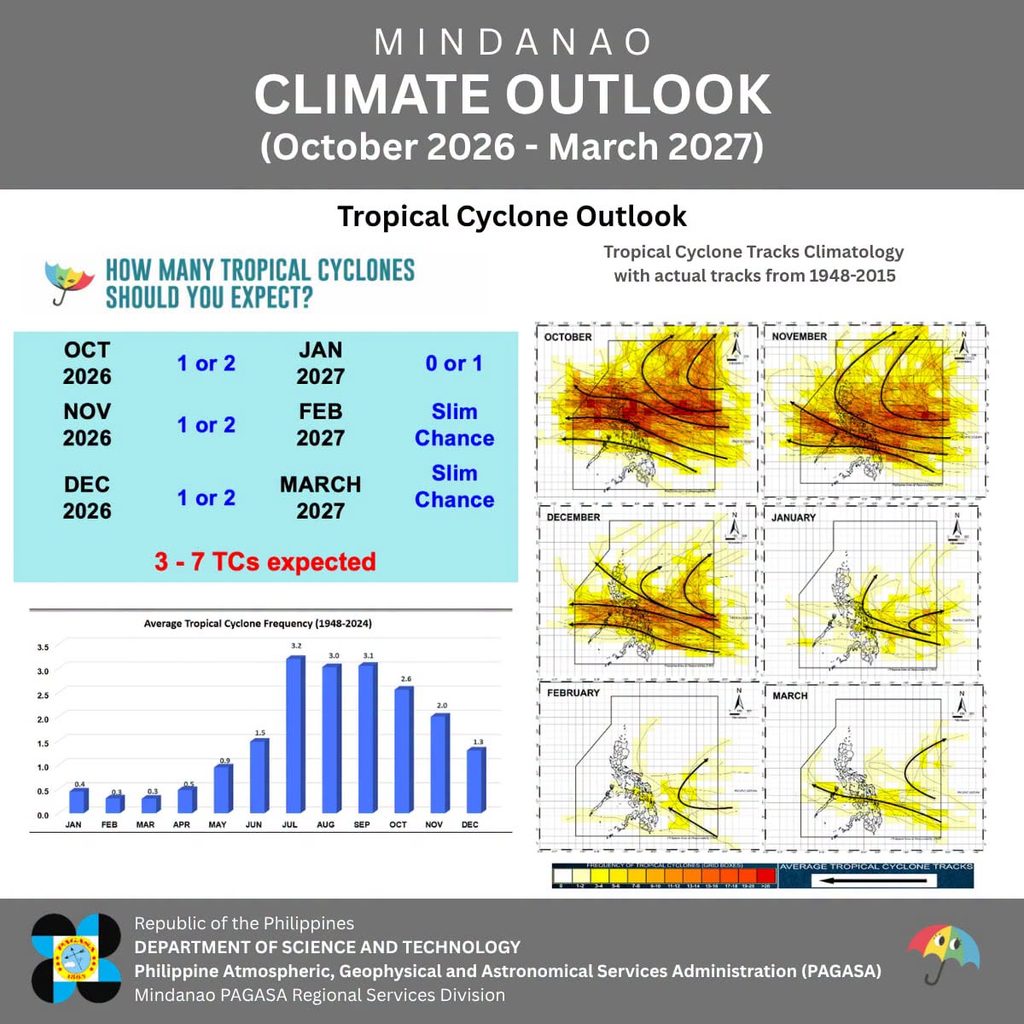
Tropical cyclones, the Intertropical Convergence Zone, low-pressure areas, easterlies, shear lines, and localized thunderstorms may still bring rain to different parts of the island. The number of tropical cyclones expected during October 2026 to March 2027 does not eliminate the possibility of weather-related impacts.
The outlook estimates around three to seven tropical cyclones during the period and indicates that activity may shift farther southward during the latter part of 2026 and early 2027. That possibility makes continued monitoring essential, even as the overall number of systems generally declines toward the early months of 2027.
This creates an important challenge for disaster managers: drought preparedness must not become an excuse to neglect flood and landslide preparedness.
Rain falling after a prolonged dry period does not automatically restore depleted reservoirs, replenish groundwater immediately, or reverse agricultural losses. Depending on the intensity and duration of rainfall, the condition of the soil, and the characteristics of the watershed, heavy rain can also create localized flooding and landslide risks.
Communities should continue monitoring official weather warnings, maintain drainage and flood-control infrastructure, protect watersheds, and keep evacuation procedures operational.
The correct approach is not to assume that every dry day signals disaster or that every rain shower ends a drought. It is to monitor conditions continuously and respond to the hazard that is actually developing.
Climate preparedness requires the ability to manage both water scarcity and sudden excess.
Local Governments Must Move From Advisories to Action
Public warnings are important, but warnings alone do not protect communities.
The decisive question is whether local governments have translated climate information into practical, funded, and measurable preparations.
Every province, city, and municipality in Mindanao should review its existing El Niño or drought contingency plans and determine whether they reflect the latest October 2026 to March 2027 outlook. Where plans are absent, outdated, or too general to guide decisions, they should be updated immediately.
At a minimum, these plans should establish who is responsible for monitoring water supplies, protecting agricultural production, delivering emergency assistance, coordinating public health responses, and communicating verified information to residents.
They should also identify the conditions that trigger specific interventions. For example, authorities could establish locally appropriate thresholds for water conservation measures, emergency water deliveries, irrigation restrictions, agricultural assistance, and heat-related precautions. These thresholds should be based on technical assessments and actual supply conditions rather than arbitrary island-wide rules.
Barangay officials must be part of this process. They are often closest to households that depend on communal wells, small water systems, rain-fed farms, and daily agricultural income. They can help identify vulnerable families, report emerging shortages, and distribute timely information.
But barangays cannot be expected to shoulder the entire burden without support. Municipal and city governments, provincial authorities, regional agencies, and national departments must provide technical assistance, funding, equipment, and clear lines of coordination.
The Department of the Interior and Local Government, Office of Civil Defense, disaster risk reduction and management offices, Department of Agriculture, Department of Health, National Irrigation Administration, water utilities, and other relevant institutions should work from a common picture of emerging risks.
They should not wait for each agency to experience a crisis separately before coordinating their responses.
There is a practical precedent for this approach. During the 2023–2024 El Niño episode, government response measures documented by the National Disaster Risk Reduction and Management Council included irrigation-canal desilting, installation of water pumps, agricultural assistance, and directions to local governments to implement contingency plans and water-conservation measures.
The task now is to assess what worked, what failed, which interventions remain useful, and what must be improved for the current forecast. Lessons from a previous event should be adapted to today’s conditions, not copied mechanically.
Local governments should also disclose what they are doing. Residents deserve to know which water sources are being monitored, what emergency supplies are available, how farmers can seek assistance, and where to report emerging shortages.
Transparency is part of preparedness. It enables communities to plan and gives the public a basis for assessing whether commitments are being fulfilled.
Fund the Preparation, Not Just the Emergency
One of the persistent weaknesses in disaster response is the tendency to mobilize resources after the damage has already occurred.
By then, the government may be paying for emergency water deliveries, relief operations, agricultural recovery, infrastructure repairs, and livelihood assistance simultaneously. Families may have already lost income, crops, or productive assets. Recovery becomes more expensive because prevention and early intervention were inadequate.
The government should instead identify which interventions can be funded and implemented before conditions deteriorate.
Local disaster risk reduction and management funds, agriculture programs, water-system budgets, and appropriate national assistance should be assessed against the specific risks identified in the forecast. Existing contingency arrangements should be activated where justified, and procurement for essential supplies and repairs should begin early enough to avoid last-minute delays.
This does not mean spending indiscriminately or treating every projected impact as certain. It means matching resources to credible risks, establishing clear accountability, and using evidence to decide when interventions are necessary.
Authorities should publish a practical preparedness scorecard covering water-source assessments, irrigation-system inspections, agricultural advisories, health preparedness, vulnerable-household identification, and emergency response arrangements.
Such a scorecard would allow residents, civil society groups, farmers’ organizations, and journalists to track whether commitments are being carried out.
The question is not simply how much money has been allocated. It is whether the money is reducing exposure to foreseeable harm.
The FAO’s approach to anticipatory action offers a useful principle: use forecasts and risk information to trigger protective measures before hazards cause severe losses. Its guidance emphasizes early support for farmers and other producers to protect food production and livelihoods. Read FAO’s El Niño resource.
For Mindanao, that principle should translate into timely support, functioning water infrastructure, reliable agricultural advice, and targeted assistance for communities facing the greatest exposure.
Communities Must Prepare, but Responsibility Cannot Be Shifted to Households Alone
Residents have an important role to play. Households can conserve water, repair leaking taps, use water efficiently, maintain safe storage where feasible, and follow official advisories. Farmers can seek local agricultural guidance, review planting decisions, and reduce avoidable losses. Community organizations can help disseminate verified information and identify people who may need assistance.
However, personal responsibility has limits.
A household cannot conserve water that never reaches its tap. A farmer cannot irrigate a field without access to water. A livestock raiser cannot maintain production indefinitely if drinking water and feed become unaffordable. A worker cannot simply remain indoors if the loss of a day’s wages threatens the family’s survival.
That is why preparedness cannot be reduced to telling people to save water and endure the heat.
Government must ensure that essential services remain accessible, that assistance reaches exposed communities, and that decisions about scarce resources are transparent and fair.
Civil society, cooperatives, schools, universities, faith-based organizations, local businesses, and media organizations can also contribute through public education, community monitoring, technical support, and targeted assistance. But their efforts should complement—not replace—the obligations of public institutions.
Mindanao’s diverse communities have different needs and capacities. Remote upland settlements, urban neighborhoods, coastal fishing villages, agricultural plains, and rapidly growing towns will not all require the same interventions.
The response must be locally informed and inclusive, particularly for low-income households and communities with limited access to public services.
Preparation should protect people’s dignity as well as their livelihoods.
What Must Be Done Before January 2027
The remaining months of 2026 should be treated as a decisive preparation period. The following measures should be prioritized.
1. Complete water-security assessments by November. Identify vulnerable water sources, inspect reservoirs and distribution systems, map communities at risk of shortages, and establish locally appropriate triggers for conservation and emergency water delivery. Publish the findings and response arrangements.
2. Protect the next planting and harvest cycles. Map rain-fed farms and irrigation-dependent production areas. Provide farmers with localized planting advice, suitable seeds, water-management guidance, and timely information on available agricultural assistance.
3. Activate heat and public-health preparedness. Prepare drinking-water access, shaded rest areas, workplace heat precautions, school guidance, and health advisories. Ensure health facilities are ready to respond to heat-related illness and that vulnerable residents receive timely information.
4. Prepare livestock raisers and fishing communities. Assess water and feed requirements, disseminate animal-health guidance, monitor aquaculture and fisheries conditions, and identify small producers who may need assistance to protect their livelihoods.
5. Release funds before losses escalate. Review existing contingency budgets, repair essential infrastructure, procure necessary supplies, and establish transparent procedures for assistance. Publish clear responsibilities, deadlines, and indicators of preparedness.
6. Establish continuous, localized monitoring. Combine PAGASA forecasts with rainfall observations, reservoir and groundwater measurements, crop assessments, heat reports, and community-level information. Update response plans as actual conditions change.
These actions should not be delayed until the first quarter of 2027. By that point, some farmers may already have made planting decisions, some water sources may already be under pressure, and the time available to prevent avoidable losses may be much shorter.
The Bigger Question: Is Mindanao Building Resilience or Merely Reacting to Disasters?
El Niño is a recurring natural climate phenomenon. Its occurrence cannot be prevented through local government action, but many of its potential impacts can be reduced through preparedness, sound resource management, and early intervention.
Climate change adds another dimension. The FAO warns that El Niño is unfolding against a hotter global temperature baseline, increasing concerns about the combined effects of heat and shifting rainfall patterns. Read FAO’s El Niño resource.
For Mindanao, this should prompt a broader discussion about development priorities.
Are water systems being designed to withstand prolonged dry periods? Are cities and municipalities protecting watersheds and groundwater recharge areas? Are agricultural programs helping farmers adapt to changing rainfall patterns? Are irrigation investments reaching the communities that need them most? Are local governments using climate information when planning land use, infrastructure, and public services?
These questions matter beyond the coming El Niño.
Watershed protection, sustainable groundwater management, efficient irrigation, diversified agriculture, climate-informed land-use planning, and reliable public information are investments in long-term resilience. They can help communities cope with different climate hazards, although no single intervention can eliminate all risks.
Water conservation must also be approached carefully. Large-scale infrastructure projects, groundwater extraction, and other interventions should be guided by technical studies and environmental safeguards. Emergency measures must not create new ecological damage or transfer shortages from one community to another.
Similarly, cloud seeding should not be presented as a guaranteed solution to drought. Its feasibility depends on suitable atmospheric conditions, and it cannot substitute for water storage, efficient use, watershed protection, and contingency planning.
Mindanao needs a strategy that combines immediate preparedness with long-term adaptation—not a collection of disconnected projects announced whenever the weather becomes alarming.
A Warning Is Only Useful if We Act on It
The climate outlook for October 2026 to March 2027 gives Mindanao something valuable: time to prepare.
That opportunity must not be wasted.
The possibility of below-normal rainfall becoming more severe in early 2027, combined with warmer-than-usual conditions and the risk of dry spells and drought, should prompt immediate action across the island. The forecast does not establish that every community will suffer a water crisis or that agricultural losses are inevitable. It establishes a credible risk that deserves a coordinated response.
The responsibility now rests with national agencies, regional offices, provincial governments, cities, municipalities, barangays, water utilities, agricultural institutions, and communities themselves.
They must turn climate information into operational plans, operational plans into funded measures, and funded measures into protection that people can actually feel.
Farmers need to know whether they should adjust their planting schedules before they invest their savings. Water utilities need to know which sources are vulnerable before households experience interruptions. Health offices need to prepare before heat-related illness increases. Livestock raisers and fisherfolk need access to timely advice before their incomes are affected.
And the public deserves clear information about what is known, what remains uncertain, and what authorities are doing in response.
There should be no need to wait for empty reservoirs, withered crops, rising food prices, or desperate communities before the urgency becomes apparent.
Mindanao cannot control the Pacific Ocean. It cannot order the rains to return. It cannot eliminate every consequence of an exceptionally strong El Niño.
But it can prepare its water systems. It can protect vulnerable farmers. It can strengthen public-health measures. It can safeguard essential services. It can invest in resilience instead of repeatedly paying the higher price of delayed action.
The coming dry months may test Mindanao’s capacity to protect its people, food systems, water resources, and livelihoods. The time to demonstrate that capacity is now.
Do not wait for the drought to become a disaster before acting on the warning. Prepare now, protect the vulnerable, and make every remaining month of 2026 count.
External Sources and Further Reading
The following sources provide official climate information and practical guidance relevant to the issues discussed in this opinion article.
- DOST-PAGASA — El Niño Advisory No. 5, October 7, 2026. The latest listed advisory on the ongoing El Niño event. Read PAGASA’s El Niño advisories.
- DOST-PAGASA — El Niño monitoring and outlook. Information on the current ENSO alert status and expected duration of the event. View the monitoring page.
- World Meteorological Organization — El Niño set to become very strong, raising risks of extreme weather into 2027, September 3, 2026. Global assessment of the developing event and the need for preparedness. Read the WMO announcement.
- Food and Agriculture Organization of the United Nations — El Niño in a hotter world: Acting early to protect food and livelihoods. Guidance on protecting agriculture, livestock, rural livelihoods, and food security. Read FAO’s El Niño resource.
- Department of Agriculture — DA strengthens preparedness for possible El Niño to support farms, April 29, 2026. Philippine agricultural preparedness measures, including irrigation-system assessments. Read the DA announcement.
Editorial note: The climate outlook describes projected conditions, not guaranteed outcomes. Before publication, the specific October 2026–March 2027 rainfall and temperature projections should be checked against the latest PAGASA regional outlook. “Super El Niño” is a commonly used expression; the article uses PAGASA’s official terminology when describing the event’s expected strength.