
DAVAO CITY — The Philippines and Japan are deepening a decades-long partnership, with Davao City and Mindanao emerging as key frontiers for expanded cooperation in infrastructure, transport modernization, and clean energy—signaling a new phase in bilateral relations anchored on sustainability and regional growth.
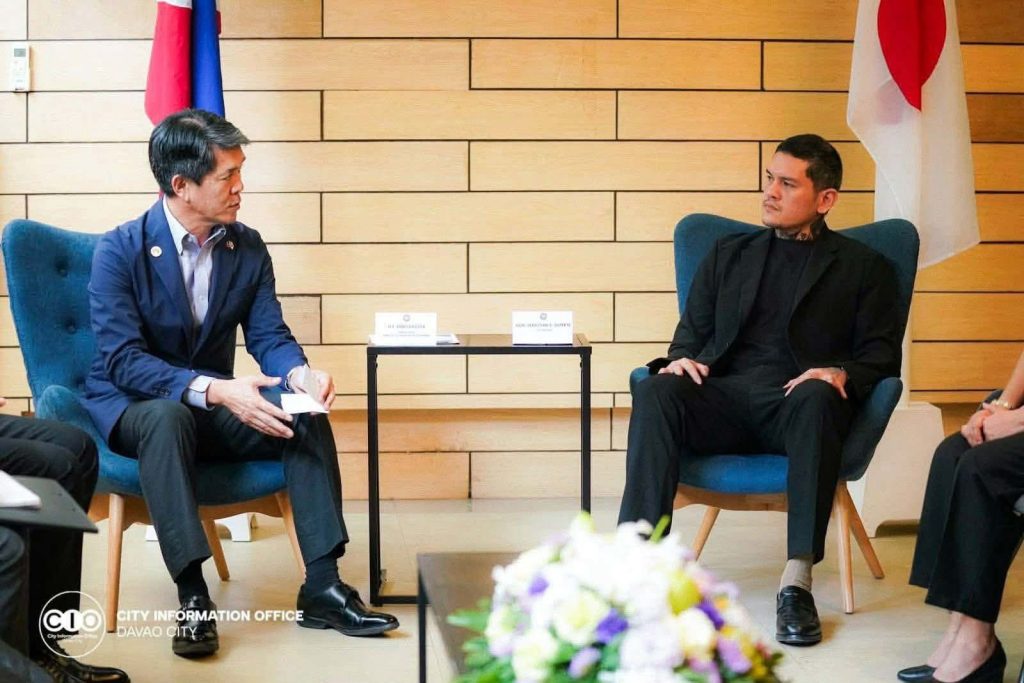
At the center of this renewed engagement was the recent visit of Japanese Ambassador Endo Kazuya, who held back-to-back high-level meetings in Davao City, reinforcing Japan’s strategic commitment to Mindanao.
On April 16, Ambassador Endo paid a courtesy call on Davao City Mayor Sebastian Z. Duterte—their second official meeting since January 2025—underscoring the city’s growing importance in Japan-Philippines relations. The meeting coincided with preparations for the 70th anniversary of diplomatic ties between the two nations, a milestone both sides aim to celebrate with expanded cooperation and localized activities in Davao.
Endo described Davao as a “cornerstone” of the bilateral relationship, citing the steady expansion of partnerships that now span infrastructure, cultural exchange, and economic development. He formally invited Mayor Duterte to participate in anniversary events, with special commemorative programs expected to take place in the city.
Joining the discussions were Japanese Consul General Ono Hirotaka, embassy officials, and key Davao City representatives, including members of the city council and the Davao City Investment Promotion Center.
A major focus of the dialogue was the city’s Waste-to-Energy (WTE) project, a flagship initiative aimed at addressing solid waste management while generating sustainable power. Both leaders expressed optimism about accelerating its implementation, viewing it as a model for environmentally responsible urban development.
Mayor Duterte also highlighted the transformative impact of past Japanese-supported infrastructure projects, particularly the Davao City Bypass Road, which has significantly improved mobility and urban connectivity in the city.
Beyond city-level engagement, Japan’s cooperation with Mindanao is also gaining momentum through its partnership with the Mindanao Development Authority (MinDA). In a separate meeting on April 17, Ambassador Endo met with MinDA Chairperson Leo Tereso A. Magno to discuss broader economic and development priorities for the region.
Secretary Magno emphasized the crucial role of Public-Private Partnerships in fast-tracking infrastructure projects, noting that Japan remains one of the Philippines’ most reliable development partners. He pointed to ongoing efforts to equip local government units with the tools to develop investment-ready projects that can attract foreign capital, including from Japanese firms.
Transport modernization—particularly railway development—emerged as a key area of collaboration. With Mindanao’s economy rapidly expanding, Magno stressed the need for efficient, integrated transport systems, an area where Japanese technology and expertise are widely recognized.
Ambassador Endo expressed strong interest in supporting railway initiatives, citing Japan’s extensive experience in building safe, reliable, and high-capacity transport networks.
Energy cooperation also featured prominently in the discussions, with both sides exploring opportunities in renewable energy development. Magno encouraged Japanese investors to participate in the government’s Green Energy Auction Program, highlighting Mindanao’s vast potential for solar, hydro, and other renewable energy sources that could strengthen energy security while advancing sustainability goals.
The talks extended to the Bangsamoro Autonomous Region in Muslim Mindanao (BARMM), where both parties identified opportunities for collaboration in infrastructure, energy, and capacity-building—seen as vital to sustaining peace and fostering inclusive economic growth in the region.
Further reinforcing regional cooperation, Magno invited Ambassador Endo to the upcoming BIMP-EAGA Leaders’ Summit on May 7 in Cebu, where Japan plays a key role as a development partner supporting initiatives across the Brunei Darussalam–Indonesia–Malaysia–Philippines East ASEAN Growth Area.
These engagements align closely with the broader development agenda of Ferdinand R. Marcos Jr., which prioritizes infrastructure modernization, renewable energy expansion, and inclusive regional development. The administration has consistently pushed for stronger international partnerships to drive balanced growth across the country.
Taken together, the high-level meetings in Davao signal more than diplomatic routine—they reflect a shared vision between Japan and the Philippines to build resilient cities, modern transport systems, and sustainable energy solutions, with Mindanao at the forefront of this transformation.
As both nations mark 70 years of diplomatic relations, the evolving partnership between Japan and Davao City stands as a testament to enduring cooperation—one that continues to shape a more connected, sustainable, and prosperous future for Mindanao and beyond.