
DAVAO CITY — A long-dormant air link between southern Philippines and eastern Indonesia is on the verge of a high-impact revival, promising to transform regional travel, trade, and tourism in a way not seen in years.
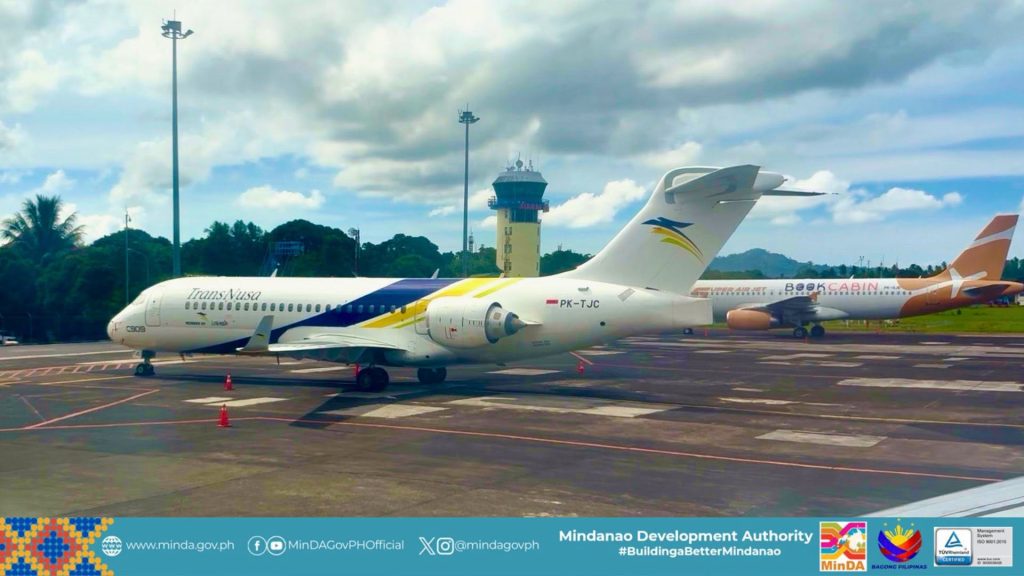
Government officials and industry stakeholders are now pushing to restore direct flights between Davao City and Manado—a move that could cut the current grueling 19-hour journey down to just over an hour. For business travelers, tourists, and investors alike, the difference is nothing short of game-changing.
At present, traveling between the two cities involves multiple connecting flights through regional hubs and, in some cases, additional sea travel. The result is a long, fragmented trip that has discouraged movement despite the close geographic proximity of Mindanao and North Sulawesi.
That could soon change.
Romeo Montenegro, Deputy Executive Director of the Mindanao Development Authority (MinDA), said the initiative is part of a coordinated push with the Department of Tourism (DOT) and the Department of Trade and Industry (DTI) to reestablish air connectivity under the BIMP-EAGA framework.
The strategy, he explained, is markedly different from previous attempts.
Instead of waiting for airlines to gamble on uncertain demand, government agencies are actively building the market first—strengthening tourism circuits, trade flows, and local government partnerships to ensure sustained passenger and cargo volume once flights resume.
Earlier efforts to operate the route were shelved due to weak and inconsistent demand, limited cargo movement, and underdeveloped tourism exchanges—problems later compounded by the disruptions of the COVID-19 pandemic.
This time, officials are betting on a “demand-first” approach.
Montenegro stressed that the long-term viability of the route hinges on robust economic activity linking Mindanao and North Sulawesi, from tourism and trade to investment partnerships. Without that foundation, even the most strategic air link would struggle to survive.
Encouragingly, private sector interest is beginning to align with government efforts. Indonesian carrier TransNusa has expressed interest in reviving the Davao–Manado route, signaling renewed confidence in the corridor’s economic potential.
For the tourism sector, the stakes are high.
DOT Region XI Director Tanya Rabat-Tan underscored that restoring the route is a top regional priority, with active coordination underway involving aviation regulators and route development bodies. She noted that both destinations offer strong potential for cross-border tourism growth—ranging from dive tourism and adventure travel to medical, wellness, and educational exchanges.
Beyond tourism, the initiative is also tied to a broader economic vision.
The development of the “Davao Triangle Gateway Corridor,” which includes Davao de Oro and Davao Oriental, aims to position eastern Mindanao as a unified gateway to the wider BIMP-EAGA region. The corridor is expected to generate consistent demand through integrated tourism, agriculture, and trade activities—key ingredients for sustaining direct air connectivity.
At the national level, Ferdinand Marcos Jr. has prioritized improved regional connectivity as a cornerstone of economic strategy, with Mindanao playing a central role as a gateway to ASEAN markets.
Strengthening links like the proposed Davao–Manado route is seen as critical to unlocking new flows of trade, tourism, and investment between the Philippines and Indonesia—two neighboring economies with vast untapped potential for cooperation.
Recent engagements by MinDA, DOT, and DTI officials in Manado have further reinforced this direction, aligning local initiatives with the administration’s broader goal of making Mindanao a more competitive and integrated economic hub in Southeast Asia.
If successful, the revival of direct flights will do more than shorten travel time. It will reconnect markets, revive cultural exchanges, and open new economic frontiers—firmly positioning Mindanao as a strategic bridge to eastern Indonesia and beyond.