
The unanimous passage of Resolution No. 18-24-01-2026 by the Sangguniang Panlalawigan of Davao Oriental marks a defining and historic moment in the province’s governance—one that firmly upholds environmental protection, social justice, and accountable leadership over corporate pressure and profit-driven interests. By rescinding and revoking its previous endorsement of mining operations by Austral-Asia Link Mining Corporation and Hallmark Mining Corporation under Asiaticus Management Corporation (AMCOR), the provincial government has sent a powerful and unequivocal message that the welfare of the people, the integrity of the environment, and the future of Davao Oriental will never be compromised for destructive extractive ventures. This courageous decision reflects principled leadership anchored on the Constitution, the rule of law, and the lived realities of communities that have long suffered from the harmful impacts of irresponsible mining.
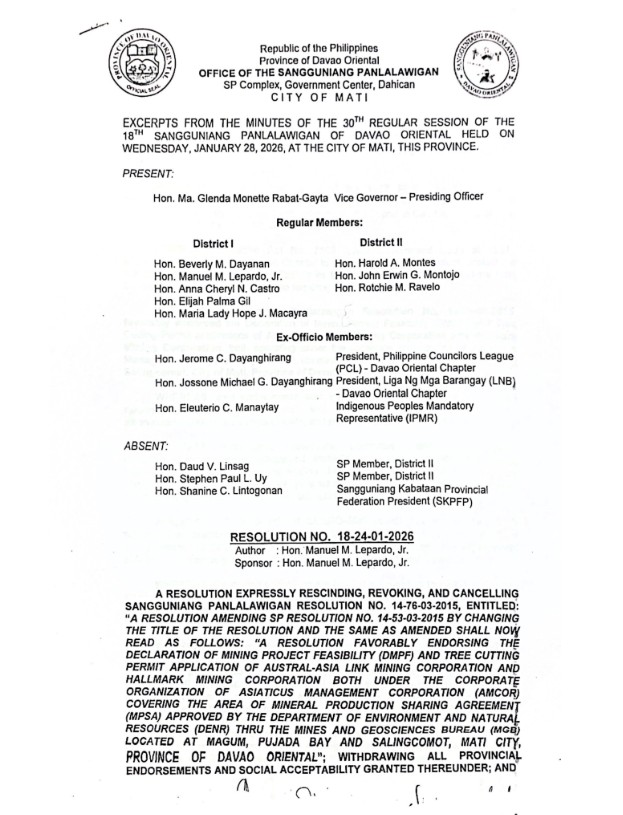
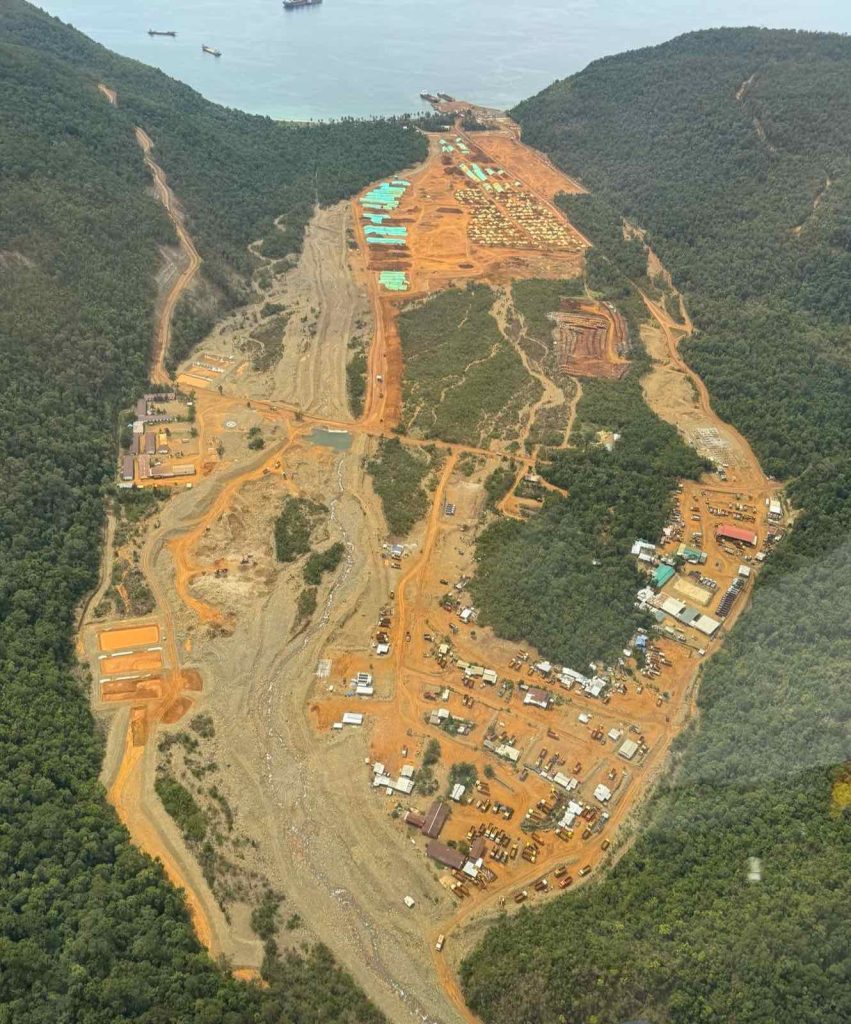
At the heart of this resolution is a deep respect for Article II, Section 16 of the 1987 Philippine Constitution, which guarantees every Filipino the right to a balanced and healthful ecology. By invoking this fundamental principle, the provincial government reaffirmed that environmental protection is not merely a policy option but a constitutional obligation. For years, residents of affected barangays have witnessed forests disappear, rivers become polluted, farmlands erode, and fishing grounds decline—real and painful consequences that threaten food security, public health, and human dignity. Through this decisive action, the province has demonstrated that genuine development cannot be built on environmental ruin and social displacement.
The resolution is firmly grounded in documented evidence of serious and repeated violations by the mining companies, including extremely low compliance with mandatory tree replacement programs, obstruction of government infrastructure projects, restriction of public access, alteration of provincial roads, and persistent refusal to cooperate fully with regulatory authorities. Compliance rates as low as eight and thirteen percent expose the emptiness of corporate claims of “responsible mining” and reveal a troubling pattern of negligence and disregard for environmental laws. By confronting these violations, the provincial government refused to normalize destruction disguised as economic progress and asserted that accountability is non-negotiable.
More significantly, this action safeguards some of the most ecologically valuable areas in the country, including the Mount Hamiguitan Range Wildlife Sanctuary, a UNESCO World Heritage Site, and the Pujada Bay Protected Landscape and Seascape. These natural treasures are vital to biodiversity, climate regulation, food systems, and disaster resilience. Their proximity to large-scale mining operations demanded heightened vigilance and firm governance. By prioritizing their protection, the provincial leadership affirmed its role as a responsible steward of both national and global environmental heritage.
Equally commendable is the provincial government’s responsiveness to the long-standing voices of farmers, fisherfolk, Indigenous Peoples, church groups, and civil society organizations who have raised concerns for more than a decade. Despite years of being ignored or dismissed, these communities persisted in defending their land and livelihoods. Through this resolution, their struggles were finally recognized and validated. It is a testament to democratic governance that listens to its people and acts upon their collective will.
The decision also reflects a clear understanding that mining has severely disrupted local economies and traditional livelihoods. Fisherfolk have lost access to productive fishing grounds, farmlands have been degraded, and vital road networks have been obstructed. These disruptions translate into poverty, displacement, and insecurity. By withdrawing support for destructive mining, the provincial government has chosen to defend sustainable agriculture, fisheries, ecotourism, and community-based enterprises—sectors that nurture long-term prosperity without destroying natural capital.
The leadership shown by Governor Nelson Dayanghirang, Vice Governor Ma. Glenda Monette Rabat-Gayta, and the members of the Sangguniang Panlalawigan deserves the highest commendation. In a political climate often influenced by corporate lobbying and economic pressure, standing up to powerful interests requires exceptional courage and integrity. Their decision reflects a commitment to public service rooted in honesty, responsibility, and moral conviction. It demonstrates that principled governance is not only possible but necessary for genuine progress.
Moreover, Davao Oriental’s action now serves as a powerful example for other provinces confronting similar environmental threats. It proves that local governments have the authority and duty to revisit past decisions when these no longer serve the public interest, that environmental justice can prevail through lawful processes, and that leadership grounded in conscience can reshape development pathways. This resolution sets a national standard for environmental accountability and participatory governance.
While this milestone deserves celebration, it also signals the beginning of a greater responsibility. The people now look forward to sustained action through strict monitoring, ecological rehabilitation, protection of watersheds and coastal zones, and meaningful support for affected communities. The long-term credibility of this historic stand will depend on the province’s commitment to translating policy into lasting environmental protection and social well-being.
Ultimately, Resolution No. 18-24-01-2026 represents a victory not only for present generations but for those yet to come. It safeguards clean water, fertile land, thriving seas, and living forests for future children. It preserves cultural heritage, strengthens community resilience, and protects Davao Oriental’s identity as a province of natural beauty and dignity. By choosing people over profit, nature over negligence, and justice over convenience, the provincial government has written a powerful chapter in its history—one that affirms that development does not require destruction and that progress must never come at the expense of life itself. For this courageous, principled, and visionary stand, the Provincial Government of Davao Oriental deserves the deepest respect, gratitude, and commendation of its people and of the nation.