
As Interfacing Development Interventions for Sustainability (IDIS) raises the alarm over the proposed Waste-to-Energy (WtE) incineration project in Davao City, the debate goes far beyond technical compliance or procedural transparency. It cuts to the core of a fundamental question: What kind of future do we want for our waste—and for our environment?
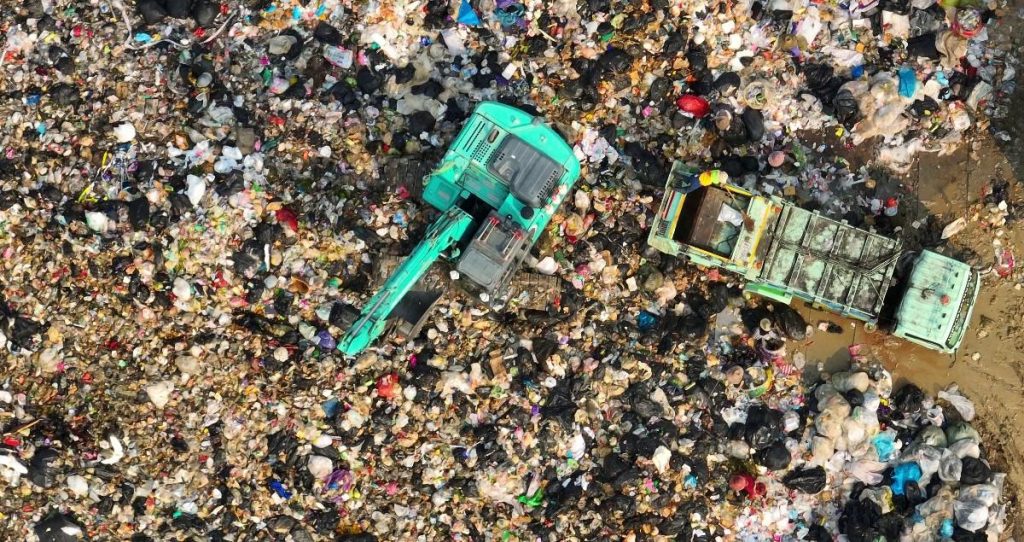
On paper, converting waste into energy sounds like a pragmatic solution. A city burdened by growing waste streams finds an opportunity to reduce landfill use while generating electricity. But beneath this appealing narrative lies a more troubling reality—one that risks locking Davao into a system that contradicts its own sustainability ambitions.
A Collision Course with the Circular Economy
Davao has not been idle in addressing its waste problem. Through partnerships and local initiatives, it has embraced the principles of the circular economy—reduce, reuse, recycle. These are not just buzzwords; they represent a systemic shift away from extractive, linear consumption toward resource efficiency and environmental stewardship.
WtE incineration, however, operates on an entirely different logic.
Instead of preserving materials, it destroys them. Plastics, paper, and other recyclables—materials that could re-enter the production cycle—are burned. A 2024 study by Hernandez-Romero and colleagues underscores this: incineration, particularly of plastics, severely limits material circularity by degrading their quality beyond reuse.
In effect, WtE creates a perverse incentive. It requires a steady stream of waste to remain economically viable. The more waste you generate, the more “fuel” you have. This directly undermines efforts to reduce waste at the source and expand recycling systems.
Davao cannot simultaneously champion circularity and invest in infrastructure that depends on its failure.
The Environmental Trade-Off: Cleaner Than Landfills?
Proponents of WtE often argue that it is cleaner than traditional dumpsites. There is some truth to this. Modern incinerators can reduce the volume of waste by up to 90% and generate energy in the process. They also mitigate methane emissions—a potent greenhouse gas—typically associated with landfills.
But this does not mean WtE is environmentally benign.
Burning waste releases a cocktail of pollutants, including dioxins, furans, and particulate matter—substances linked to respiratory diseases, cancer, and long-term ecological damage. Even with advanced filtration systems, no incinerator is emission-free.
Then there is the issue of ash. Incineration produces toxic bottom ash and fly ash, which often contain heavy metals like lead and mercury. These residues must be carefully managed and disposed of in specialized facilities—adding another layer of environmental risk and cost.
In a country governed by the Clean Air Act of 1999, which restricts incineration that emits toxic fumes, the compatibility of WtE technology remains a contentious issue.
So while WtE may reduce visible waste, it transforms it into less visible—but potentially more dangerous—forms.
The Human Cost: Livelihoods at Stake
Beyond environmental concerns lies a social dimension often overlooked in infrastructure debates.
Davao’s informal waste sector—waste pickers, junkshop operators, recyclers—forms the backbone of its current resource recovery system. These communities depend on the very materials that WtE seeks to burn.
By diverting recyclables into incinerators, the project threatens to dismantle an existing economy that sustains thousands of livelihoods. What replaces it? Highly mechanized facilities that generate far fewer jobs.
This is not just a shift in technology; it is a shift in who benefits—and who is left behind.
A False Solution to a Real Problem
The allure of WtE lies in its simplicity: burn waste, generate energy, reduce landfill pressure. But waste is not merely a technical problem—it is a systemic one.
True sustainability demands upstream solutions: reducing plastic production, redesigning packaging, strengthening segregation at source, and scaling composting and recycling. These approaches address the root of the problem rather than its symptoms.
WtE, by contrast, treats waste as inevitable.
Worse, it risks locking the city into long-term contracts and capital-intensive infrastructure that may become obsolete as circular systems improve. If waste volumes decline—as they should in a functioning circular economy—WtE facilities could become stranded assets.
Process Matters—but So Does Direction
To its credit, the Department of Environment and Natural Resources (DENR), through its Environmental Management Bureau, emphasizes that the upcoming public scoping is not an approval mechanism but a platform for dialogue under DAO 2017-15. This process is essential. It ensures that concerns about emissions, ash disposal, and community impacts are formally documented and studied.
But process alone is not enough.
The question is not just whether the project can pass environmental safeguards. It is whether it aligns with the long-term vision of a sustainable, inclusive, and circular Davao.
Burning the Future—or Rethinking It?
The WtE debate is often framed as a choice between doing something and doing nothing. This is a false dichotomy.
Davao has already begun charting a different path—one rooted in circularity, community participation, and resource efficiency. The real challenge is not managing waste better after it is created, but preventing it from becoming waste in the first place.
Incineration may offer a quick fix. But quick fixes have a way of becoming long-term problems.
If sustainability is truly the goal, then the city must ask itself a difficult but necessary question: Should we burn what we could instead reuse, recycle, and reclaim?
Because in the end, the measure of progress is not how efficiently we dispose of waste—but how effectively we eliminate it.