
Davao City, Philippines — Former Miss Universe Catriona Gray recently found herself in the company of cultural mastery during her visit to Davao City, where she met and conversed with acclaimed Bagobo traditional artist Bae Arlyne Salazar. The encounter was more than a casual meeting—it was a window into a living heritage of intricate craftsmanship, deep symbolism, and community pride.
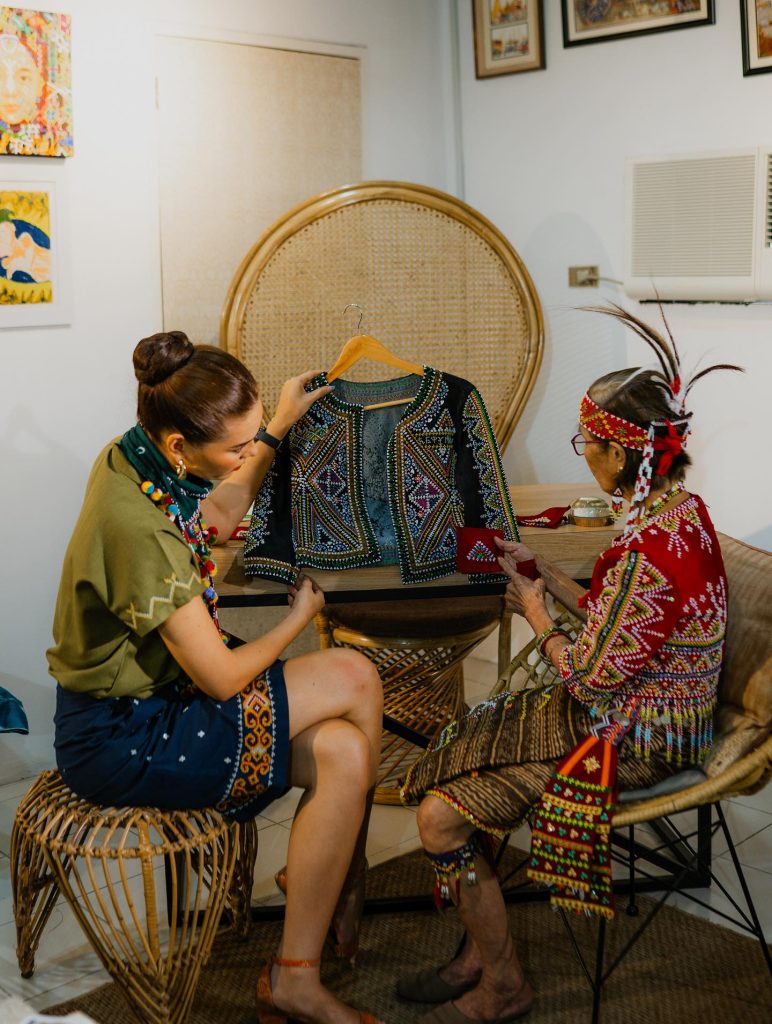
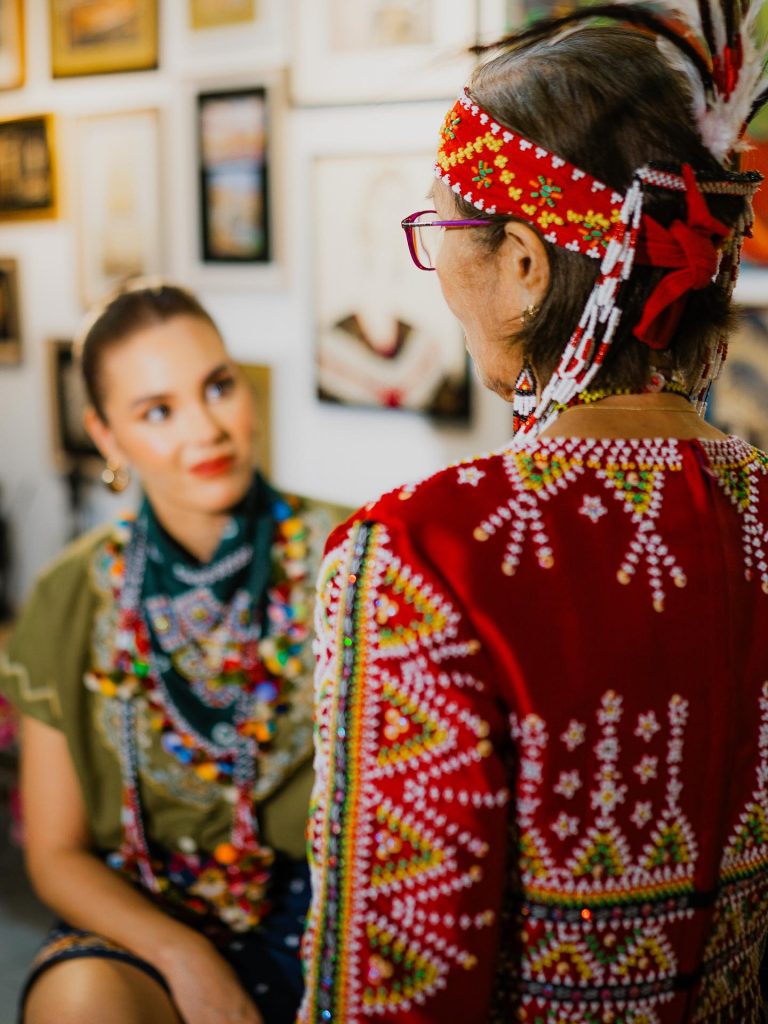
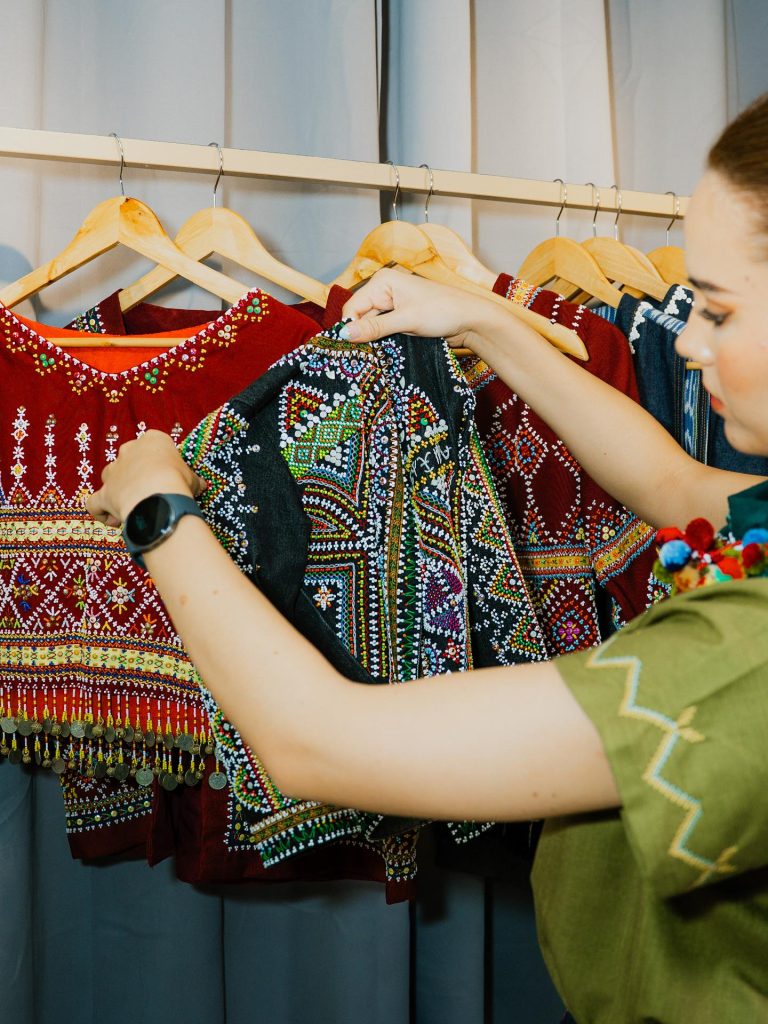
Bae Arlyne is revered for her appliqué and beadwork, which have earned the admiration of both traditional artisans and contemporary fashion designers. Her creations are not only visually stunning, but also deeply rooted in the stories, dreams, and cultural environment of the Bagobo people. Each stitch and bead reflects centuries-old traditions, often inspired by nature and the epics passed down through generations.
One of her signature works involves the umpak, the traditional jacket worn by the Bagobo. Far more than clothing, the umpak serves as a cultural tapestry—its colors and designs conveying symbols from visions, natural surroundings, and oral histories. To the untrained eye, it may be beautiful attire; to the Bagobo, it is a narrative of identity and belonging.
Beyond creating these intricate pieces, Bae Arlyne plays a vital role in ensuring that this heritage thrives. She teaches at the Schools of Living Traditions in Davao del Sur, where she mentors the next generation in crafting traditional Bagobo garments. This work safeguards the continuity of their artistry, ensuring that the knowledge, skills, and meaning embedded in each design are not lost to time.
For Gray, the meeting was a personal highlight of her trip. “Having the opportunity—not just to see her work with my own eyes—but to be able to speak with the artist herself is something I treasure so deeply,” she shared. The beauty and precision of Bae Arlyne’s creations left an indelible impression on her, underscoring the richness of Filipino indigenous arts.
In an age where cultural practices are often overshadowed by fast fashion and mass production, encounters like this are a reminder that tradition remains vibrant when nurtured by passionate hands. Through artists like Bae Arlyne Salazar, the Bagobo’s woven stories continue to live—not as relics of the past, but as threads that connect the present to the dreams of their ancestors.