
The deaths of two Indigenous farmers in Alabel raise urgent questions about customary justice, the protection of human life, and the need to preserve cultural traditions without allowing dangerous practices to continue unexamined.
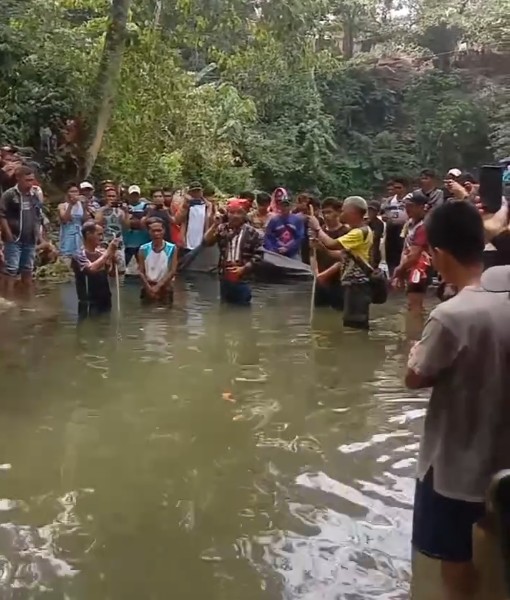
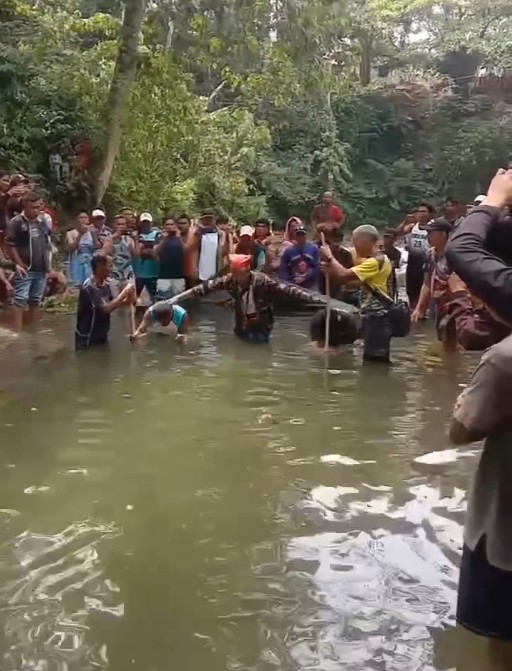
ALABEL, Sarangani Province — A traditional practice reportedly intended to resolve a land ownership dispute ended in tragedy after two farmers died following a ritual known as Sulif in the waters of Glamang River in Barangay Datal Anggas, Alabel, on Friday, October 16, 2026.
The victims were identified in initial reports as Tonny Bulanon Mansag, 69, and Gaspar Tusan Palasanon, 49, both residents of the barangay. According to preliminary information attributed to the Alabel Municipal Police Station, the two men had been involved in a disagreement over ownership of a parcel of land before they reportedly agreed to undergo the traditional ritual as a means of settling their dispute.
Reports indicate that the two men entered the river at around 10 a.m. while members of their community witnessed the proceedings. They reportedly remained underwater for approximately 10 minutes without resurfacing, prompting those present to pull them out and rush them to separate medical facilities.
Mansag was declared dead on arrival at the Sarangani Provincial Hospital, while Palasanon was taken to a private hospital in General Santos City, where he reportedly died several hours later.
The incident has since drawn attention to the intersection of Indigenous customary justice, cultural identity, public safety, and the rule of law.
However, important details remain unverified. Initial accounts circulating on social media use different names for the practice, including Sulif, Salom, and Kallep. Some accounts associate the ritual with Blaan traditions, while others identify it with Tagakaulo or Tboli communities. These distinctions matter because Indigenous peoples are not culturally interchangeable, and customary practices may differ across communities, clans, and ancestral territories.
The full circumstances of the incident, including the precise nature of the agreement between the two farmers, the customary authority involved, and the applicability of the ritual to a land dispute, must be established through a careful investigation and consultation with the communities concerned.
Customary justice predates the modern legal system
Long before Spanish colonization introduced its own institutions of government and justice, Indigenous communities across the Philippines had developed systems of leadership, dispute settlement, accountability, reconciliation, and restoration of social relationships.
These systems were not merely collections of rituals. They were embedded in relationships among families, clans, elders, ancestral lands, and the broader community. In many Indigenous societies, the objective of resolving a dispute was not simply to identify a guilty party or determine who was right. It was also to prevent retaliation, restore relationships, and maintain peace.
For this reason, customary justice deserves serious recognition rather than automatic dismissal as backward or incompatible with modern society.
The Indigenous Peoples’ Rights Act of 1997, or Republic Act No. 8371, recognizes the rights of Indigenous Cultural Communities and Indigenous Peoples to use their own justice systems, conflict-resolution institutions, and peace-building processes, subject to applicable national law and fundamental human rights.
Recognition, however, should not be confused with unquestioning acceptance of every practice attributed to tradition.
A customary system’s legitimacy rests not only on its historical origins but also on its ability to protect the community, uphold fairness, and respond to changing circumstances. A tradition that once served a particular social purpose must still be examined when its application creates serious risks to life.
Sulif and the limits of cultural generalization
An important perspective comes from members of the Indigenous community who have cautioned against drawing broad conclusions about Sulif based on the available reports.
In a statement expressing his position on the tragedy, Fulung Romy Martin, president of the Sarangani IP Professionals Association, described Sulif as part of Blaan customary conflict-resolution traditions practiced in ancestral domains since time immemorial. He also referred to practices such as sadyandi, kasfala, and Sekleng Luas, which he associated with peace-making, reconciliation, and the restoration of relationships.
Martin emphasized that traditions were established by elders to help resolve disputes and restore brotherhood, not to produce further suffering.
His position is both a defense of cultural identity and a call for reform. He expressed grief over the deaths and argued that when a tradition takes human life, its purpose must be reconsidered.
Meanwhile, a separate account shared by a Tboli community member offers another important distinction. The account refers to a practice called Stuli or Sulif within that community and explains that it was not traditionally used to settle land ownership disputes. According to the account, land conflicts were better addressed through the wisdom and deliberation of elders, while other forms of wrongdoing could be dealt with through different customary processes.
The same account describes Kestulon as an approach to resolving cases without resorting to a ritual that might endanger lives, and Sekleng Luas as a practice used to address longstanding family grievances and restore unity.
These accounts should not be treated as definitive descriptions of every Blaan, Tboli, or Tagakaulo tradition. Rather, they demonstrate why community-specific knowledge is essential before outsiders conclude what a particular practice means, when it is used, or whether its use in this incident was consistent with customary rules.
The distinction is especially important in the present case. If the dispute concerned land ownership, questions must be asked about whether the ritual was an accepted method of resolving that particular kind of conflict within the community involved.
Cultural sensitivity requires listening to Indigenous elders and practitioners. It also requires resisting the temptation to portray all Indigenous communities as having one uniform system of justice.
Respect for tradition cannot mean indifference to death
Martin’s central message deserves serious consideration: culture must remain consistent with the law, Christian values, and the protection of human life.
Under the Indigenous Peoples’ Rights Act, customary laws and justice systems are recognized within the framework of the Philippine Constitution and applicable national laws. This recognition does not create an unrestricted exemption from legal accountability when a practice results in death or serious injury.
The circumstances of the two farmers’ deaths must therefore be investigated independently of assumptions about the legitimacy or illegitimacy of the tradition.
Authorities should establish what happened before, during, and after the ritual; whether the participants understood the risks; what role, if any, customary authorities played; and whether any conduct may give rise to legal responsibility. These are matters for evidence, due process, and appropriate legal proceedings—not speculation or public condemnation based solely on a viral video.
At the same time, cultural respect must not become an excuse for ignoring preventable harm.
The right to life is fundamental. No person should be compelled, pressured, or placed in circumstances where survival depends on enduring a potentially fatal test. An agreement to participate in a traditional practice does not, by itself, resolve the questions of safety, voluntariness, or legal responsibility.
Nor should the tragedy be used to condemn an entire Indigenous people or dismiss the value of customary law. Such a response would replace one injustice with another by allowing the actions of a few individuals, or an incompletely understood event, to define an entire culture.
The challenge is to protect human life while preserving the knowledge, identity, and peace-building values that Indigenous traditions can offer.
Wisdom over judgment: a path toward reform
The Tboli community account offers a particularly relevant principle: wisdom over judgment.
Instead of immediately subjecting disputants to a dangerous test, elders and community authorities can explore the history of a land claim, hear the testimony of both parties, examine evidence of ownership or customary rights, consult witnesses, and seek a settlement that prevents further hostility.
Such an approach does not require abandoning Indigenous identity. It requires strengthening customary processes that prioritize dialogue, deliberation, fairness, and reconciliation.
Where appropriate, these processes can work alongside formal legal mechanisms, including land registration procedures, local mediation, the National Commission on Indigenous Peoples, and other competent authorities. The proper route depends on the nature of the land, the rights being asserted, and the applicable laws.
The objective should not be to force Indigenous communities to choose between their culture and the law. It should be to help communities exercise their customary rights in ways that protect dignity and life.
Martin’s reference to sadyandi, which he describes as emphasizing dialogue, deliberation, and the white hen as a symbol of pure intentions for peace, points toward a constructive alternative. The meaning and application of these practices should be explained by knowledgeable community members themselves, but their stated emphasis on reconciliation offers a starting point for discussion.
Likewise, practices intended to restore relationships after longstanding family grievances demonstrate that customary systems can provide avenues for peace beyond punishment or the identification of a supposed wrongdoer.
Not every dispute requires a ritual. Not every disagreement must end with a winner and a loser. Sometimes, justice means finding a way for both sides to remain alive, preserve their dignity, and continue living within the same community.
A responsibility shared by elders, government, and the community
The tragedy calls for a coordinated response rather than a reaction driven by outrage.
Indigenous elders and customary leaders should lead an honest, community-based review of the circumstances surrounding the deaths. They are best positioned to explain the practice’s traditional meaning, its customary limitations, and whether its reported use in this case was appropriate. Any review should include the voices of affected families, community members, and knowledgeable practitioners.
The National Commission on Indigenous Peoples and the local government should support culturally sensitive dialogue, clarify the legal protections and limits governing customary justice, and help develop community-accepted safeguards against practices that place lives at risk. Such engagement should be conducted in partnership with Indigenous communities rather than imposed without consultation.
Law enforcement and other competent authorities must establish the facts through a fair investigation. Cultural context should inform that investigation, but it should neither predetermine guilt nor prevent the authorities from examining possible violations of law.
Indigenous professionals, educators, faith leaders, and younger community members also have a role in connecting ancestral knowledge with present-day realities. They can help document customary systems, preserve their legitimate peace-building functions, and encourage reforms that communities themselves understand and accept.
Christian communities, meanwhile, can contribute to the discussion through the principles of mercy, forgiveness, reconciliation, and the sacredness of life, without treating Christianity as a reason to erase Indigenous identity.
A meaningful reform process must respect both cultural self-determination and the human rights of individuals within the community, including those who may disagree with customary authorities.
Two deaths must lead to more than grief
The deaths of Mansag and Palasanon leave families and a community facing a painful loss. They also expose the human cost that can arise when a dispute over land is pursued through a process whose risks may prove fatal.
Yet the land dispute itself remains an important unanswered question. Who owns or has customary rights to the land? What evidence supports each claim? What resolution would be fair to both parties and consistent with applicable law? The answers must be established through a legitimate process, not inferred from who survived or failed to survive a dangerous underwater test.
A person’s ability to remain underwater cannot reliably establish land ownership, determine the truth of a claim, or prove guilt. Even if a practice carries a particular meaning within a customary belief system, its use cannot substitute for a fair assessment of evidence when property rights and legal responsibilities are at stake.
The deaths should therefore prompt a wider conversation about how Indigenous communities can preserve customary justice while adapting procedures that expose people to avoidable danger.
Tradition is not weakened simply because a community examines it critically. In many cases, the willingness to reconsider a practice is evidence that a culture remains alive and capable of responding to the needs of its people.
As Martin has urged, elders, government agencies, and Indigenous professionals should work together to find ways of resolving conflicts that are culturally grounded, legally sound, and humane.
The goal is not to erase Sulif, sadyandi, Kestulon, or other customary traditions from public discussion. It is to understand them accurately, recognize their differences, preserve their constructive purposes, and ensure that the pursuit of justice does not cost another human life.
Two farmers have died. Their families deserve answers, their community deserves respect, and the land dispute deserves a fair resolution.
If customary justice is meant to restore peace and brotherhood, its future must be measured not by its ability to identify a winner or a guilty party, but by its ability to deliver justice without sacrificing human life.