
MALAPATAN, Sarangani Province — Approximately 300 kilograms of solid waste were collected from mangrove and coastal areas in Malapatan as the Department of Environment and Natural Resources (DENR), in partnership with the local government, continued efforts to rehabilitate mangrove ecosystems, reduce marine pollution, and protect coastal biodiversity.
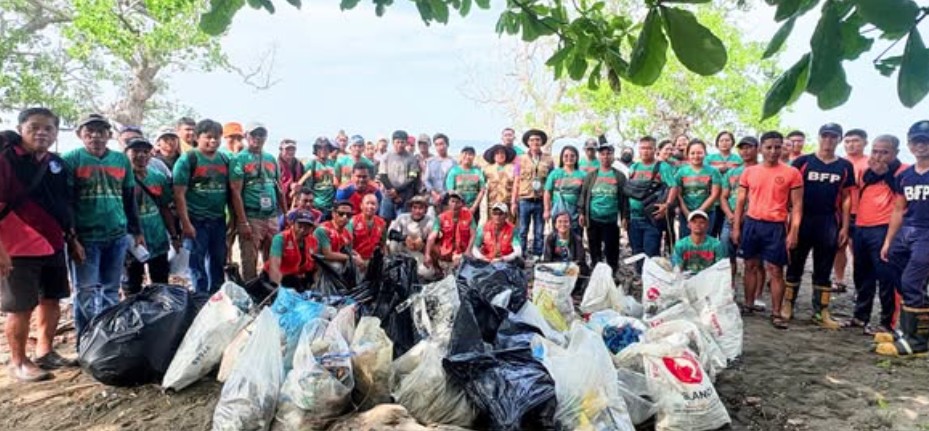
The cleanup and mangrove declogging activities were conducted by the DENR Provincial Environment and Natural Resources Office (PENRO) Sarangani and the Community Environment and Natural Resources Office (CENRO) Glan in partnership with the Local Government Unit (LGU) of Malapatan. The initiative is being spearheaded by PENR Officer Joy C. Ologuin as part of continuing efforts to maintain and protect the municipality’s coastal ecosystems.
The removal of accumulated solid waste and debris is intended to help maintain water flow within mangrove stands, minimize pollution, and prevent physical obstructions that could affect the growth and establishment of previously planted mangrove propagules.
Mangrove propagules are young plant structures that develop into mangrove trees. Their successful establishment is essential to the long-term rehabilitation of degraded coastal areas. However, planting alone may not guarantee their survival, making regular maintenance, monitoring, and waste removal important components of mangrove restoration.
By clearing debris from mangrove areas and nearby coastlines, the participating agencies aim to improve local environmental conditions and support the survival of mangroves planted during earlier rehabilitation activities.
Malapatan Institutionalizes Regular Mangrove Growing Activities
The municipality’s mangrove conservation efforts have also received support through Special Ordinance No. 30, Series of 2026, enacted by the Sangguniang Bayan of Malapatan.
The measure amends certain provisions of Special Ordinance No. 12, Series of 2026, which declares every first and third Thursday of the month as Mangrove Growing Day in the municipality.
The ordinance provides a local policy framework for sustained mangrove planting, rehabilitation, maintenance, monitoring, and coastal cleanup activities in identified coastal barangays.
Establishing a regular schedule for mangrove growing and maintenance activities can help institutionalize environmental protection efforts beyond one-time cleanup campaigns. It also provides a basis for continued coordination among local authorities, environmental agencies, and community volunteers.
The long-term effectiveness of these initiatives, however, depends on consistent implementation, adequate monitoring, and sustained community participation to ensure that planted mangroves survive and coastal areas remain free from accumulated waste.
Multiple Agencies, Volunteers Join Coastal Protection Efforts
The latest activity brought together personnel from the Malapatan Maritime Law Enforcement Group, Coast Guard Sub-Station Malapatan, the Bureau of Fire Protection (BFP)–Malapatan Fire Station, and Bantay Dagat volunteers.
Their participation reflects a coordinated approach to coastal resource management, bringing together government agencies and community-based environmental protection groups to address waste accumulation and support mangrove rehabilitation.
Mangrove ecosystems provide important environmental benefits, including habitat for fish and other marine organisms, support for coastal biodiversity, and natural protection against waves and coastal erosion. Healthy mangrove forests can also contribute to the resilience of coastal communities exposed to environmental pressures.
The DENR and the LGU of Malapatan continue to pursue mangrove rehabilitation, coastal cleanup, and biodiversity conservation through inter-agency cooperation and community participation.
With approximately 300 kilograms of waste removed during the latest activity, the effort underscores the importance of regular maintenance alongside mangrove planting. Sustained cleanup operations, responsible waste disposal, and continued monitoring will be critical to protecting the municipality’s coastal resources and ensuring that mangrove rehabilitation efforts deliver lasting environmental benefits.