
Investigators are examining an alleged $49,500 private-jet charter, 21 suitcases of suspected methamphetamine, aviation intermediaries, possible commercial fronts and a money trail linked to a shipment intercepted in Laos before its planned delivery to the Philippines.
A foiled international drug shipment involving 521 kilograms of suspected shabu, estimated to be worth ₱3.54 billion, has drawn renewed scrutiny to the intersection of transnational narcotics trafficking, private aviation, financial networks and political connections, after Philippine authorities identified 11 persons of interest in the ongoing investigation.
Among those named is Sultan Edrieza Hadji Nasser Rimbang, a former member of the Bangsamoro Transition Authority (BTA) Parliament who served from 2019 to 2022. Interior and Local Government Secretary Jonvic Remulla publicly identified him during a Malacañang briefing on October 16, 2026, as an alleged financier and organizer connected to the attempted shipment.
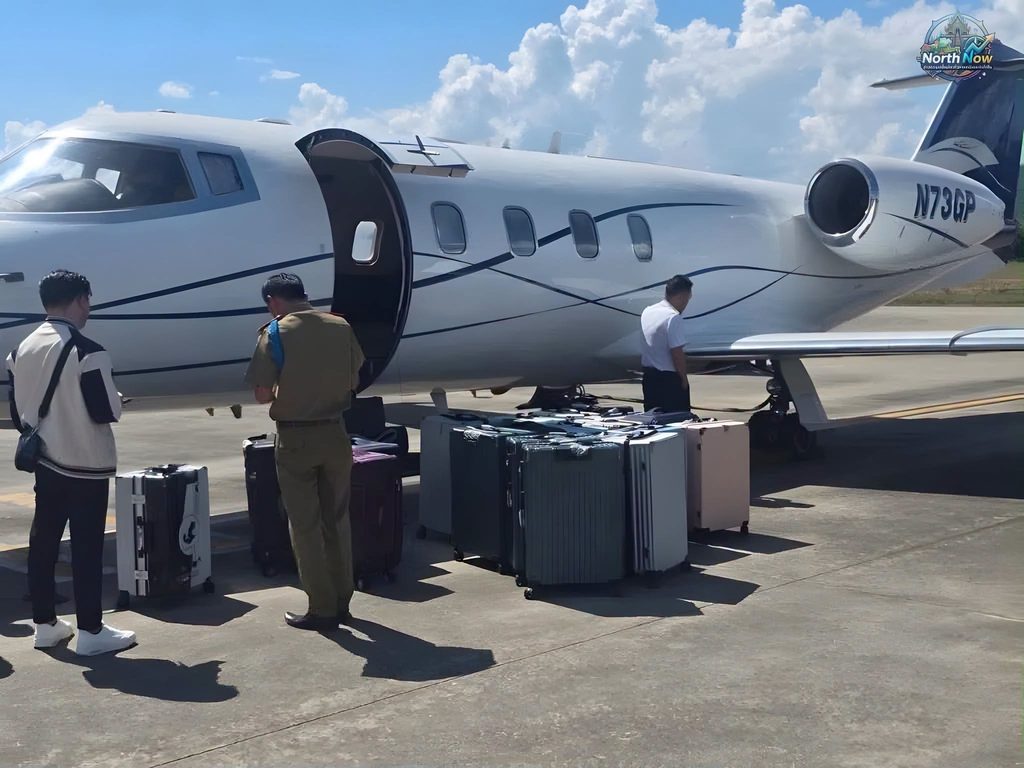
The case centers on a private Learjet 55B that reportedly traveled from Subang, Malaysia, to Luang Prabang, Laos, where authorities intercepted a shipment of suspected crystal methamphetamine before it could be transported to the Philippines.
According to the supplied investigative account, the aircraft was supposed to carry 21 suitcases containing the suspected narcotics to a private aviation facility in Pasay City, with Mindanao identified as the intended market for eventual distribution.
The shipment’s interception prevented the reported cargo from reaching its intended destination. However, the investigation now faces a more consequential task: establishing who financed the operation, who arranged the aircraft and cargo movements, who controlled the suspected drugs, and whether any businesses or other entities were used to facilitate the operation or conceal its financial proceeds.
Authorities have identified 11 persons of interest, but the available account does not establish that all of them were formally charged, that each had knowledge of the suspected narcotics, or that a court has determined any of them to be criminally responsible.
The alleged operation: From Malaysia to Laos, with the Philippines as the intended destination
The reported sequence of events points to a cross-border operation involving aircraft chartering, ground transportation, cargo handling and a planned delivery into the Philippines.
According to the supplied account, the private Learjet initially departed from Subang, Malaysia, without cargo and subsequently landed at Luang Prabang International Airport in Laos.
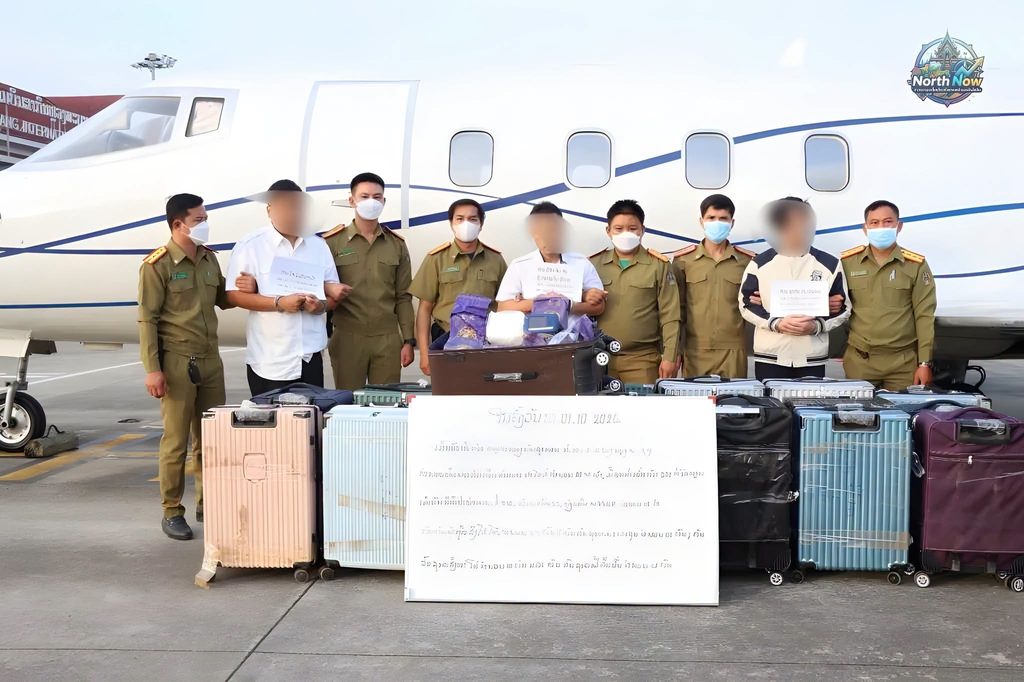
Once the aircraft arrived, 21 suitcases containing suspected crystal methamphetamine were reportedly delivered to the airport by ground vehicles. The cargo was allegedly declared as vape products, a detail that, if supported by documentary evidence, could become central to determining whether the shipment was deliberately misrepresented to conceal its contents.
The reported plan unraveled when a Malaysian pilot refused to load the suspicious cargo. Lao customs and law enforcement authorities subsequently inspected the shipment and intercepted the suspected narcotics.
The account identifies Fahad Mulok Dibarosan, also referred to as Dibaroson Fahad, a resident of Marawi City, as the sole passenger listed on the aircraft’s flight manifest and the only Filipino suspect reportedly arrested at the scene in Laos.
These details, if corroborated by the flight manifest, customs documentation, arrest records and other primary evidence, could provide investigators with an initial framework for reconstructing the operation.
But the precise sequence of the cargo’s arrival, the identities of those who transported and handled the suitcases, the person or entity that controlled the cargo, and the documentary basis for the reported declaration as vape products remain matters requiring verification.
The interception itself establishes neither the full organizational structure of the alleged operation nor the criminal responsibility of every individual subsequently identified by Philippine authorities.
The alleged $49,500 aircraft charter: Following the money
One of the most significant leads in the case is the reported payment of $49,500, described in the supplied account as approximately ₱2.8 million, to charter the private aircraft.
Investigators allegedly traced the charter arrangement to a Mindanao-based political figure whom Remulla subsequently identified as Rimbang.
The alleged payment could become a critical piece of evidence because chartering a private aircraft for an international journey typically generates a documentary trail involving contractual arrangements, invoices, payment instructions and aviation records.
However, the existence of a charter payment alone would not establish that the payer knew the aircraft was intended to transport illegal drugs. Investigators would need to establish the payment’s origin, recipient, purpose and relationship to the suspected cargo.
Among the questions requiring answers are:
- Who formally contracted the Learjet 55B, and which individual or entity appeared on the charter agreement?
- Who paid the reported $49,500, and can bank records or other financial documents establish the source and destination of the funds?
- Was the payment made directly by the alleged financier or through intermediaries?
- Who communicated the aircraft’s itinerary, arranged the ground delivery and coordinated the cargo’s loading?
- Did the charter operator, aviation broker, pilot or other personnel know the nature of the cargo?
- Are there messages, invoices, transfer records or other documents linking the payment to the 521-kilogram shipment?
These are not minor accounting questions. They go to the heart of whether the charter was an ordinary aviation transaction that was misused by other parties or a deliberately organized component of a narcotics-smuggling operation.
The supplied account states that the National Bureau of Investigation (NBI) and the Philippine Drug Enforcement Agency (PDEA) are conducting financial case-building and examining financial records and seized ledgers.
The results of those examinations could help establish whether the reported charter payment was connected to the shipment and whether additional financial transactions point to other participants.
Until the underlying records are disclosed or formally presented in proceedings, the alleged payment and its attribution must remain investigative claims rather than established findings of criminal liability.
Eleven persons of interest: Mapping the alleged network
The list released during the October 16 briefing reportedly includes individuals associated with aviation arrangements, financial transactions, law enforcement, operational coordination and commercial records.
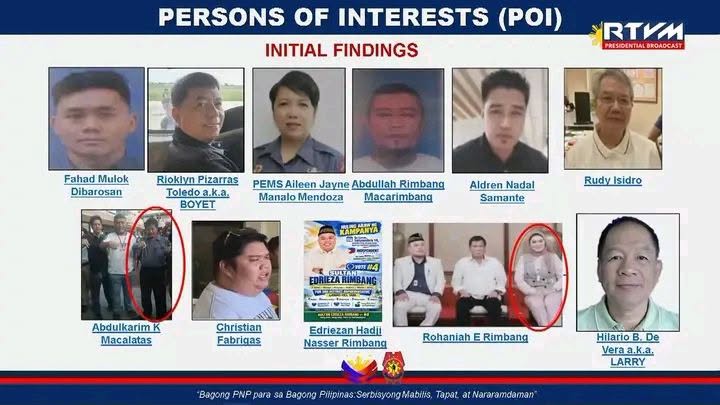
Their inclusion does not establish that they played equivalent roles or that all had knowledge of the suspected drugs.
The following account reflects the roles attributed to them in the supplied material, which should be independently corroborated against official statements and case records.
1. Fahad Mulok Dibarosan, also known as Dibaroson Fahad
Dibarosan, reportedly a resident of Marawi City, was identified as the sole passenger listed on the chartered Learjet 55B’s flight manifest. He was also reported to be the only Filipino suspect arrested and detained in Laos during the interception.
His presence on the manifest and reported arrest make his account potentially important to reconstructing the flight’s purpose and the intended cargo movement.
Investigators would need to establish his actual role, knowledge of the shipment and communications with the people who arranged the aircraft and delivered the suitcases. The available material does not provide his account or establish the outcome of any proceedings against him in Laos.
2. Rioklyn Pizarras Toledo, also known as “Boyet”
Toledo was described as an aviation operations manager who allegedly brokered or handled transactions with a United States-based aviation company to rent the Learjet 55B.
If substantiated, his role could help investigators reconstruct how the aircraft was contracted, who issued instructions and which parties were involved in the flight’s operational arrangements.
The key questions concern the charter agreement, the identity of the contracting party, the payment records and whether Toledo knew of any illicit purpose behind the flight.
3. PEMS Aileen Jayne Manalo Mendoza
Mendoza was identified as a member of the Philippine National Police. The supplied material states that investigators were examining her possible administrative or logistical connection to the network.
It does not specify the conduct that allegedly links her to the shipment.
That distinction is particularly important because a person’s employment in law enforcement does not itself establish participation in criminal activity. Any allegation would need to be supported by specific evidence concerning her actions, communications, access to information or other relevant conduct.
The available account does not establish that she has been formally charged or found to have committed an offense.
4. Abdullah Rimbang Macarimbang
Macarimbang was identified in the supplied account as a primary financier who allegedly contributed capital to bankroll the operation.
His alleged role is distinct from the reported claim that Sultan Edrieza Rimbang financed the aircraft charter. The material does not explain whether the two were allegedly acting together, whether their alleged financial roles overlapped, or whether investigators have traced separate transactions to each.
Establishing the relationship between the alleged sources of financing would be essential to understanding the operation’s financial structure.
5. Aldren Nadal Samante
Samante was listed as a person of interest whose direct logistical or operational connection was reportedly undergoing verification by the NBI.
The supplied material does not specify a particular transaction, instruction or physical act attributed to him.
Consequently, his inclusion on the list should not be interpreted as proof that he arranged the flight, handled the cargo or financed the shipment.
6. Rudy Isidro
Isidro was described as a person of interest whose name or documentation allegedly appeared in investigative flight, handling or advisory records.
The nature of those records and the context in which his name appears have not been detailed in the supplied account.
Investigators would need to identify the documents, establish their authenticity and determine whether any recorded activity was connected to the suspected shipment.
7. Abdulkarim K. Macalatas
Macalatas was identified as a possible operational link associated with a building or business establishment in Quiapo, Manila, reportedly used in coordinating transit paperwork.
The available account does not establish the specific documents involved, who controlled the establishment or whether its operators knew of the alleged smuggling plan.
The relevant investigative question is whether the location was used for legitimate administrative activity, knowingly facilitated the shipment, or was connected to the operation in some other way.
8. Christian Fabrigas
Fabrigas was described as an operational handler or associate allegedly linked to the transport manifest, logistics coordination or tracking of the cargo.
The supplied material does not specify which of these functions he allegedly performed or what evidence supports the attribution.
Flight records, cargo documentation, communications and testimony from people involved in the transportation arrangements would be important in determining the nature of any connection.
9. Sultan Edrieza Hadji Nasser Rimbang, also identified as Edriezan Hadji Nasser Rimbang
Rimbang, a former BTA parliament member, is alleged to have served as a local organizer and financier, including through the reported $49,500 aircraft-charter payment.
The supplied account describes him as a central figure in the investigation, but the underlying financial and communications evidence has not been provided in the material reviewed for this article.
The allegations therefore remain subject to verification and due process.
10. Rohaniah E. Rimbang
Rohaniah E. Rimbang, identified as the wife of Sultan Edrieza Rimbang, was also included among the persons of interest.
The supplied account says investigators presented a photograph featuring her with former President Rodrigo Duterte to illustrate political associations and her family’s political circles.
A photograph with a political figure, membership in a political party or a personal relationship with someone under investigation does not establish participation in a drug-smuggling operation.
The available material does not identify a specific financial transaction, communication, logistical act or other conduct attributed to her. Any meaningful assessment of her alleged connection must rest on evidence of her own actions rather than association alone.
11. Hilario B. De Vera, also known as “Larry”
De Vera was described as a person of interest whose background and corporate records were being examined for possible links to businesses allegedly used as logistical fronts.
The supplied account does not identify a specific transaction or establish that any business associated with him knowingly facilitated the shipment.
Corporate records, beneficial ownership information, financial transactions and evidence of actual business operations could help determine whether any connection is relevant to the alleged smuggling activity.
Taken together, the 11 names suggest that investigators are examining a network extending beyond the individual listed as the aircraft passenger. But the extent of the network, the relationships among its members and the strength of the evidence against each individual remain unresolved.
The former BARMM parliament member and the political dimension
Rimbang’s identification has added a political dimension to a case that would otherwise center on international narcotics trafficking and aviation logistics.
He served in the first Bangsamoro Transition Authority Parliament from 2019 to 2022 after being appointed to the interim body in February 2019 under the administration of former President Rodrigo Duterte.
During his tenure, the supplied background material credits him with participating in legislative proposals, including measures concerning the Bangsamoro region’s official flag and emblem, and with supporting community-level initiatives involving infrastructure, health facilities, agricultural equipment and other local assistance.
The material also describes his political affiliations and participation in the region’s first regular parliamentary elections in 2026.
Those details establish a public profile, but they do not substantiate or disprove the allegations concerning the shipment.
The relevant issue is whether investigators can demonstrate a connection between Rimbang’s alleged financial activity and the logistics of the suspected narcotics operation.
Political prominence can make an investigation more consequential, particularly when allegations involve public figures. It can also increase the risk that unverified claims will be interpreted through partisan loyalties rather than evaluated on the basis of evidence.
The supplied account characterizes Rimbang’s political circle as opposed to the current administration. However, political opposition is not evidence of criminal conduct, and the available material does not establish that political affiliation played a role in the alleged operation.
Similarly, Rimbang’s former position in the BTA Parliament should not be conflated with the actions of the institution itself. His parliamentary tenure ended in 2022, according to the supplied background material, and the allegations concern his purported personal involvement in a private transaction.
There is no evidence in the material reviewed here establishing that the BARMM government, the BTA Parliament or any current regional government office directed or participated in the alleged shipment.
The investigation must therefore distinguish individual accountability from institutional responsibility and avoid drawing conclusions about an entire political administration or region from allegations against particular people.
The alleged Mindanao connection: Where was the shipment supposed to go?
Although the reported flight was scheduled to travel to Manila, the supplied account identifies Mindanao as the suspected final market for the shipment.
It further states that the aircraft was expected to reach a private hangar facility operated by MAPTRA within the Manila International Airport area, in Pasay City.
These details raise an important distinction between the aircraft’s immediate destination and the alleged ultimate distribution market.
A shipment may enter through one location and subsequently be transported elsewhere. Establishing that route, however, requires evidence of the intended recipients, onward transportation arrangements and the parties responsible for receiving or distributing the cargo.
The supplied material does not identify a confirmed recipient of the 521 kilograms or establish precisely where the drugs would have been taken after arrival in Manila.
Nor does it establish that the named aviation facility’s operator knowingly participated in the alleged smuggling plan. The reported intended destination should not be treated as proof of wrongdoing by the facility, its personnel or its owners.
Investigators would need to examine the relevant flight authorization, hangar access records, communications, vehicle movements and any arrangements for onward transport.
If the suspected Mindanao destination is substantiated, the investigation would also need to establish whether the shipment was intended for a particular city or province, which individuals would have received it, and whether local distribution networks were already in place.
Without that evidence, the alleged destination remains a significant investigative lead rather than a fully established account of the planned distribution route.
Carwashes, rice mills and rice trading: Investigating possible commercial fronts
The supplied material states that investigators are examining several apparently legitimate businesses, including a carwash, a rice mill and a rice trading operation, to determine whether they were connected to the alleged network.
Such businesses can become relevant to a financial investigation if evidence shows that their accounts, transactions, facilities or corporate structures were used to facilitate illegal activity or conceal the proceeds of crime.
But the existence of a business, its association with a person of interest or its inclusion in an investigative inquiry does not establish that it served as a front for narcotics trafficking.
The distinction between a legitimate enterprise and an alleged criminal conduit must be established through evidence.
Investigators would need to determine who owns and controls each business, whether its recorded income corresponds to its actual operations, whether unexplained transactions occurred, and whether payments or communications can be connected to the aircraft charter or the suspected cargo.
Other relevant evidence could include accounting records, invoices, loan agreements, corporate ownership documents, bank transactions and communications between the business operators and other persons of interest.
The investigation should also determine whether any suspicious transactions were ordinary commercial payments, proceeds of unrelated activities or transfers connected to the suspected shipment.
The supplied account does not identify the specific businesses by name or provide financial records demonstrating that any of them knowingly facilitated the alleged operation.
Their inclusion in the investigation should therefore be reported as an investigative lead, not a finding that the businesses or their owners engaged in money laundering or drug trafficking.
The alleged transnational network and the role of aviation intermediaries
The case also raises questions about how a private aircraft could allegedly have been arranged to transport a large quantity of suspected narcotics across international borders.
The supplied account points to possible links with a broader, Chinese-connected transnational criminal network operating out of Laos. However, it does not provide sufficient underlying evidence to establish the identity, structure or command relationships of such a network.
The reference to Chinese-connected syndicates must therefore be treated as an investigative allegation rather than an independently established attribution.
What the reported route does illustrate is the importance of reconstructing the operation across several jurisdictions.
The alleged sequence involved an aircraft originating in Malaysia, a cargo delivery in Laos, a proposed flight to the Philippines and a suspected onward market in Mindanao. Each stage would generate different forms of evidence and potentially involve different parties.
Aviation contracts and flight records could help establish who arranged the aircraft. Airport and customs records could clarify how the cargo arrived and why it was inspected. Financial records could reveal who paid for the arrangements. Communications could help determine whether the parties coordinated their activities or understood the nature of the shipment.
Investigators would also need to distinguish between individuals who provided routine aviation or transport services and those who knowingly participated in illegal activity.
A broker’s involvement in arranging an aircraft, for example, would not by itself establish knowledge of the cargo’s contents. The same principle applies to pilots, ground handlers, business operators and other service providers.
The reported refusal by the Malaysian pilot to load the suspicious cargo is a particularly important element of the account because it precedes the reported interception. The circumstances surrounding that refusal, including what prompted the concern and what the pilot communicated to authorities, should be established through official records and testimony.
The case’s international dimension makes cooperation among Philippine and Lao authorities particularly important, alongside any relevant Malaysian and aviation-sector records.
The evidence still needed to establish criminal responsibility
The government’s identification of 11 persons of interest represents an investigative development, not the conclusion of a criminal case.
The central challenge is to connect the suspected drugs, the aircraft, the alleged payment and each person’s conduct through reliable, independently corroborated evidence.
Several evidentiary questions remain particularly important.
First, the physical evidence. Investigators must establish the identity, quantity and evidentiary integrity of the seized substance through official documentation and appropriate laboratory examination. The reported 521-kilogram quantity and ₱3.54-billion valuation should be tied to the relevant seizure and valuation records.
Second, the aviation records. The aircraft’s flight manifest, charter agreement, booking correspondence, payment documents and operational records could help establish who arranged the flight and the purpose represented to the aviation company.
Third, the cargo documentation. Records concerning the 21 suitcases, the reported declaration as vape products, their transportation to the airport and the circumstances of the interception could help reconstruct the shipment’s movement.
Fourth, the financial trail. Investigators must establish whether the reported charter payment originated with the alleged financier, whether intermediaries were used and whether additional transactions can be linked to the operation.
Fifth, the communications. Messages, calls, emails and other records may help establish whether particular individuals coordinated the shipment, knew what the cargo contained or gave instructions concerning its movement.
Sixth, the alleged commercial connections. Investigators must establish whether the businesses under scrutiny had any actual role in financing, storing, transporting or distributing the suspected drugs, rather than relying solely on ownership, association or unexplained suspicion.
Seventh, the individual roles. Evidence must be assessed separately for each person of interest. A connection to the aircraft, a business, a political figure or another suspect cannot automatically establish participation in the same alleged offense.
These distinctions are critical to determining whether the case can progress from intelligence leads and investigative suspicions to evidence capable of supporting formal charges and, ultimately, a judicial determination.
The supplied account states that the NBI and PDEA are conducting financial case-building and reviewing records. It does not provide the complete investigative files, laboratory reports, authenticated financial documents or charging decisions needed to independently assess the strength of the allegations.
Questions authorities must answer
As the investigation proceeds, several questions deserve clear answers from the agencies involved.
- What evidence specifically connects the reported $49,500 aircraft-charter payment to Rimbang, and has the transaction been independently verified through financial records?
- What was the source of the charter funds, who received them, and were any intermediaries involved?
- What evidence supports the alleged financing role attributed to Abdullah Rimbang Macarimbang, and how does it relate to the separate allegation against Sultan Edrieza Rimbang?
- What is the verified legal and investigative status of the Filipino suspect detained in Laos, and what information can authorities lawfully disclose about the circumstances of his arrest?
- Who arranged the delivery of the 21 suitcases, who declared the cargo as vape products, and what records establish the identity of the consignor and intended recipient?
- What evidence supports the alleged involvement of each of the remaining persons of interest, particularly those whose specific actions have not been publicly detailed?
- What is the evidentiary basis for the reported connection to a broader transnational criminal network, and have authorities established the identities of its alleged coordinators?
- Which businesses are actually under examination, what transactions triggered the inquiry, and has any evidence established that they knowingly facilitated the alleged shipment?
- What documentation establishes the reported intended arrival at the MAPTRA-operated facility in Pasay City, and what evidence, if any, connects the facility’s operators to the alleged operation?
- Have formal criminal complaints or charges been filed against any of the 11 individuals, and what are their current legal statuses in the Philippines and Laos?
- Have the named individuals or their representatives been asked to respond to the allegations, and have any issued statements or provided documentary explanations?
The supplied material does not answer these questions comprehensively. They should not be treated as findings against any individual, but as the outstanding issues necessary to evaluate the investigation.
Due process and the risk of guilt by association
The seriousness of a reported ₱3.54-billion drug shipment demands a thorough investigation. It also demands accurate reporting.
A person of interest is not necessarily a suspect formally charged with a crime, and neither status constitutes a conviction. The legal implications depend on the specific circumstances and the applicable proceedings.
The inclusion of a former parliament member, a police officer, a person’s spouse, aviation personnel and business-connected individuals in one investigative list does not mean that all are alleged to have performed the same acts or possessed the same knowledge.
Political photographs, family relationships, party affiliations and professional associations must not be substituted for evidence of individual conduct.
Likewise, the absence of a disclosed charge does not prove that an allegation is false. It means that the public record described in the supplied material has not yet established criminal liability through a completed legal process.
The relevant standard for a credible investigation is not the prominence of the people named, the magnitude of the alleged shipment or the political implications of the case. It is the quality of the evidence linking each individual to a specific alleged offense.
The available material also contains variations in the spelling of Rimbang’s name. Official identification records and formal case documents should be used to establish the exact names and identities of all persons listed.
No responses from the named individuals or their legal representatives are included in the supplied material. Their positions on the allegations therefore remain unreported in this account.
A major seizure is only the beginning
The reported interception of 521 kilograms of suspected shabu in Laos may have prevented a substantial quantity of narcotics from reaching the Philippines. But the broader significance of the case will depend on what investigators can establish beyond the seizure itself.
A successful interception can remove suspected drugs from circulation without necessarily dismantling the financial arrangements, logistical relationships or distribution networks behind an alleged shipment.
The next stage is therefore crucial: tracing the money, authenticating the aviation and cargo records, identifying the intended recipients, examining the alleged commercial connections and determining the actual conduct of each person of interest.
The reported $49,500 charter payment is one potentially important lead. The alleged use of a private aircraft and a cargo declaration that differed from the reported contents are others. The suspected Mindanao destination and the businesses under examination may also help investigators reconstruct the operation if supported by reliable evidence.
Yet none of these leads, individually or collectively as currently described in the supplied material, establishes the guilt of every person named.
The public deserves answers about how the shipment was organized, who financed it, who was expected to receive it and whether the operation was part of a larger criminal enterprise. The people named in the investigation, in turn, are entitled to have allegations against them assessed on the basis of evidence and due process.
For Philippine authorities, the decisive measure of success will not simply be the number of names on a persons-of-interest list or the value assigned to the seized drugs. It will be whether the investigation produces a verifiable account of the alleged operation, identifies those demonstrably responsible and supports any resulting criminal charges with evidence that can withstand scrutiny in court.
The central question remains unanswered: Who actually controlled the 521-kilogram shipment, and can investigators prove the financial and operational links connecting the suspected cargo to the individuals they have named?