
BANSALAN, Davao del Sur — Twenty-five former rebels, referred to by authorities as Friends Rescued, are set to receive reintegration assistance under the sixth batch of the Tupad Pangako Program, following its formal launch on October 15, 2026, at the Mindanao Baptist Rural Life Center (MBRLC) in Barangay Kinuskusan, Bansalan.
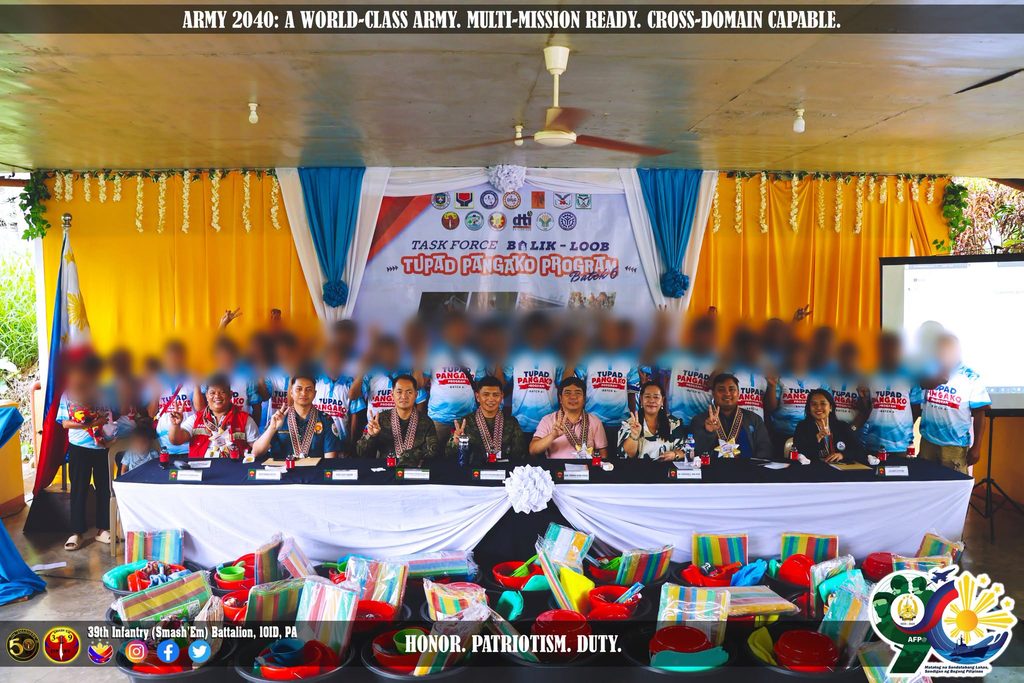
The initiative, led by the 39th Infantry (Smash’Em) Battalion in partnership with the Provincial Government of Davao del Sur, aims to help the participants rebuild their lives in civilian communities through personal development, sustainable livelihood opportunities, and active involvement in local peacebuilding efforts.
The program seeks to provide a pathway toward social and economic recovery for former combatants who have chosen to leave armed struggle behind, while encouraging their participation in community development and efforts to maintain peace and stability across the province.
Implemented in support of Executive Order No. 70 and the objectives of the National Task Force to End Local Communist Armed Conflict (NTF-ELCAC), the initiative brings together national government agencies, local government units, civil society organizations, and other partner stakeholders to coordinate reintegration support.
Lt. Col. Hector A. Estolas, commanding officer of the 39th Infantry Battalion, commended the 25 participants for choosing the path of peace. He reaffirmed the battalion’s commitment to supporting their transition into productive civilian life and encouraging them to become active contributors to their communities.
Estolas emphasized the importance of helping former combatants establish stable lives and participate meaningfully in community development, underscoring the role of sustained government support in making reintegration efforts successful.
Representing BGen. Apollo Jun F. Lamaton, commander of the 1002nd Infantry Brigade, Deputy Brigade Commander Col. Jeffrey A. Villarosa expressed his appreciation to the Provincial Government of Davao del Sur, partner agencies, and program organizers for their continued support.
Villarosa stressed that lasting peace and inclusive development require close cooperation among the military, local governments, civil society, communities, and former combatants. He encouraged the participants to become advocates of peace, take advantage of available government reintegration assistance, and work toward peaceful and productive lives through the Tupad Pangako Program.
The provincial government also reaffirmed its commitment to supporting the initiative. Atty. Herbert Gonzales, provincial administrator, delivered a message of solidarity on behalf of Governor Yvonne Roña Cagas, expressing the provincial government’s support for the participants and the program’s objectives.
Representatives from the Davao del Sur Police Provincial Office, the Barangay Local Government Unit of Kinuskusan, the Provincial Social Welfare and Development Office (PSWDO), the Technical Education and Skills Development Authority (TESDA), the Department of Labor and Employment (DOLE), the Department of Social Welfare and Development (DSWD), and MBRLC also expressed their commitment to the program’s successful implementation.
Their participation highlights the importance of coordinated government services in addressing the various needs of former combatants as they return to civilian communities. Such assistance can help connect participants with livelihood opportunities, skills development, social welfare services, and other forms of support necessary for a more stable transition.
The launch of Batch 6 underscores continuing efforts by the military, provincial and local governments, national agencies, civil society organizations, and community stakeholders to strengthen reconciliation and promote socioeconomic stability in Davao del Sur.
Beyond the formal launch, the program’s broader objective is to help participants build peaceful and productive futures while contributing to safer, more inclusive communities.
The long-term success of reintegration efforts will depend on sustained institutional support, access to practical livelihood opportunities, and the willingness of communities to participate in reconciliation and peacebuilding. Through initiatives such as Tupad Pangako, government and community partners aim to turn the decision to abandon armed conflict into a lasting opportunity for personal recovery, social reintegration, and sustainable peace.