
Davao Oriental has reached a point where its electricity problem can no longer be dismissed as an ordinary inconvenience. Frequent brownouts, voltage fluctuations, unannounced interruptions, and concerns over the quality of service have become serious obstacles to household welfare, business operations, and the province’s economic ambitions. When electricity is unreliable, livelihoods suffer, investments hesitate, and development plans become more difficult to realize.
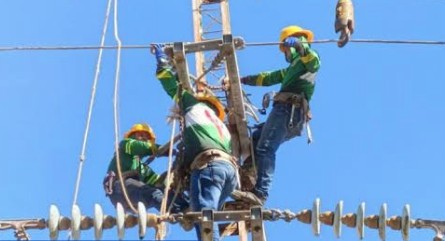
The growing call to bring Davao Light and Power Company, Inc. into the province, now formally advanced by the Philippine Chamber of Commerce and Industry–Davao Oriental, deserves serious consideration. It is not simply a contest between a private utility and an electric cooperative. It is a question of whether the existing electricity distribution arrangement can adequately serve the people of Davao Oriental—and whether a different arrangement could deliver better results.
But while the case for change is compelling, the public must not mistake a franchise expansion for a guaranteed solution. Davao Oriental needs reliable, affordable, and safe electricity, not merely a new utility operator. Any decision on Davao Light’s entry must be judged against that standard.
When brownouts become a development problem
For households, an unexpected power interruption means disrupted routines, spoiled food, lost working hours, and possible damage to appliances. For students who depend on online learning and workers who earn through remote employment, unreliable electricity can mean missed classes, lost productivity, and reduced income.
The consequences extend beyond individual households. Hotels, resorts, restaurants, manufacturers, and other businesses must contend with interruptions that can disrupt operations and force them to rely on backup generators. These generators bring additional fuel and maintenance expenses, costs that ultimately affect business viability and, potentially, consumer prices.
For a province seeking to expand tourism, attract investment, improve agricultural value chains, and strengthen commercial activity, these are not minor inconveniences. They are structural disadvantages.
Reliable electricity is particularly important to Davao Oriental’s development plans, including the proposed expansion of tourism and the operation of Mati City Airport. Investors do not evaluate a destination solely on its natural attractions, workforce, or available land. They also consider whether essential utilities can support operations consistently and at a reasonable cost.
This is why the demand for better power service deserves to be taken seriously. When electricity becomes an obstacle to earning a living and building a business, it becomes a public-interest issue.
The frustration expressed by residents through the familiar complaint, “Brownout nasad, DORS?” captures a sentiment that utility providers should never take lightly. Public confidence is not sustained by explanations alone. It is earned through dependable service, transparent communication, and measurable improvements.
The business sector has made its position formal
The demand for change has moved beyond informal complaints.
In Board Resolution No. 004, Series of 2026, adopted on September 28 and signed on October 2, the PCCI–Davao Oriental Chamber of Commerce and Industry formally urged Congress to expand Davao Light’s legislative franchise to cover Mati City and all municipalities currently served by the Davao Oriental Electric Cooperative, or DORECO.
The resolution followed a request from Governor Nelson L. Dayanghirang Sr. for support from the business sector in pursuing power stability in the province. The chamber cited frequent and prolonged brownouts, unannounced interruptions, low voltage, and power-quality problems affecting businesses, tourism establishments, households, and public services.
It also pointed to the experience of neighboring areas where Davao Light’s franchise has been expanded under Republic Act No. 12144, which took effect in April 2025.
The precedent is relevant, but it should not be treated as conclusive proof that the same arrangement will automatically produce the same results in Davao Oriental. The province must examine the actual performance of Davao Light in areas where it has assumed operations, including service reliability, electricity rates, investment commitments, customer complaints, and the pace of infrastructure improvements.
Claims of superior performance should be tested against independently verifiable evidence. If the experience in neighboring areas demonstrates sustained improvements, those results would strengthen the case for expansion. If there are unresolved problems, those should also be disclosed.
The public deserves a comparison based on actual outcomes, not competing assurances from institutions with their own interests and responsibilities.
DORECO’s defense identifies a real problem—but also raises questions
DORECO’s October 24 statement acknowledges consumers’ concerns about sudden power interruptions, voltage fluctuations, and the need for reliable, safe, and reasonably priced electricity. The cooperative argues, however, that changing the distribution franchise would not automatically improve service.
On this point, DORECO has a legitimate argument.
The province’s electricity problems cannot be understood solely by looking at the organization that distributes power to consumers. The reliability of the entire system depends on several interconnected components: generation, transmission, distribution infrastructure, maintenance, and the ability of institutions to coordinate when failures occur.
DORECO has identified delays in the National Grid Corporation of the Philippines’ Maco–Mati 138-kilovolt transmission project as a major constraint. In its statement, the cooperative said the project had been delayed from an earlier target of 2021 to 2026 and subsequently to 2029. It also argued that a stronger transmission connection is essential to improving voltage regulation and supply reliability.
If transmission capacity is inadequate, replacing a distribution utility will not, by itself, resolve the underlying bottleneck. A new operator would still depend on the transmission network and the power supplied through it.
This is an important qualification to the argument for Davao Light’s entry. Congress and local officials must distinguish between interruptions caused by transmission constraints and those arising from distribution-system deficiencies, maintenance failures, poor voltage regulation, or operational shortcomings. Without that distinction, the province risks pursuing a major institutional change without fully addressing the technical causes of the crisis.
Yet DORECO’s explanation cannot become a blanket defense against accountability.
A cooperative may not control every power plant, transmission line, weather event, or right-of-way dispute. But it remains responsible for the aspects of service within its control: maintaining and rehabilitating distribution facilities, managing outages effectively, communicating with consumers, addressing voltage problems, documenting recurring failures, and coordinating with the agencies responsible for wider infrastructure.
The relevant question is not whether DORECO alone caused every interruption. It is whether the cooperative has done everything reasonably expected of it to reduce the effects of those interruptions—and whether its actions have produced adequate, measurable improvements.
Consumers should not have to choose between accepting the cooperative’s explanations indefinitely and supporting a private utility without sufficient scrutiny. They deserve a clear accounting of what has failed, what has been corrected, what remains unresolved, and who is responsible for each outstanding problem.
The transmission line must not become another promise without a deadline
The Maco–Mati 138-kV transmission project is central to this debate.
DORECO itself has emphasized the importance of completing the project, arguing that a transmission connection reaching Mati could reduce the province’s exposure to certain interruptions associated with facilities and maintenance in neighboring areas. The cooperative has also urged NGCP to accelerate implementation while it continues rehabilitation and maintenance of its own distribution facilities.
That acknowledgment points to a larger governance problem: electricity reliability depends on institutions whose responsibilities overlap but are not interchangeable.
NGCP must account for the status of the transmission project, explain the causes of its delays, disclose its implementation schedule, and identify the obstacles that must still be overcome. The Energy Regulatory Commission and the Department of Energy must ensure that regulatory and planning processes do not become excuses for indefinite postponement. Local and provincial officials, for their part, should use their influence to demand a firm, publicly monitored timetable.
The reported movement of the target completion date to 2029 deserves particular scrutiny. A project repeatedly deferred over several years requires more than another assurance that it remains a priority.
The public should be able to monitor specific milestones, including permitting, right-of-way acquisition, procurement, construction progress, and commissioning. If deadlines are missed, the responsible parties should explain why and identify corrective measures.
A franchise expansion and the completion of the transmission line should not be framed as mutually exclusive solutions. Davao Oriental needs both an adequate transmission backbone and a distribution system capable of delivering electricity reliably to consumers. Neither can fully compensate for persistent weaknesses in the other.
Will Davao Light deliver better and more affordable electricity?
This is the central question, and it requires more than an assumption that private ownership is inherently more efficient than cooperative management.
Davao Light’s entry could bring additional technical capacity, investment resources, operational systems, and management expertise. Its experience in a larger distribution network may offer advantages in procurement, maintenance, system planning, and customer service. If those capabilities are translated into better performance in Davao Oriental, consumers and businesses could benefit.
But a larger utility is not automatically a better utility in every location. Its actual performance would depend on the condition of the assets it inherits or acquires, the investments it commits to make, the transmission supply available to it, the regulatory environment, and the cost of extending and maintaining service across the province.
The argument over electricity prices also needs careful examination. Claims that DORECO consumers pay premium rates despite receiving substandard service are serious, but a sound comparison must use comparable billing periods, customer categories, consumption levels, and rate components. Differences in generation charges, transmission charges, distribution charges, system losses, taxes, and other pass-through costs must be distinguished.
The public needs to know whether Davao Light can deliver lower total bills, better service at comparable rates, or improved reliability that justifies any differences in cost. Those are separate questions and should be answered with evidence.
Congress should therefore require any franchise proposal to be accompanied by clear service commitments, investment plans, consumer-protection provisions, and transparent reporting requirements. The Energy Regulatory Commission must retain its role in overseeing rates and compliance with applicable standards.
The province should not trade chronic brownouts for an arrangement in which consumers have little recourse against excessive charges or inadequate service. The objective must be a better electricity system, not simply a different corporate name on the bill.
The risks of transition must be addressed before they become the consumers’ burden
A change in franchise can involve difficult questions about distribution assets, employee arrangements, outstanding obligations, service territories, and the continuity of electricity delivery. These issues must be settled through a transparent and lawful process.
PCCI–Davao Oriental has recognized this in its resolution, calling for an orderly transition, uninterrupted electricity service, consumer information campaigns, preferential consideration where practicable for qualified DORECO employees, and safeguards against stranded costs and unreasonable rate increases.
These provisions should not be treated as secondary details. They are essential protections.
DORECO has also raised concerns about maintaining electricity service in more than 315 remote sitios and puroks, particularly in mountainous and distant communities. Its warning deserves serious consideration. A utility transition must not weaken the commitment to serving communities where infrastructure is more expensive to build and maintain and where commercial returns may be limited.
However, the existence of remote communities should not be used to shield an incumbent provider from scrutiny or to deny residents the possibility of better service. The proper response is to establish enforceable obligations for universal and equitable service, backed by adequate investment, regulatory monitoring, and clear accountability.
Workers also deserve protection. Employees who have maintained and operated the existing network should not become collateral damage in a political and commercial dispute. Any transition should establish fair procedures for employment, compensation, training, and the recognition of relevant experience, subject to applicable laws and agreements.
Most importantly, electricity must continue flowing throughout the transition. Consumers cannot be expected to bear the consequences of disputes over assets, contracts, or institutional responsibilities.
A cooperative’s public mission does not excuse poor performance
DORECO’s cooperative structure carries a public-service responsibility. Its member-consumer-owners are not merely customers; they are also stakeholders in an institution intended to support their communities.
That structure deserves recognition, particularly given the responsibility of bringing electricity to geographically isolated areas. Rural electrification can be costly, and the economic case for serving remote communities may be weaker than that for densely populated urban centers.
But the cooperative model must be judged by the same fundamental standard as any other service provider: whether it serves the people effectively.
Institutional history, community ownership, and a public-service mandate are not substitutes for reliable electricity. Nor should the prospect of a private operator be treated as sufficient evidence that a better outcome will follow.
The most defensible position is neither unconditional loyalty to DORECO nor unquestioning confidence in Davao Light. It is to insist that whichever arrangement best serves consumers must demonstrate its value through performance, transparency, affordability, and equitable access.
DORECO’s willingness to consider dialogue and cooperation, including possible arrangements with Davao Light, could also provide an avenue worth examining. Its own resolution acknowledges that a partnership, joint venture, or other lawful collaborative arrangement may be explored, subject to regulatory approval and agreement between the parties.
That possibility should not replace consideration of franchise expansion, but neither should it be dismissed before its practical merits are assessed. The province should examine all lawful options capable of producing the best outcome for consumers, without allowing institutional pride or political rivalry to dictate the result.
Congress must demand evidence, not merely choose sides
The proposed expansion of Davao Light’s franchise remains a legislative matter. It is not yet an accomplished change in the province’s electricity distribution system.
Congress therefore has a responsibility to scrutinize the proposal before acting. That scrutiny should include public hearings, independent technical assessments, a review of DORECO’s performance, an evaluation of Davao Light’s record in newly served areas, and a clear accounting of the costs and benefits of each available arrangement.
The inquiry should establish a baseline against which future performance can be measured. How frequent and prolonged are outages in each municipality? What are their principal causes? How severe are voltage fluctuations? What are the actual electricity rates paid by different consumer categories? How much investment is required to rehabilitate the existing distribution network? What commitments can Davao Light make, and how will compliance be verified?
These questions are necessary because the public should not be asked to accept a major restructuring based solely on frustration with the status quo or confidence in a proposed alternative.
If the evidence shows that Davao Light can materially improve reliability, protect consumers, maintain equitable access, and make the required investments, Congress should give the proposal serious consideration. If other arrangements can achieve those objectives more effectively, they too should receive a fair hearing.
Whatever the outcome, the government must also press NGCP and the relevant energy agencies to resolve the transmission bottleneck. Changing the distributor while allowing critical infrastructure delays to continue would leave a central part of the problem unresolved.
The people of Davao Oriental cannot wait indefinitely
There is a danger that this debate will become a familiar exchange of explanations, accusations, promises, and institutional defenses while consumers continue to experience the same interruptions.
That would be unacceptable.
Residents need a public timetable for action, clear reporting on outages and voltage quality, transparent disclosure of infrastructure investments, and regular updates on the Maco–Mati transmission project. Regulators must make performance information accessible and ensure that complaints receive meaningful responses. Local officials must demand results from every institution responsible for the electricity system, rather than treating a franchise change as the sole measure of progress.
Davao Light’s entry may be a viable path toward better service. The case for considering it is strengthened by the formal appeal of the business community and the persistence of consumer concerns. But its value must ultimately be demonstrated, not presumed.
Davao Oriental needs electricity that is reliable enough for students to attend online classes, workers to earn their wages, hospitals to operate safely, farmers and businesses to protect their investments, and tourism enterprises to welcome visitors without constantly worrying about the next brownout.
The real test is not whether Davao Light replaces DORECO. It is whether the people receive better service, whether their bills remain reasonable, whether remote communities continue to receive electricity, and whether those responsible can be held accountable when standards are not met.
The province has every reason to demand change. It also has every reason to demand proof that the change will work.
Electricity is too essential to be held hostage by institutional inertia, political interests, or corporate promises. Davao Oriental deserves a power system that delivers—and a process that puts consumers, not institutions, at its center.