
DAVAO CITY — Bringing together around 160 members of the Balik Islam community, the City Government of Davao used the 2nd Balik Islam Congress 2026 to strengthen religious unity, recognize the sector’s place in the city’s social fabric, and encourage its participation in peacebuilding, public safety, and community development.
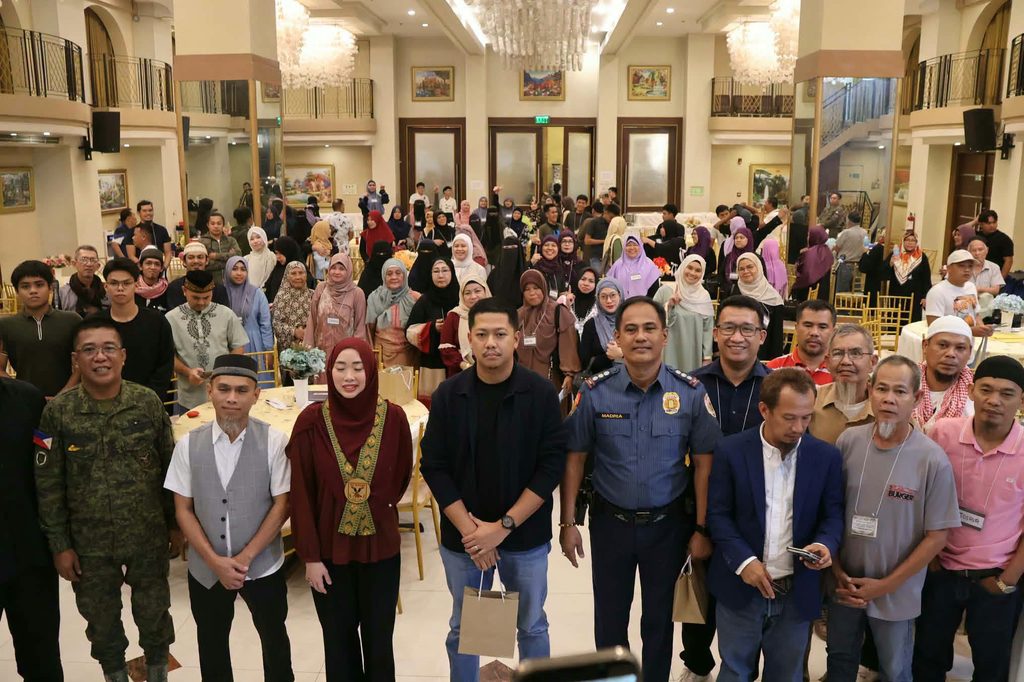
Held on October 17, 2026, at the Grand Hall of World Palace Hotel along Acacia Street, Ecoland Drive, the congress provided a platform for Muslims who embraced Islam after previously practicing other faiths to share their experiences, discuss concerns affecting their communities, and explore ways to contribute to a more peaceful and inclusive Davao City.
Organized through the City Government’s Task Force Davao, the gathering carried the theme “Sustaining Balik Islam Communities: Strengthening Faith, Nurturing Peace, and Building Resilient Communities.”
The event highlighted the growing recognition of Balik Islam communities not only as a religious sector but also as partners in strengthening relationships across faiths, improving community engagement, and sustaining peace in a city where cultural and religious diversity remains an important part of public life.
As of October 2026, Davao City has at least 1,000 Balik Islam members, underscoring the importance of ensuring that their voices, needs, and experiences are represented in local governance and community programs.
Faith journeys and the search for belonging
Balik Islam refers to individuals who embrace or revert to Islam after previously following other religious traditions, including Christianity, Hinduism, Judaism, or Buddhism. For many within the community, the decision represents a deeply personal journey shaped by spiritual conviction, reflection, and a renewed sense of purpose.
In his message delivered by Aysee A. Romanda, administrative officer of the Public Safety and Security Office (PSSO), City Mayor Sebastian Duterte recognized the significance of these individual journeys and the sincerity involved in choosing a faith.
“Every journey of faith carries a story of discovery, conviction, and a renewed sense of purpose,” Duterte said.
He added that the experiences of those who embrace Islam form part of a broader story of genuine intention and the pursuit of a renewed spiritual commitment.
The mayor’s message placed emphasis on the personal dimension of religious conversion, recognizing that each member’s experience is shaped by individual circumstances, beliefs, and convictions.
Beyond religious observance, the congress also highlighted the importance of creating an environment in which Balik Islam members can participate in community life, build relationships with other sectors, and contribute to shared efforts toward peace and development.
Recognition of the sector also provides an opportunity to address the concerns that can arise when individuals enter a new religious community, including the need for representation, social acceptance, and access to programs that support their participation in public life.
From religious recognition to meaningful representation
For Task Force Davao Commander Colonel Rodrigo A. Mariñas Jr., the congress serves a purpose beyond gathering members of the community for a religious event. It provides a venue where their concerns can reach local authorities and where they can become more involved in programs related to public safety and development.
Mariñas explained that the initiative began as an effort to consolidate Balik Islam members and provide them with representation within the local government and the broader Davao City community.
“The Balik Islam Congress basically started in consolidating our Balik Islam brothers and sisters for them to be represented. Not only in the local government but also in the main stream Davao City,” he said.
He described the congress as a forum for introducing government programs while allowing participants to raise issues and concerns experienced in their respective communities.
The commander also encouraged Balik Islam members to become responsible Dabawenyos and take part in what he described as the city’s “Culture of Security.”
The approach reflects an understanding that public safety cannot depend solely on law enforcement operations. Community cooperation, communication, and public participation can also help authorities better understand local conditions and build relationships with residents.
By providing a direct channel between Balik Islam members and government representatives, the congress can help surface concerns that might otherwise receive limited attention. It can also encourage community members to participate in discussions on security, social cohesion, and development.
However, the long-term value of such gatherings will depend on whether the concerns raised lead to appropriate responses, sustained engagement, and programs that remain accessible beyond the annual congress.
Muslim affairs officials urge unity
Datu Pamikirin Latip Arumpac Jr., head of the Davao City Muslim Affairs Office (DCMAO), urged Balik Islam members to appreciate the city’s recognition of their community and use the opportunity to strengthen their solidarity.
“Sa ating mga kapatid na Balik Islam, pasalamat tayo sa City Government of Davao dahil ni-recognize tayo. Dito lang yan nangyari sa Davao nga na recognized yung mga Balik Islam. So, i-grab po natin ang pagkakataon na magka-isa tayo,” Arumpac said.
He encouraged members to remain united and take advantage of the opportunity to participate in initiatives that recognize their presence within the city.
His remarks emphasized the importance of representation as a starting point for stronger community relationships. Recognition can help establish a connection between a sector and local institutions, but maintaining that connection requires continued dialogue, trust, and meaningful participation.
For Balik Islam members, unity may also provide a stronger foundation for communicating common concerns while respecting the different circumstances and experiences of individuals within the community.
The congress therefore served as an opportunity to reinforce both internal solidarity and the community’s relationship with local authorities.
Police highlight shared responsibility for peace
The Davao City Police Office (DCPO) also reaffirmed its commitment to inclusive peacebuilding through the participation of its City Director, Police Colonel Peter Bauzon Madria.
Madria attended the congress and delivered a lecture on the peace and order situation in Davao City, emphasizing the importance of cooperation among religious communities, government institutions, and law enforcement agencies.
“Peace and order is a shared responsibility. By working together across faiths and institutions, we can build inclusive harmony and ensure the safety and security of our communities,” Madria said.
His message underscored the role of community partnerships in maintaining peace and security, particularly in a city where different religious and cultural groups share public spaces and participate in common civic life.
The police participation also placed the congress within a broader framework of preventive engagement, in which dialogue and cooperation complement the work of law enforcement.
Rather than treating public safety as the responsibility of authorities alone, the approach encourages residents to become active partners in maintaining peaceful communities and communicating issues that may affect local security.
The presence of police leadership alongside religious representatives and local officials provided an opportunity to discuss how these relationships can be sustained through continued engagement.
A gathering of religious and civic leaders
The congress brought together several leaders representing religious institutions, indigenous communities, public safety, and local government.
Among those who attended were Ustadz Ismael Español, president of the Balik Islam Council of Davao City; Michael Mohamad, deputy mayor of the Kagan Tribe; Shayk Mohammad Y. Pasigan, grand mufti of Region XI; Colonel Rodrigo A. Mariñas Jr., Task Force Davao commander; and City Councilor Atty. Luna Marie Dominique S. Acosta, chair of the Peace, Order, and Public Safety Committee and representative of the city’s first district.
Their participation highlighted the importance of bringing different institutions and community sectors into discussions on religious inclusion and peacebuilding.
The involvement of Muslim religious leaders, representatives of indigenous communities, local officials, and police authorities also reflected the value of cross-sector dialogue in addressing concerns that extend beyond the responsibilities of any single institution.
For a community whose members come from different religious backgrounds and personal experiences, such engagement can create opportunities to establish stronger networks and encourage participation in wider civic initiatives.
Beyond the congress: Sustaining an inclusive community
The 2nd Balik Islam Congress 2026 reaffirmed the City Government of Davao’s recognition of the Balik Islam sector and the role its members can play in promoting peaceful and resilient communities.
Yet the significance of the gathering ultimately rests on what follows after the event.
With at least 1,000 Balik Islam members in Davao City, sustained engagement could help ensure that the sector has opportunities to communicate its needs, access relevant government programs, participate in community development, and contribute to public safety initiatives.
The challenge is to translate recognition into continuing representation and practical support. This includes maintaining open communication between community members and local authorities, ensuring that concerns raised during the congress receive appropriate attention, and encouraging participation without discrimination based on religious background.
The congress also offered an important reminder that peacebuilding is not limited to preventing conflict. It involves creating conditions in which people from different backgrounds can participate in public life, develop mutual understanding, and work together toward common goals.
For Balik Islam members, the gathering provided a venue to affirm their faith and strengthen their ties with one another. For local authorities, it presented an opportunity to listen, engage, and build partnerships with a growing community.
As Davao City continues to pursue peace and public safety, the continued inclusion of Balik Islam members in community initiatives may help strengthen the relationships on which lasting peace depends.
The message of the congress was clear: faith may be a personal journey, but building a peaceful and resilient community is a shared responsibility.