
PALIMBANG, Sultan Kudarat — In a quiet but powerful transformation of once conflict-affected lands, soldiers, former rebels, and farmers stood side by side to plant not just coffee seedlings—but the seeds of peace, livelihood, and renewed community trust.
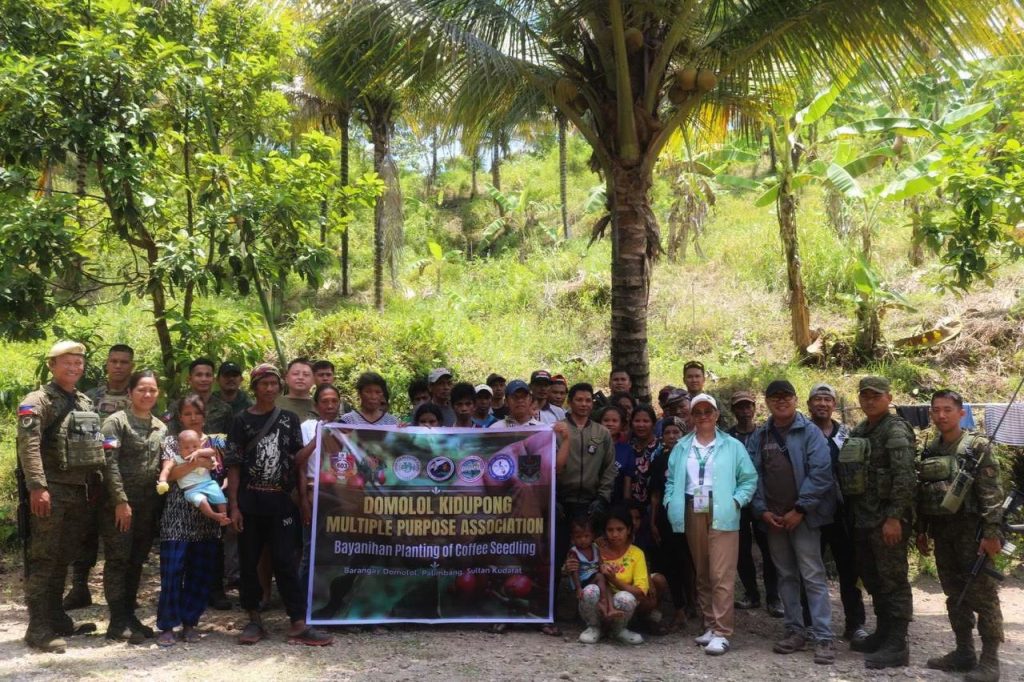
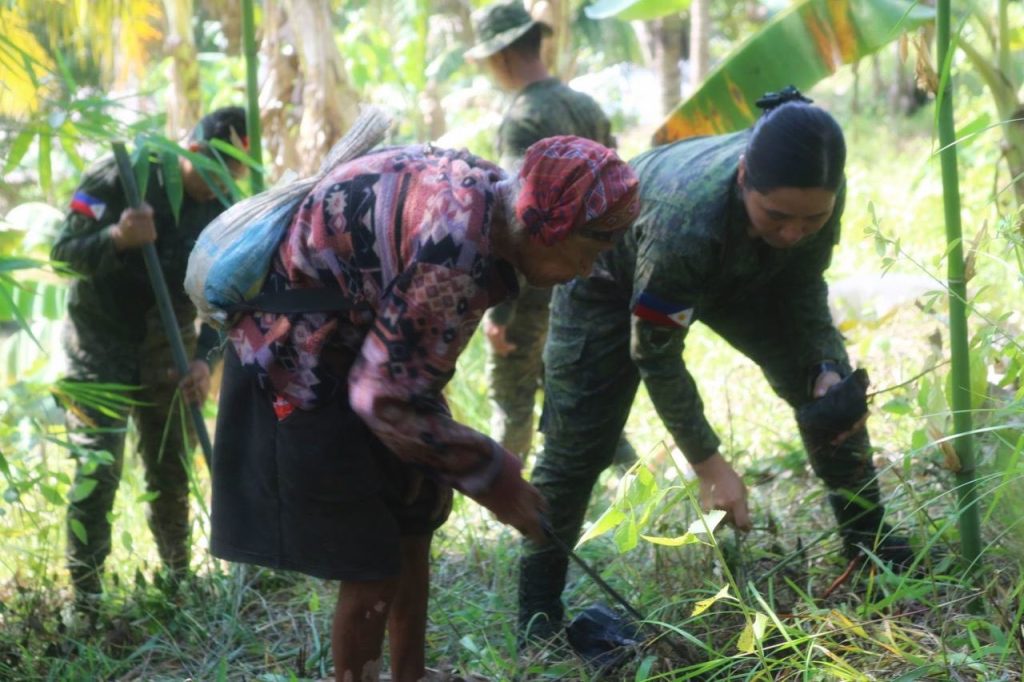
Over two days from April 30 to May 1, the 37th Infantry Battalion (37IB) of the 6th Infantry Division, Philippine Army led a “Bayanihan” coffee planting initiative across Barangay Domolol and Barangay Ligao. The activity brought together government agencies, local leaders, and residents in a coordinated push to turn former battlegrounds into productive agricultural spaces.
At the center of the initiative is a strategic effort to support the reintegration of former rebels—one that goes beyond disarmament and into sustainable economic inclusion.
Turning Over a New Leaf
Led by Lieutenant Colonel Christopherson M. Capuyan, Commanding Officer of the 37IB, the activity was carried out with the support of Bravo Company under Lt. Patrick John C. Pacres. But more than a military-led operation, the initiative reflected a broader whole-of-nation approach.
The Municipal Government of Palimbang, through its Office of the Municipal Agriculture, partnered closely with the battalion, alongside the Municipal Task Force to End Local Communist Armed Conflict (MTF-ELCAC). The Office of the Presidential Adviser on Peace, Reconciliation and Unity (OPAPRU), represented by Project Development Officer IV Mart Anne A. Lebria, also lent critical support.
Together, they worked not just to plant crops, but to build a pathway for former rebels to rejoin society with dignity and purpose.
Coffee as a Catalyst for Peace
The choice of coffee is both symbolic and practical. Known for its long-term yield and market value, coffee farming offers a sustainable source of income—particularly crucial for individuals transitioning away from armed struggle.
For former rebels, many of whom have struggled to find stable livelihoods after returning to civilian life, the project provides a tangible opportunity to rebuild. For the broader community, it signals a shift—from uncertainty and conflict to cooperation and shared progress.
Residents, barangay officials, and members of local people’s organizations actively participated in the planting, embodying the Filipino spirit of “bayanihan”—collective action toward a common goal.
A Community Reclaims Its Future
The significance of the initiative runs deeper than agriculture. In areas long affected by insurgency, trust between communities and government institutions has often been fragile. Activities like this, however, are gradually reshaping those dynamics.
By engaging local stakeholders and ensuring that former rebels are not left behind, the program promotes inclusivity—an essential ingredient for lasting peace.
“This is not just about planting coffee,” one local participant noted. “It’s about giving people a reason to stay in peace.”
Sustaining Gains Beyond the Battlefield
The coffee planting project forms part of a broader campaign to address the root causes of insurgency: poverty, lack of opportunity, and social exclusion. It aligns with national efforts under ELCAC to deliver basic services, infrastructure, and livelihood programs to geographically isolated and disadvantaged areas.
For the Philippine Army, the mission is no longer confined to combat operations. Increasingly, it extends into community-building, development facilitation, and peace advocacy.
As rows of coffee seedlings now line the soil of Domolol and Ligao, they represent more than future harvests—they stand as living proof of transformation.
In Palimbang, the journey from conflict to cultivation is taking root—one seedling, one partnership, and one renewed life at a time.