
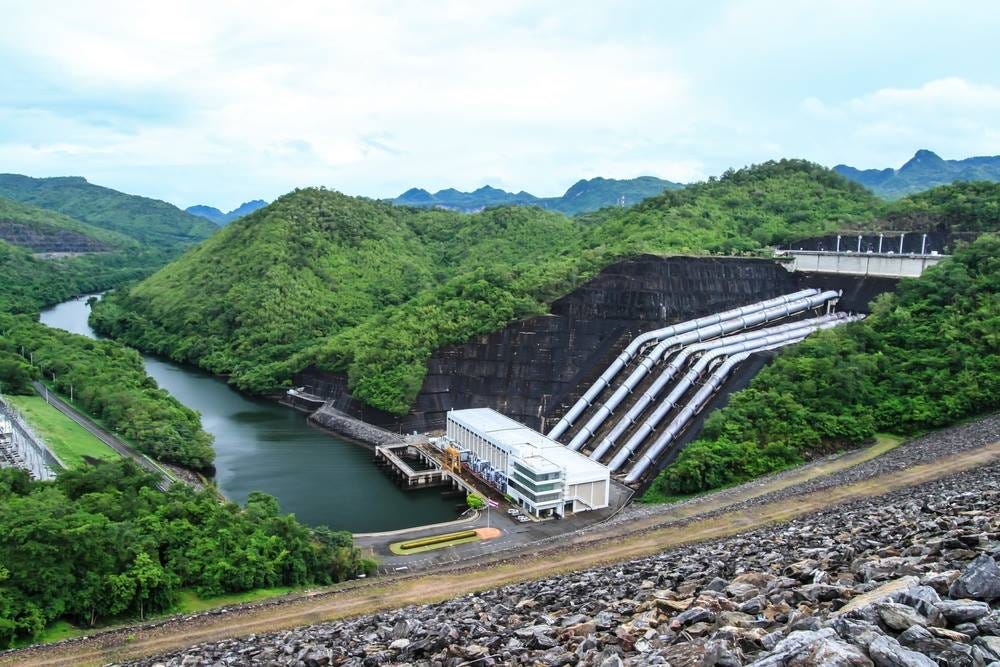
There is nothing “technical” or “routine” about what is happening to the Agus–Pulangi Hydropower Complex. Strip away the bureaucratic language—“rehabilitation,” “modernization,” “concession framework”—and what emerges is a familiar and deeply troubling pattern: a strategic, step-by-step march toward privatization of one of Mindanao’s most critical public assets. And Mindanao has every reason to be alarmed. For decades, the roar of Maria Cristina Falls and the steady current of the Agus and Pulangi rivers have powered not just homes and industries—but the very idea that Mindanao can stand on its own. This is not just infrastructure. This is sovereignty. This is survival. Now, it is being quietly prepared for sale.
The Great Disguise: “Rehabilitation” as a Prelude to Privatization
Let’s be clear: rehabilitation is necessary, but the way it is being framed and executed raises serious red flags. The timeline being advanced by the Power Sector Assets and Liabilities Management (PSALM) Corporation suggests that what is presented as a technical upgrade is, in fact, a calculated prelude to privatization. The so-called preparatory phase—asset condition assessments, digital transformation, and capacity building—does not merely improve operations; it systematically enhances the asset’s attractiveness to private investors. This is not just about fixing aging infrastructure. It is about packaging Agus–Pulangi for eventual transfer. The repeated emphasis on a “concession framework” is particularly telling. That language is not neutral—it signals a clear direction toward private control. By the time full rehabilitation begins, the structure for privatization may already be firmly in place.
A Dangerous Trade-Off: Public Investment, Private Profit
At the heart of the issue lies a deeply troubling contradiction: why should the government pour billions in public funds to rehabilitate Agus–Pulangi, only to hand over its operation to private corporations afterward? This is not reform—it is a transfer of wealth from the public to private interests. Under any concession arrangement, private operators will inevitably seek returns on their investment, and those returns will come from consumers through higher electricity rates. This is the unavoidable logic of privatization. The Diocese of Iligan, led by Bishop Jose Rapadas III, has rightly underscored that electricity is a basic necessity, not a commodity to be subjected to profit-driven pricing. To allow this shift is to place an even heavier burden on already struggling households across Mindanao.
The Myth of Necessity
Privatization is often justified by claims that the government lacks the financial capacity to rehabilitate the complex. But this narrative does not hold up under scrutiny. Agus–Pulangi is not a failing asset—it generated approximately ₱9 billion in revenue between 2023 and 2024. It remains a viable and productive public utility. The question, then, is not whether resources exist, but why alternatives are not being pursued. Why not secure official development assistance, multilateral financing, or direct public investment while retaining ownership? Why is privatization being framed as the only viable path when other options clearly exist? The insistence on a concession model suggests not necessity, but preference.
The Cost to Mindanao: More Than Just Higher Bills
The implications of privatization extend far beyond rising electricity costs. Agus–Pulangi is central to Mindanao’s energy security, providing stable and flexible power that supports industries and economic growth. Surrendering control to private entities means relinquishing the ability to manage energy supply in the public interest, particularly during crises. Beyond economics, the stakes are also cultural and environmental. The Agus River, flowing from Lake Lanao, is deeply intertwined with the identity and heritage of the Maranao people, while the Pulangi River sustains Indigenous communities such as the Higaonon. These are not mere resources—they are living ecosystems and cultural lifelines. Privatization risks reducing them to profit-generating assets, undermining both environmental stewardship and Indigenous rights. It also weakens long-standing calls for greater regional control over Mindanao’s resources, particularly within the Bangsamoro Autonomous Region.
A Manufactured Crisis?
Equally alarming are reports of inadequate funding for maintenance, with the National Power Corporation indicating that budget approvals for key projects in 2026 have yet to be secured. This raises the possibility that the current challenges facing Agus–Pulangi are not simply the result of neglect, but part of a broader pattern that justifies privatization. When a public asset is systematically underfunded, its decline can be used as evidence that government management has failed—thereby making privatization appear inevitable. This is a familiar script, and it is one that Mindanao must critically examine before accepting the narrative being presented.
The Illusion of Transparency
While consultations and press briefings are being conducted, genuine transparency requires more than information dissemination—it demands meaningful public participation before decisions are effectively made. The existence of multiple unsolicited proposals already under review indicates that the process is far more advanced than publicly acknowledged. This creates the risk that by the time the broader public fully understands the implications, the decision to privatize will already be locked in. Transparency should not be a formality; it must be a safeguard.
The Line That Must Not Be Crossed
Agus–Pulangi is more than a government asset—it is a national and regional lifeline. It represents renewable energy potential, economic stability, and cultural heritage. To privatize it without exhaustive public scrutiny, without fully exploring alternatives, and without strong guarantees for consumer protection would constitute a grave disservice to the people of Mindanao. The issue is not whether rehabilitation should occur—it must—but who ultimately controls and benefits from that rehabilitation.
The Time to Speak Is Now
The timeline is already unfolding, with preparatory steps underway and a potential award of contracts by 2027. The window for intervention is rapidly closing. If Mindanao is to assert its interests, it must do so now—before decisions become irreversible. This is not merely a debate about energy policy. It is a question of ownership, accountability, and justice. Will Agus–Pulangi remain a resource for the many, or will it be ceded to the few? The answer will shape the region’s future for generations.