
In the heart of the rugged Piyapayungan Mountain Range in Lanao del Sur, a tiny creature clung to a fragile branch — alert, trembling, and surrounded by the growing shadows of environmental destruction.
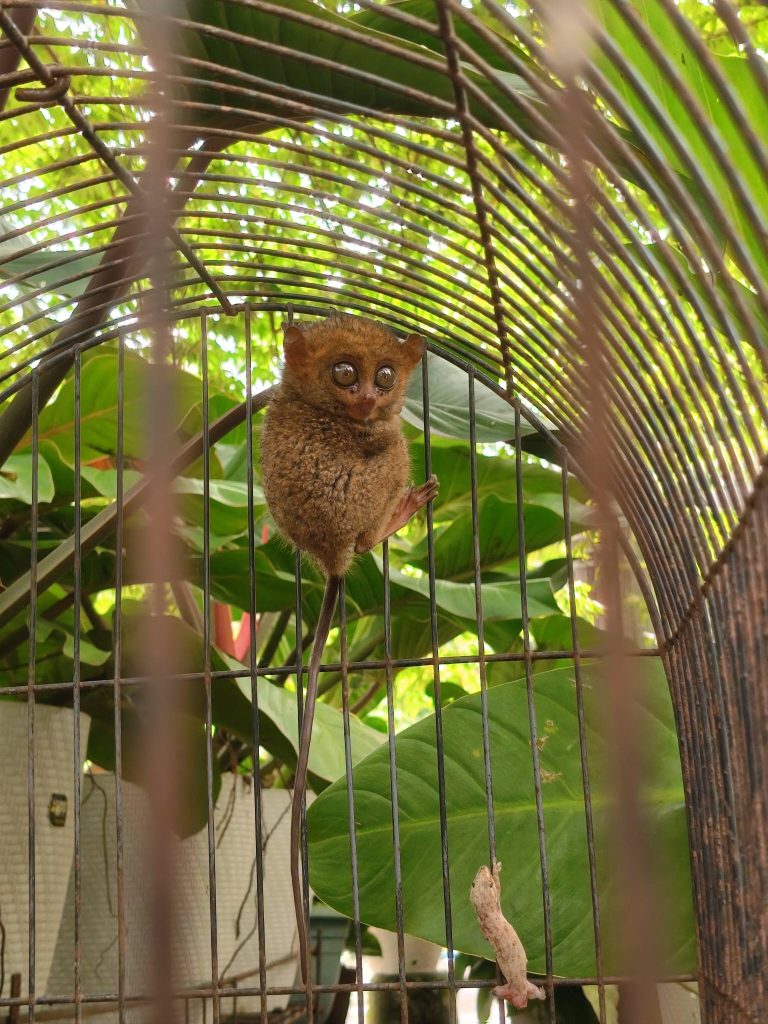
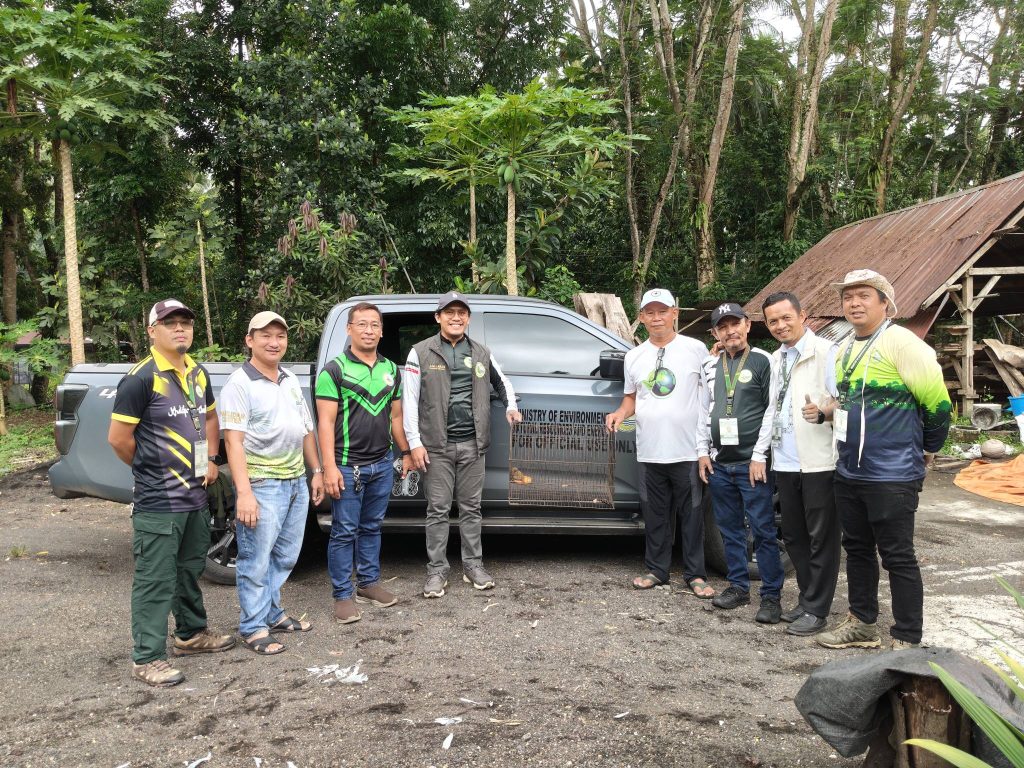
The rescue of a juvenile Philippine tarsier in the municipality of Marogong has now become more than just another wildlife incident. For environmental advocates and local conservation workers in the Bangsamoro Region, it has become a symbol of hope, a warning from nature, and a renewed call to defend the remaining biodiversity corridors of Mindanao before they disappear forever.
Discovered on May 14, 2026, in Brgy. Diragun, the young male tarsier was found by residents conducting maintenance activities near a National Greening Program (NGP) rehabilitation site — an area already partially disturbed by agricultural expansion and other human activities.
The rescue happened amid mounting environmental concerns across the region, where forests continue to shrink under the pressures of land conversion, illegal activities, climate-related impacts, and weak ecological protection measures.
Recognizing the importance of the discovery, local residents immediately turned over the animal to Barangay Chairman Hon. Imran Benito, who coordinated with the Municipal Environment and Natural Resources Office of Lanao del Sur (MENRE-LDS) for proper wildlife handling and assessment.
A joint assessment conducted by Ecosystem Specialists Chief Forester Ameer Hussein Abbas Jr. and Chief Hindawi Abdulwahab confirmed that the tarsier remained active and responsive despite the stressful encounter. The animal displayed normal climbing and jumping behavior, indicating it was still physically capable of surviving in the wild.
The rescued primate was described as brown in color, measuring approximately four inches in body length with an eight-inch tail. Experts identified it as a juvenile male Mindanao tarsier, part of the Philippine tarsier species scientifically known as Carlito syrichta.
Though small in size, the tarsier carries enormous ecological significance.
Known for its massive eyes, nocturnal habits, and extraordinary ability to leap between branches, the Philippine tarsier is considered one of the country’s most iconic endemic species. Yet despite its cultural and ecological value, its survival remains under threat due to deforestation and habitat fragmentation across Mindanao and other forested areas in the Philippines.
For conservation workers in Lanao del Sur, the discovery underscored a troubling reality: even protected and rehabilitated areas are increasingly vulnerable to environmental pressure.
Community ENRE Officer Ashawie Pangandaman immediately recommended the tarsier’s release back into its natural habitat to ensure its survival and freedom in the wild. On May 18, 2026, the rescue team successfully returned the animal to the forested area of Palaw a Piyamanggoan within the Piyapayungan Mountain Range.
But according to Provincial Environment and Natural Resources Office (PENREO) official Asmarie Labao, the incident carries a message far bigger than a single wildlife rescue.
Labao stressed that the appearance of the tarsier serves as a powerful reminder that environmental protection and biodiversity conservation continue to receive insufficient attention despite worsening habitat destruction, climate change, and socio-political conflicts affecting many communities in the Bangsamoro Region.
“This is not merely an isolated wildlife incident,” Labao emphasized, describing the rescue as “a strong message from nature itself.”
The rescue also revived memories of previous wildlife operations in the province, including the rescue of the well-known “Bangsa Bae” Philippine eagle in Marogong several years ago — another incident that drew national attention to the rich but threatened biodiversity of Lanao del Sur.
Environmental advocates now believe the rescued tarsier could eventually gain local recognition as the “Ranaw Tarsier” of the Bangsamoro Region. However, Labao clarified that the animal is still presently considered part of the broader Mindanao population of Philippine tarsiers pending further scientific and taxonomic studies.
Even so, the rescue team has already given the animal a symbolic identity.
They now refer to the rescued tarsier as “𝘿𝙖𝙩𝙪 𝙖 𝙈𝙖𝙣𝙜𝙤𝙙𝙖 𝙨𝙖 𝙆𝙖𝙡𝙖𝙨𝙖𝙣” or “The Charming Prince of the Forest” — a title representing peace, hope, unity, and the urgent call to protect what remains of Lanao del Sur’s natural heritage.
Beyond the emotional significance of the rescue, the incident has intensified calls for stronger institutional conservation measures in the province.
Conservation groups and environmental officials are once again pushing for the establishment of a dedicated Wildlife Rescue Center in Lanao del Sur, noting that the province remains home to ecologically critical areas such as the Lake Lanao Watershed Forest Reserve, the Piyapayungan Mountain Range, and Mt. Gurain — all recognized as important biodiversity zones.
Despite repeated wildlife rescue incidents and the province’s ecological importance, Lanao del Sur still lacks a permanent rescue and rehabilitation facility for endangered and endemic wildlife species.
Environmental advocates warn that without such facilities, rescued wildlife remain vulnerable, while conservation responders continue operating with limited resources and infrastructure.
The latest discovery has also strengthened long-standing appeals for the formal declaration of the Piyapayungan Mountain Range as a Protected Nature Landscape or Local Conservation Area.
For many conservation workers, the urgency can no longer be ignored.
Every forest cleared, every habitat disturbed, and every biodiversity corridor destroyed could mean the silent disappearance of species that exist nowhere else on Earth.
As environmental destruction continues to threaten ecosystems across Mindanao, specialists say the rescued tarsier’s appearance may be nature’s final warning — a reminder that protecting the environment is no longer simply an advocacy issue, but a moral and generational responsibility shared by both the Bangsamoro people and the nation as a whole.