
Members of an indigenous community in Bukidnon have raised serious concerns after workers and armed security personnel of Green Arrow Agriventures, Inc. (GAAVI), a subsidiary of Kennemer Foods International, allegedly began fencing portions of a contested 195-hectare banana plantation located within the tribe’s ancestral domain.
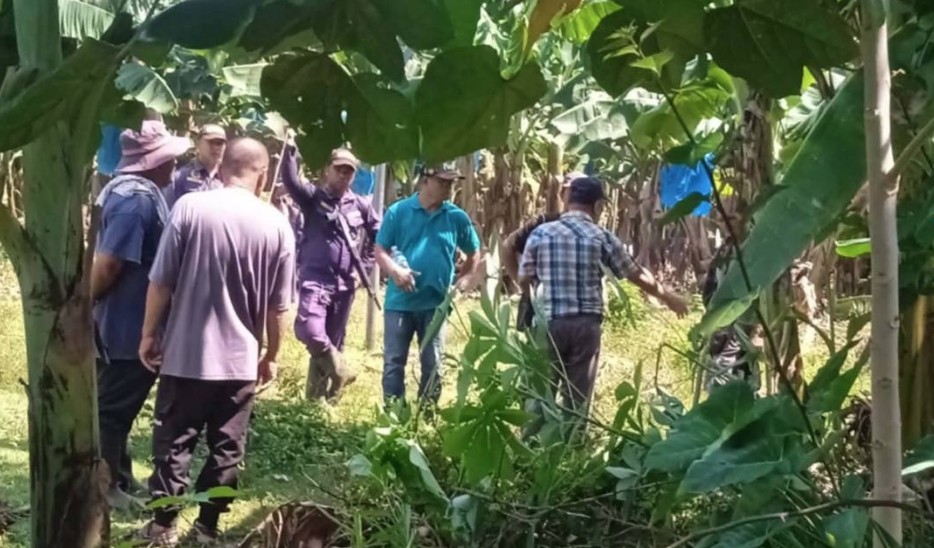
According to the Serukadang Manobo Tribal Organization (SMTO), workers of the company started digging holes for perimeter fences at around 11:40 a.m. on May 15, 2026. Tribal leaders claimed the fencing activities threaten to block the indigenous community’s access routes to and from their village, as well as their farms, reforestation zones, and sacred cultural sites.
The contested plantation area is reportedly located within the ancestral territory traditionally known as Sezukadang, home to the Kirinteken-Ilentungen Menuvu tribe. Indigenous leaders said the area has long been subjected to overlapping land claims involving agribusiness firms, political clans, and development projects.
The dispute comes amid an ongoing Agrarian Law Implementation (ALI) case involving land titles currently undergoing redistribution under the government’s Support to Parcelization of Lands for Individual Titling (SPLIT) Project. Tribal groups argue that the parcelization process conflicts with their Certificate of Ancestral Domain Title (CADT), which recognizes the land as communal indigenous property.
SMTO said a “pulong-pulong” or dialogue was previously facilitated on April 27, 2026 involving representatives from the Department of Agrarian Reform, Department of Environment and Natural Resources, National Commission on Indigenous Peoples, and the World Bank.
During the meeting, tribal representatives said SPLIT-related activities in the disputed area were officially suspended pending the final resolution of the ALI case.
However, the company reportedly maintained that it had not yet received any formal memorandum from the Department of Agrarian Reform regarding the suspension, prompting it to continue asserting the status quo of its land occupation and operations.
The indigenous group said the fencing operation could further isolate the community, noting that they are now effectively confined to only seven hectares out of the tribe’s original 2,032-hectare ancestral territory.
The SPLIT Project, funded by the World Bank, has drawn criticism from indigenous and agrarian advocates who warn that individual land titling within ancestral domains could undermine collective ownership systems protected under the Indigenous Peoples’ Rights Act (IPRA).
The NCIP has previously affirmed that ancestral domains are communal properties that cannot be subdivided or converted into individually titled lands. Critics of the SPLIT program also argue that parcelization may increase the risk of land dispossession, as financially struggling farmer-beneficiaries could eventually sell their individual landholdings, potentially reversing agrarian reform gains and worsening landlessness in rural communities.
As of this writing, there is still no official statement from Green Arrow Agriventures, Inc. and Kennemer Foods International regarding the allegations raised by the tribal organization.