
DAVAO CITY — In a quiet passing that echoes loudly in history, Teofilo Gamutan—affectionately known as “Lolo Pilo”—died on April 3, 2026, at the age of 102, leaving behind a legacy shaped by war, resilience, and a lifetime of humility.
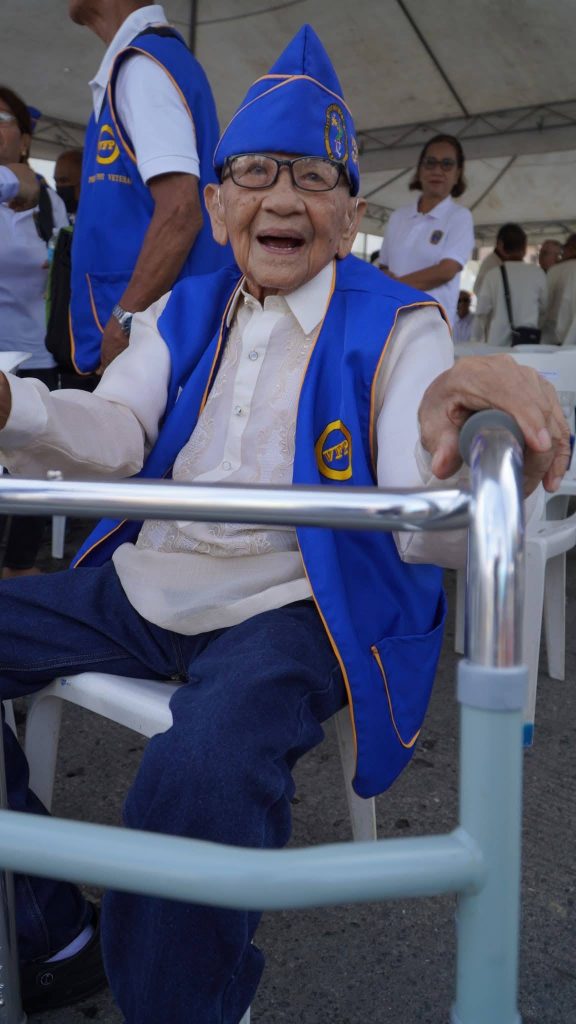
The Philippine Veterans Affairs Office confirmed his passing on Tuesday, noting that Davao City has lost not just its oldest surviving World War II veteran, but a living symbol of courage from a generation that fought for the country’s freedom.
Lolo Pilo’s story stretches back to one of the darkest chapters in global history—World War II—when he served as commanding officer of the Headquarters Company of the 84th Infantry Battalion under the Philippine Army Reserve in Bohol. In a time when the nation’s fate hung in the balance, he stood among those who answered the call to defend it.
Yet beyond the battlefield, those who knew him remember a man defined not only by bravery, but by faith, kindness, and quiet strength.
His family described him as a deeply spiritual man who lived a life anchored in honor and humility. He was a loving father and a gentle neighbor—someone who carried wisdom lightly and offered comfort generously. To them, he was not just a veteran, but a source of protection, guidance, and grace.
In Davao City, Lolo Pilo became a familiar and beloved figure, especially during the annual commemoration of Araw ng Kagitingan every April 9. Despite his advanced age, he remained a constant presence at the rites, quietly honoring fallen comrades and standing as a living reminder of sacrifice. Year after year, his attendance reflected a devotion not only to memory, but to the enduring meaning of patriotism.
His death on Good Friday—a day of solemn reflection for many Filipinos—has added a deeper poignancy to his passing.
As one of the last links to a generation that endured war firsthand, his loss narrows the already dwindling circle of surviving veterans. With his passing, only three World War II veterans remain in Davao City, aged between 98 and 101—a stark reminder of time’s passage and the urgency of preserving their stories.
For many Dabawenyos, Lolo Pilo was more than a historical figure. He was a witness to history, a man whose life bridged past and present, and whose presence gave meaning to remembrance.
His story now becomes part of the nation’s collective memory—one that will continue to inspire long after his final salute.
As his family calls for prayers for his eternal rest, the city he quietly served joins in honoring a life lived with dignity, sacrifice, and unwavering love for country.
Lolo Pilo’s watch has ended, but his legacy marches on.