
DAVAO ORIENTAL, Philippines — Deep within the forested slopes of Barangay Limot in the municipality of Tarragona, scientists have uncovered a tiny yet extraordinary treasure: a newly identified species of weevil whose intricate beauty and scientific value add another chapter to the Philippines’ growing reputation as one of the world’s biodiversity hotspots.
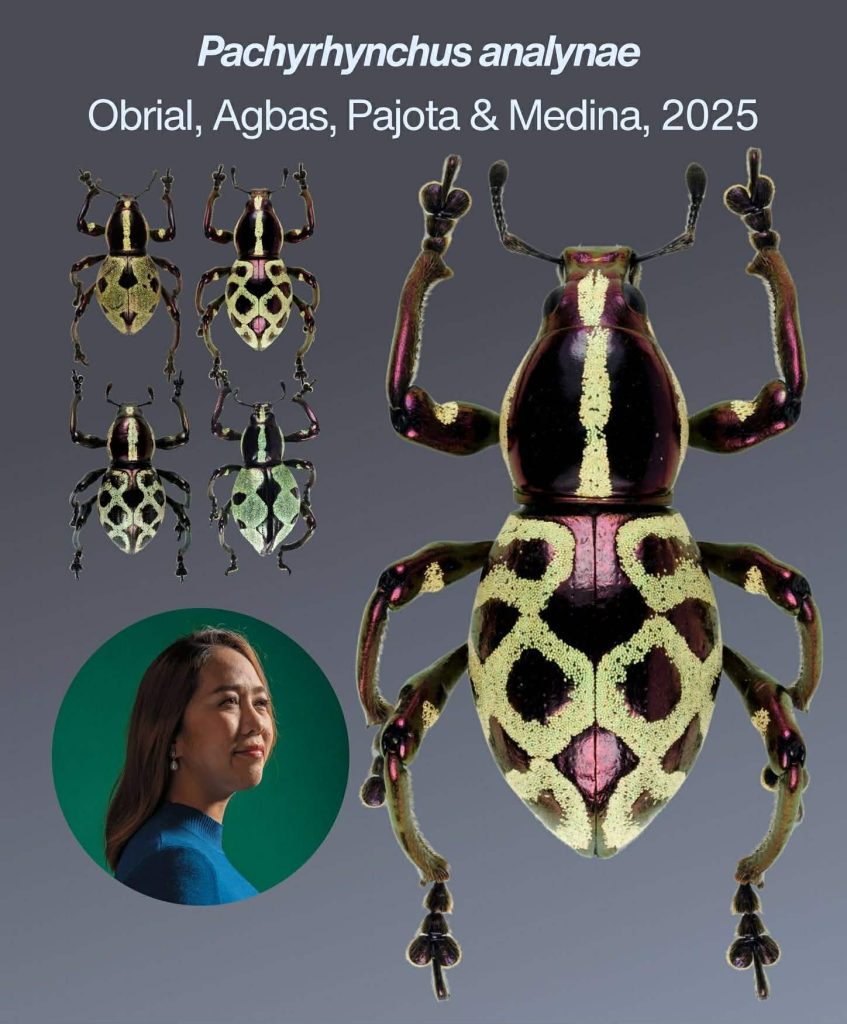
The newly discovered insect, named Pachyrhynchus analynae sp. nov., belongs to the Pachyrhynchus speciosus species group—an elite cluster of beetles renowned for their dazzling colors, delicate patterns, and jewel-like appearance. Though small in size, the weevil represents a major breakthrough in entomological research and a powerful reminder of the ecological wealth hidden within Mindanao’s remaining forests.
A Discovery Rooted in the Forests of Tarragona
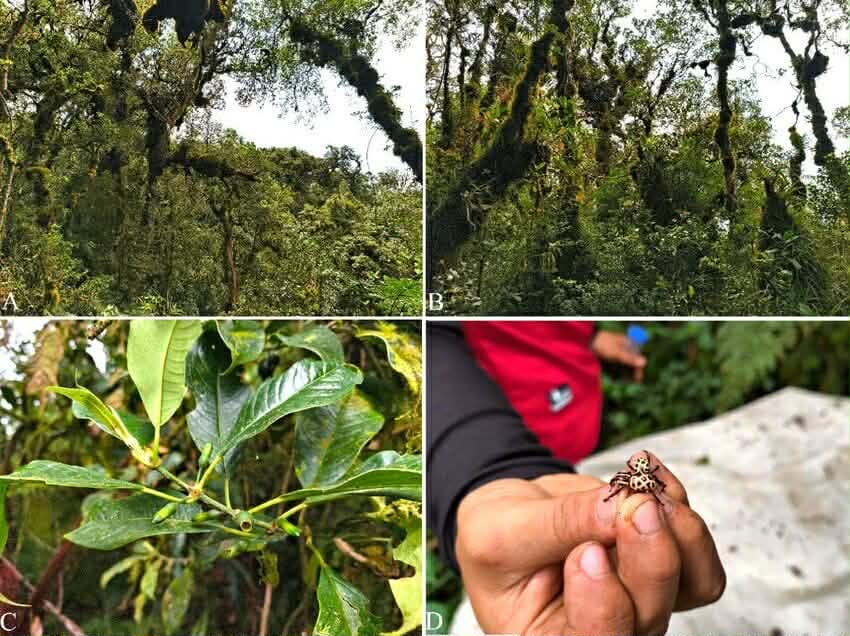
The specimen was collected from a thriving plant in the lush upland forests of Barangay Limot, an area characterized by dense vegetation and rich wildlife. Researchers say the presence of the new species reflects the relatively intact condition of Tarragona’s forest ecosystems.
For scientists, each discovery of a new species is not merely an academic achievement but proof that these landscapes continue to provide suitable habitats for rare and specialized organisms. In regions where deforestation and land conversion persist, such findings are becoming increasingly rare—and therefore more valuable.
“This discovery tells us that parts of Davao Oriental still harbor fragile but resilient ecosystems,” one researcher noted. “It underscores the importance of sustained conservation efforts.”
The Enigmatic ‘Easter Egg Weevils’ of Southeast Asia
Pachyrhynchus beetles, often called “Easter egg weevils” because of their glossy, colorful shells, are flightless insects native to the oceanic islands of Southeast Asia. The Philippines hosts the most diverse and abundant populations in the world, making the country a global center for weevil diversity.
Unlike many insects that can easily relocate, these beetles are highly sedentary. Their inability to fly limits their movement, making them extremely dependent on the health of their immediate environment. If forests are degraded or destroyed, entire populations can disappear within a short time.
Because of this, scientists consider Pachyrhynchus species as sensitive indicators of environmental health. Their survival reflects the condition of forest systems, while their decline signals ecological distress.
Nature’s Artistry: Patterns Shaped by Survival
The newly identified weevil exhibits the striking designs typical of the Pachyrhynchus speciosus group—complex markings formed by tiny, reflective scales that shimmer under light.
Interestingly, many species in this group appear almost identical despite being genetically distinct. Researchers attribute this phenomenon to mimicry, a survival strategy in which different species living in the same habitat evolve similar patterns to deter predators.
By resembling one another, these beetles create a visual “warning system” that discourages predators from attacking. Over time, this shared appearance becomes a hallmark of the group, blending beauty with evolutionary ingenuity.
A Tribute to a Pioneer of Philippine Entomology
Beyond its scientific importance, Pachyrhynchus analynae carries deep emotional and historical significance. The species was named in honor of the late Dr. Analyn Anzano Cabras, fondly known as the “Queen of Philippine Weevils.”
Dr. Anzano was an esteemed entomologist and a proud Mindanaoan whose dedication to biodiversity research helped transform the study of beetles in the country. Throughout her career, she discovered and documented nearly a hundred new beetle species, inspiring a generation of young scientists.
Colleagues describe her as a tireless mentor, a passionate field researcher, and a champion of Philippine biodiversity. Naming the new species after her ensures that her legacy will continue to live on in the forests she worked so hard to protect and understand.
“This species is not just a scientific record,” a fellow researcher said. “It is a living tribute to Dr. Anzano’s lifelong devotion to science and conservation.”
A Call for Conservation and Environmental Stewardship
More than a celebration of discovery, the emergence of Pachyrhynchus analynae highlights the urgent need to safeguard forest ecosystems. Scientists warn that continued habitat loss, illegal logging, and unregulated development threaten the survival of countless undocumented species.
The Department of Environment and Natural Resources (DENR) Region XI has reiterated its commitment to preserving Davao Region’s natural landscapes, emphasizing that biodiversity protection remains central to sustainable development.
Environmental advocates stress that protecting these habitats is not only about saving insects or plants—it is about maintaining ecological balance, securing water sources, preventing disasters, and preserving natural heritage for future generations.
Small Creature, Lasting Impact
Though barely noticeable to the untrained eye, Pachyrhynchus analynae represents something far greater than its size suggests. It symbolizes the richness of Mindanao’s forests, the brilliance of Filipino scientists, and the delicate relationship between humanity and nature.
As researchers continue to explore the country’s remote landscapes, more hidden wonders are likely waiting to be found. But scientists caution that time is running out.
Each new species discovered is both a celebration and a warning—a reminder that while nature still holds many secrets, its survival depends largely on how society chooses to protect it.
In the quiet forests of Tarragona, a tiny beetle now stands as proof that life, beauty, and scientific legacy continue to thrive—if only given the chance.