
CAMP DARAPANAN, September 15, 2026 — Moro Islamic Liberation Front (MILF) Chairman and United Bangsamoro Justice Party (UBJP) President Al Haj Murad Ebrahim received a high-level Turkish delegation at the MILF-CC Hall in Camp Darapanan following the Bangsamoro Autonomous Region in Muslim Mindanao’s (BARMM) first parliamentary elections, with discussions focusing on electoral participation, election-related violence, political stability and the challenges of shifting from armed struggle to parliamentary governance.
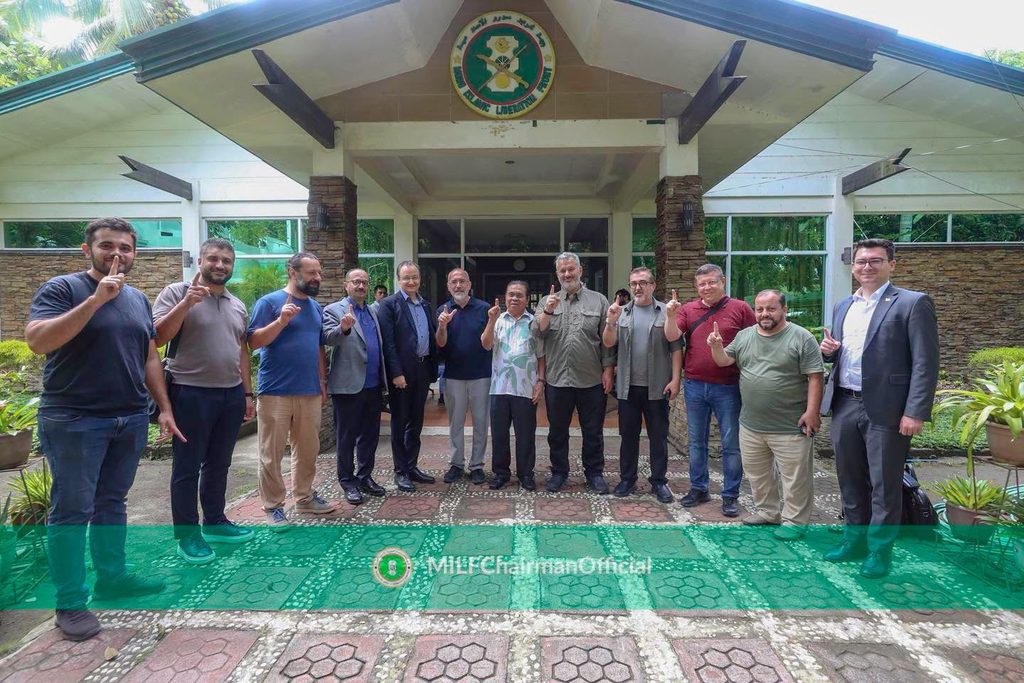
The Turkish delegation, serving as international observers of the historic Bangsamoro parliamentary elections, was composed of Fahrettin Tuğrul, member of the Justice Commission and Joint Commission; Hasan Turan, administrative officer of the Grand National Assembly of Türkiye; Osman Mesten, spokesperson of the Constitutional Commission and member of the Parliamentary Assembly of Turkic States; and Adem Yıldırım, member of the Human Rights Review Commission, Petitions Commission and Joint Commission.
During their meeting with Murad, the Turkish observers commended the MILF leadership for what they described as restraint, patience and sabr—patience and perseverance—during what they regarded as one of the most challenging and consequential periods in the Bangsamoro peace process.
The meeting came as the region begins to absorb the results and implications of its first parliamentary elections, held on September 14. The polls were a major institutional milestone under the Bangsamoro peace process, transitioning the region from an interim government toward an elected parliamentary system.
International observation was a significant component of the election process. The Office of the Presidential Adviser on Peace, Reconciliation and Unity (OPAPRU) said 108 international observers from 16 organizations and delegations were expected to monitor the historic polls.
Turkish delegation raises election concerns
The Turkish delegation expressed appreciation to Murad for receiving them despite his demanding schedule and the politically sensitive circumstances surrounding the elections.
They also raised several concerns emerging from the electoral exercise, including voter turnout, individuals killed on the eve of the elections, reports of armed confrontation following the polls, and the potential difficulties that could accompany a multiparty parliamentary system.
The observers stressed that the manner in which these issues are addressed could have long-term implications for political stability, unity and the future direction of the Bangsamoro.
The concerns come against a backdrop of isolated election-related violence reported in the region. International news reports said several people were killed in election-related incidents, while authorities deployed more than 20,000 military and police personnel to secure polling areas.
The Commission on Human Rights also said on September 16 that its monitors had observed reports involving security concerns, election-related violence, gun-ban violations, ballot irregularities, threats and intimidation, vote-buying and disinformation. The CHR emphasized that these reports were not yet final findings of fact and remained subject to verification by competent authorities.
Murad: International observers strengthened confidence
Murad thanked the Turkish delegation and the broader international community for responding to the call for independent observation of the electoral process.
He emphasized that the presence of international observers helped strengthen confidence and accountability, contributed to deterring possible escalation of violence and reinforced the Bangsamoro people’s aspiration to conduct their first parliamentary elections peacefully and democratically.
Despite isolated incidents, Murad highlighted the historic significance of the election as a major step in the Bangsamoro’s transition from decades of armed struggle toward democratic governance.
He also expressed hope that international engagement and cooperation would continue as the Bangsamoro moves into the next stage of its political transition.
The first parliamentary elections were designed to fill an 80-member Bangsamoro Parliament, consisting of 40 regional parliamentary party representatives, 32 district representatives and eight sectoral representatives. The Parliament will exercise legislative authority, while the Chief Minister will lead the executive branch.
UBJP secures 15 parliamentary seats
The election results also gave the UBJP, the political party associated with the MILF, 15 seats among the regional parliamentary political party allocations.
The Commission on Elections’ canvass results reported that the Bangsamoro Federalist Party secured 16 seats, UBJP 15, the BARMM Grand Coalition eight and the Bangsamoro Peoples’ Democratic Party, also known as Raayat Democratic Party, one.
The 15 UBJP representatives listed in the canvass are:
- Ahod “Al Haj Murad” B. Ebrahim
- Datucan “Mohagher Iqbal” M. Abas
- Ali B. Solaiman
- Eduard U. Guerra
- Ali D. Ibrahim
- Said Z. Salendab
- Mohammad S. Yacob
- Amir “Gary” A. Balindong
- John Anthony “Jet” L. Lim
- Haber A. Asarul
- Sha Elijah B. Dumama-Alba
- Nordjiana L. Dipatuan-Ducol
- Raissa H. Jajurie
- Said M. Shiek
- Ali O. Salik.
Their election is notable because several prominent MILF figures who were included among the UBJP’s broader 40 nominees did not make it into the 15 party seats allocated to the UBJP.
Among those who were part of the original UBJP nominee slate were MILF commanders Abdullah “Commander Bravo” Macapaar and Akmad “Jack” Abas. Both had previously served as members of the Bangsamoro Transition Authority Parliament and were among the MILF figures who entered the political transition following the peace process.
Their absence from the 15 elected UBJP regional party representatives illustrates one of the significant changes brought by the parliamentary election: political representation is now being determined through an electoral system rather than appointment under the transitional government.
A new political test for the Bangsamoro
The election has therefore produced not only a new Parliament but also a new political landscape for the former revolutionary movement.
The UBJP remains a major political force, but the party did not secure enough regional party seats to control the 80-member Parliament by itself. Reuters reported that no single bloc secured a majority, making coalition-building an important part of the next stage of the parliamentary transition.
That reality places greater importance on negotiations, alliances and the ability of competing political groups to work within the parliamentary framework.
For the MILF, the development represents another major stage in a transition that began with negotiations with the Philippine government and the 2014 Comprehensive Agreement on the Bangsamoro. The peace process was built around transforming a decades-long armed struggle into political participation and autonomous governance.
Before leaving Camp Darapanan, MP Hasan Turan shared a passage from Safahat by renowned Turkish poet and Turkish national anthem author Mehmet Âkif Ersoy:
“Until division enters a nation, the enemy cannot enter; as long as hearts beat as one, no cannon can overcome it.”
The message carried particular weight in a region where political divisions, clan rivalries, armed conflict and competing visions of governance have historically complicated the search for lasting peace.
For the Bangsamoro, the immediate challenge now moves beyond the ballot box: translating an historic election into a functioning parliamentary government while preserving the peace gains achieved through years of negotiations.
The Turkish delegation’s message at Camp Darapanan underscored that the success of that transition will depend not only on electoral results, but also on how political leaders respond to disagreements, manage competing interests and maintain a commitment to peaceful democratic institutions.