
LANAO DEL SUR — Lanao del Sur wrote a significant chapter in the history of the Bangsamoro after its voters peacefully exercised their democratic right during the first Bangsamoro Parliamentary Elections on September 14, 2026, with the province recording zero violent incidents throughout the election period.
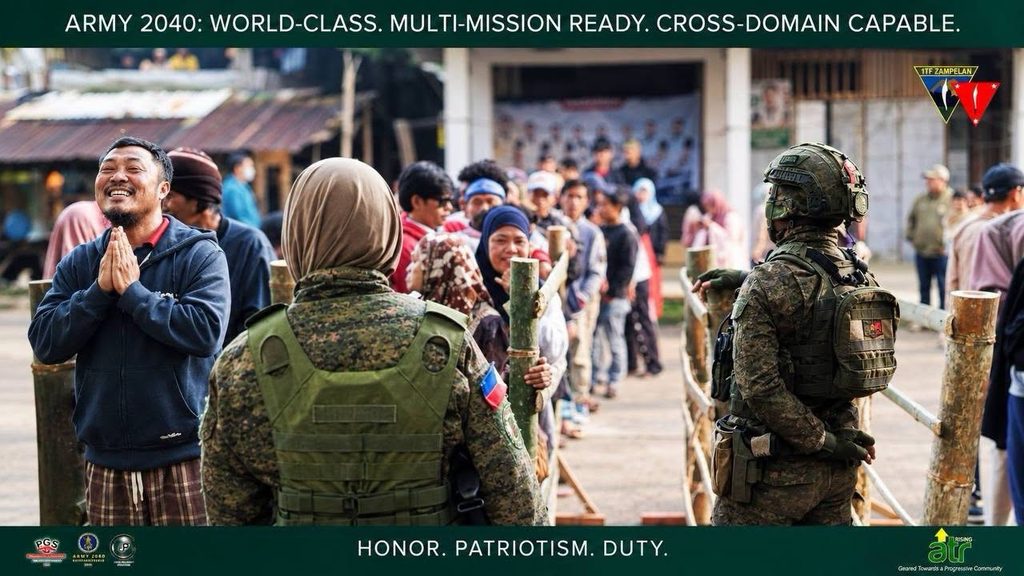
The peaceful conduct of the elections was particularly significant for Lanao del Sur, which accounts for approximately 30 percent of the registered voters in the Bangsamoro Autonomous Region in Muslim Mindanao (BARMM). With such a substantial share of the region’s electorate, the province carried considerable weight in the success of the historic electoral exercise.
The absence of reported violent incidents during the voting period was described as a powerful indication of the province’s continuing commitment to peace, public order and democratic participation.
Rather than allowing political differences and competing interests to become sources of confrontation, voters and communities demonstrated that these differences could be expressed through the ballot.
From Armed Struggle to Democratic Participation
One of the most meaningful aspects of the elections was the participation of former combatants of the Bangsamoro Islamic Armed Forces (BIAF) in the democratic process.
Their presence at polling places represented a visible transformation in the Bangsamoro peace process—from armed struggle toward political and democratic participation.
Former combatants who once belonged to an armed movement were among citizens exercising their right to choose political representatives through elections, providing a powerful illustration of how the peace process can open pathways for former combatants to participate in governance and public life through peaceful means.
The development also underscored a central principle of the Bangsamoro peace process: that aspirations for political recognition, self-governance and a better future can increasingly be pursued through institutions, dialogue and democratic mechanisms rather than armed confrontation.
The participation of former BIAF members therefore carried significance beyond the polling stations themselves. It reflected the continuing transition from a period characterized by armed conflict toward a political environment in which competing visions for the future of the Bangsamoro can be contested through democratic processes.
Peace Beyond the Absence of Violence
The peaceful elections in Lanao del Sur were not simply about the absence of shootings, clashes or other violent incidents.
They also reflected the willingness of communities and stakeholders to protect the electoral process and allow citizens to exercise their constitutional and democratic rights without fear.
The successful conduct of the elections demonstrated the importance of cooperation among voters, community leaders, local governments, election officials and security forces.
For a province with a long history of conflict-related challenges, the peaceful exercise of the vote carried a deeper meaning: peace can be reinforced when people choose democratic participation as the means of resolving political differences.
The experience also demonstrated that democratic institutions can take root and function even in communities that have experienced decades of conflict, provided that stakeholders work collectively to protect the electoral process.
Security Forces Credited for Election Protection
The 1st Infantry (TABAK) Division of the Philippine Army expressed its appreciation to the soldiers, Philippine National Police (PNP) personnel and other Army and Armed Forces of the Philippines (AFP) units deployed to help secure the elections.
The division recognized the commitment of its personnel who performed their duties with discipline, professionalism and dedication to maintaining a secure environment for voters.
Their presence was crucial in helping ensure that voters could proceed to polling places and cast their ballots in an environment conducive to peaceful participation.
The Army also acknowledged the contributions of the Commission on Elections (COMELEC), local government units, community leaders and other stakeholders whose cooperation helped facilitate the orderly conduct of the electoral exercise.
But beyond the institutions and security forces, the division placed particular emphasis on the people of Lanao del Sur, whose cooperation and determination were central to the peaceful outcome.
A Significant Moment for the Bangsamoro
The September 14 elections were historic for the Bangsamoro as voters participated in the region’s first parliamentary elections under the Bangsamoro political framework.
Against that backdrop, Lanao del Sur’s peaceful voting experience carries particular significance.
The province’s large electorate meant that its participation was essential to the credibility and success of the region-wide exercise. The absence of violent incidents further provided an example of how communities can protect the democratic process even amid political competition.
The participation of former BIAF combatants added another layer of significance, showing how individuals once associated with armed conflict can become participants in the political process that emerged from the broader peace and normalization agenda.
The transformation is not instantaneous, and the peaceful elections do not by themselves resolve the complex challenges facing the Bangsamoro. However, the experience in Lanao del Sur provides a concrete example of how democratic participation can become part of the continuing transition from conflict to peace.
Democracy as a Path to Lasting Peace
Lanao del Sur’s experience during the first Bangsamoro Parliamentary Elections illustrates how elections can serve not only as a mechanism for selecting political representatives but also as an avenue for consolidating peace.
The peaceful participation of voters, including former combatants, demonstrated that political aspirations and differences can be channeled through democratic institutions.
For the Bangsamoro, where the transition from armed conflict to political governance remains an ongoing process, such developments carry considerable importance.
The successful elections in Lanao del Sur therefore represent more than a single peaceful voting day. They mark another step in the region’s continuing journey toward lasting peace, political stability and a stronger culture of democratic participation.
The province has shown that the path from conflict to peace can be strengthened at the ballot box—and that the decision to participate in democracy can itself become an important expression of peace.