
COTABATO CITY, BARMM — Member of Parliament Abdulraof “Sammy Gambar” A. Macacua was elected Chief Minister of the Bangsamoro Autonomous Region in Muslim Mindanao (BARMM) on Friday, October 30, securing 51 votes in the first plenary session of the region’s first regular, democratically elected Parliament.
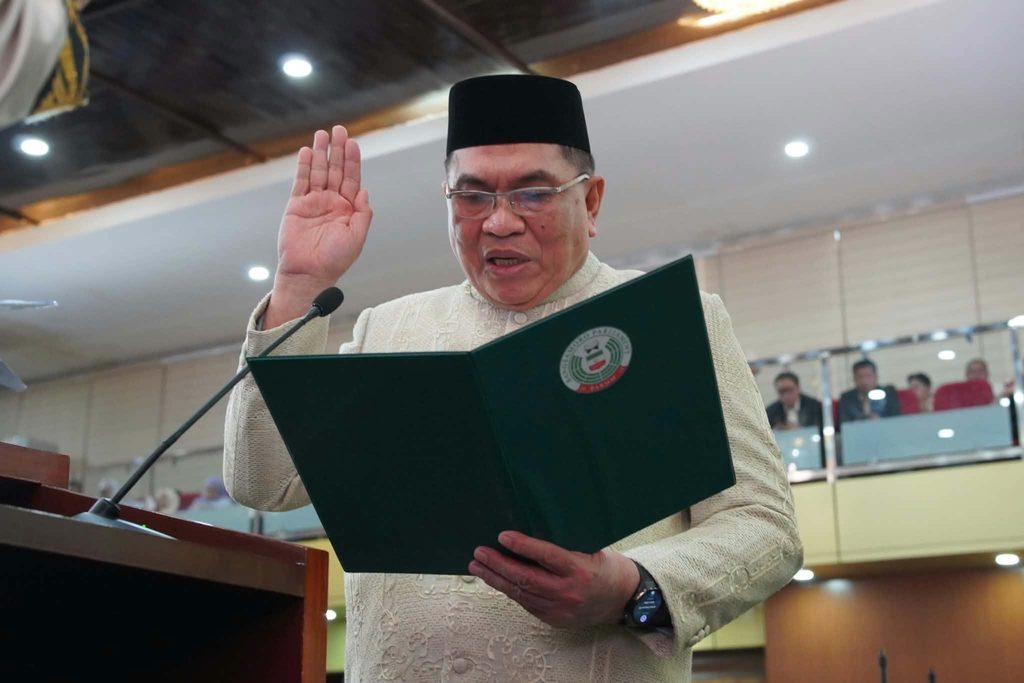
Macacua defeated former BARMM Chief Minister and Moro Islamic Liberation Front (MILF) Chairman Ahod Balawag Ebrahim, popularly known as Murad, who received 27 votes. One member abstained, bringing the total to 79 votes cast among the 80-member Parliament.
His election marks a significant political development in the Bangsamoro region, formally moving its government from the transitional arrangement under the Bangsamoro Transition Authority (BTA) to a regular parliamentary system established under the Bangsamoro Organic Law (BOL).
Macacua subsequently took his oath of office before Wālī Sheikh Muslim Guiamaden, formally assuming the leadership mandate entrusted to him by the elected legislature.
A historic shift from transitional to regular government
The inaugural session, held at the Bangsamoro Parliament Plenary Hall in Cotabato City, brought together the 80 members of the first elected Bangsamoro Parliament following the region’s historic parliamentary elections on September 14, 2026.
The elections marked the first time voters in the Bangsamoro region directly chose their parliamentary representatives through a regular electoral process.
The opening of the Parliament also signified the conclusion of more than seven years of transitional governance under the BTA, which had administered the region while the Bangsamoro political and institutional structures were being established.
Under the parliamentary system, the Chief Minister is elected by the members of Parliament from among their ranks and leads the regional executive government.
Macacua’s election is particularly significant because he previously served as Interim Chief Minister under the BTA. His latest assumption of office, however, comes through a mandate from the newly elected Parliament rather than an interim appointment.
The transition represents an important institutional milestone in the implementation of the peace agreement and the region’s pursuit of meaningful political autonomy.
Macacua defeats former Chief Minister Murad
The contest between Macacua and Ebrahim was one of the most consequential political developments during the inaugural session.
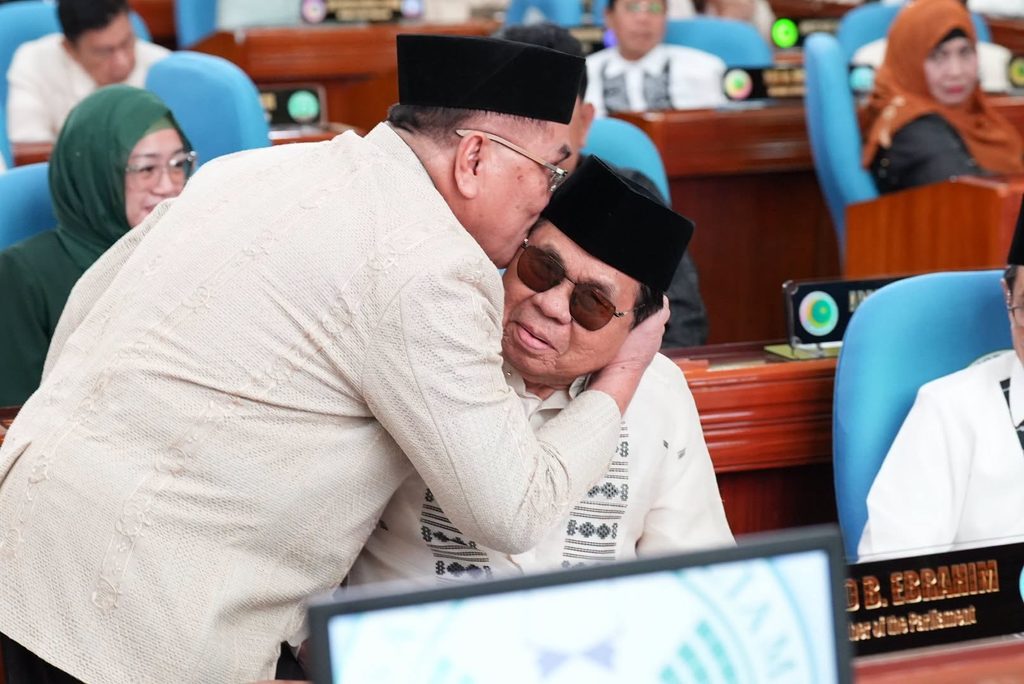
Macacua received 51 votes, while Ebrahim obtained 27. One MP abstained.
The result demonstrated that Macacua secured the support of a majority of the participating parliamentarians, despite Ebrahim’s longstanding leadership of the MILF and his previous tenure as BARMM Chief Minister.
The voting also revealed political divisions and differences in support within the United Bangsamoro Justice Party (UBJP), the political organization associated with the MILF.
A circulating list identified four elected UBJP parliamentarians who reportedly did not vote for Ebrahim:
- Tawakkal Midtimbang
- Hamza Gauraki
- Lampa Pandi
- Arrie Balindong
Their reported voting positions indicate that support for the MILF chairman was not necessarily uniform among the elected members identified with the party.
However, the individual ballots and the specific votes of these four parliamentarians were not separately established in the available account. Their inclusion in the reported list should therefore be distinguished from independently verified voting records.
The outcome nevertheless underscores the evolving political dynamics within the Bangsamoro Parliament, where elected representation and parliamentary alliances will increasingly shape regional leadership and policy decisions.
Rakim elected Parliament Speaker
Following Macacua’s election, MP Atty. Amer Zaakaria A. Rakim was elected Speaker of the Bangsamoro Parliament, receiving 51 votes.
As Speaker, Rakim will preside over parliamentary proceedings, oversee legislative business and help steer the chamber’s institutional functions.
The Parliament also elected its Deputy Speakers, Majority Floor Leader and other parliamentary officers who will manage legislative proceedings, parliamentary coordination and the chamber’s internal administration.
The election of these officials establishes the leadership structure of the first regular Bangsamoro Parliament.
New executive leadership of BARMM
Alongside the election of the Chief Minister, the Parliament designated two Deputy Chief Ministers representing the region’s two major geographic subregions.
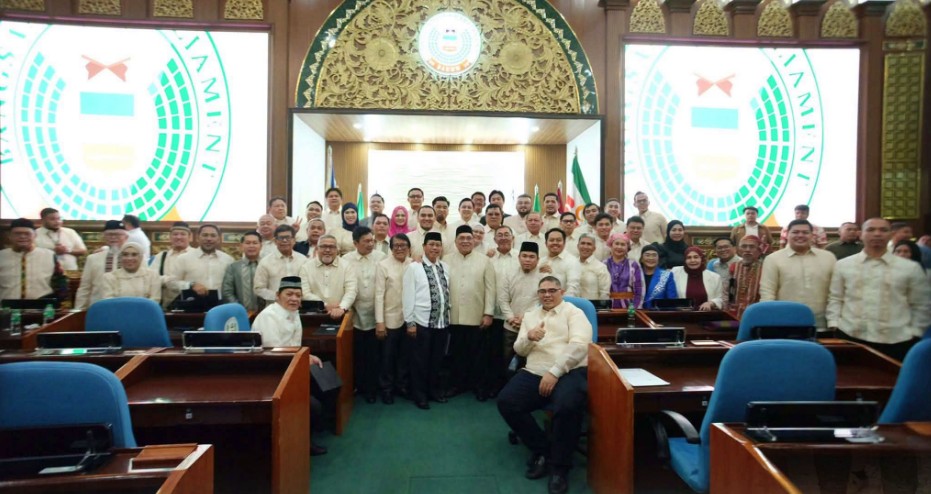
The executive leadership is composed of:
- Chief Minister: MP Abdulraof “Sammy Gambar” A. Macacua
- Deputy Chief Minister for Mainland Provinces / North Central Mindanao Subregion: MP Mamintal R. Adiong III
- Deputy Chief Minister for Island Provinces / Southwestern Mindanao Subregion: MP Hadjimar Matba
The two Deputy Chief Ministers are expected to assist Macacua in coordinating the regional executive government and addressing the distinct governance and development priorities of the mainland and island areas.
The regional Cabinet will work under the Chief Minister and his deputies in implementing government policies, programs and development priorities.
Macacua outlines six interconnected priorities
In his inaugural address, Macacua described his election not simply as a personal political victory but as a responsibility entrusted to him by the Bangsamoro people.
He emphasized that the new administration must uphold democratic institutions, accountability and genuine representation.
He also underscored the importance of establishing the government’s direction within its first 100 days in office.
Macacua said his administration would pursue six interconnected priorities, although the individual components of those six priorities were not enumerated in the available account.
In his address, he pledged to listen with humility, exercise discernment in decision-making, act with courage and serve with sincerity.
He also called on political leaders and communities to look beyond the outcome of the leadership contest and focus on the collective responsibility of advancing the Bangsamoro cause.
“The Bangsamoro is greater than any one of us. Its cause is greater than our differences. And its future is a great responsibility that we must carry together,” Macacua said.
His remarks placed particular emphasis on unity, responsible leadership and the need to translate political autonomy into meaningful improvements in the lives of the people.
President Marcos attends inaugural session
President Ferdinand “Bongbong” Marcos Jr. personally attended the inaugural plenary session of the First Regular Bangsamoro Parliament in Cotabato City.
In his message, Marcos described the opening of the elected legislature as a historic achievement for the Bangsamoro people and a milestone for the country’s peace and democratic development.
He reaffirmed the National Government’s commitment to supporting Bangsamoro autonomy and its democratic institutions.
Marcos also called on the newly elected parliamentarians to remember the sacrifices made throughout the region’s decades-long struggle and to serve with humility, honor and a commitment to good governance.
He assured the Bangsamoro people that the national government would continue working with the region’s duly constituted government.
The President’s attendance highlighted the national government’s support for the transition to regular parliamentary governance.
OPAPRU describes Parliament opening as a milestone in the peace process
Presidential Adviser on Peace, Reconciliation and Unity and Government of the Philippines Peace Implementing Panel Chair Secretary Mel Senen Sarmiento also attended the historic proceedings.
He was accompanied by Special Assistant to the President Antonio Lagdameo Jr., Mindanao Development Authority Secretary Leo Tereso Magno and National Commission on Muslim Filipinos Secretary Sheikh Sabuddin N. Abdurahim.
Sarmiento described the convening of the elected Parliament as the successful completion of the political track of the Comprehensive Agreement on the Bangsamoro (CAB).
He said the establishment of an elected legislature demonstrated how the peace process had helped transform a period of armed conflict into a framework for democratic participation and self-determination.
He also urged political leaders to move beyond campaign rivalries and work together to sustain regional stability and lasting peace.
The new Parliament is expected to play a central role in advancing the political and institutional commitments under the peace agreement.
New parliamentary officers and leadership structure
The newly constituted Parliament also designated its principal officers and leadership positions.
Parliamentary leadership
- Speaker: MP Atty. Amer Zaakaria A. Rakim
- Deputy Speaker: MP Abrar Hataman
- Deputy Speaker: MP Rhosatina (Tina) Matolo-De Asis
- Deputy Speaker: MP Tawakal Midtimbang
- Deputy Speaker: MP Amilbahar Mawallil
- Deputy Speaker: MP Ibrahim Ibay
- Deputy Speaker: MP Hosni Macapodi
- Deputy Speaker: MP Lampa I. Pandi
- Deputy Speaker: MP Ahmad Amir Balindong
- Deputy Speaker: MP Suwaib Oranon
- Deputy Speaker: MP Jose I. Lorena
Majority leadership
- Majority Floor Leader: MP Johari Abu
- Deputy Majority Floor Leader: MP Abdel Razi Amin
- Deputy Majority Floor Leader: MP Naguib Sinarimbo
- Deputy Majority Floor Leader: MP Ishak V. Mastura
- Deputy Majority Floor Leader: MP Jaafar Apollo Mikhail L. Matalam
- Deputy Majority Floor Leader: MP Alindatu K. Pagayao
- Deputy Majority Floor Leader: MP Jay Salliman
- Deputy Majority Floor Leader: MP Julbert Que
- Deputy Majority Floor Leader: MP Tomanda Antok
Parliamentary administration
- Secretary-General: Atty. Bantuas M. Lucman
These officers will support the Speaker in managing the legislative chamber, organizing parliamentary proceedings and coordinating the work of the majority bloc.
Committee chairs: Who will oversee the Parliament’s major policy areas?
The Parliament’s committee structure assigns elected members to oversee legislative work covering governance, public finance, economic development, natural resources, justice, infrastructure, education and social services.
The following are the committee chairpersons identified in the announced parliamentary roster.
Governance, ethics and finance
- Committee on Rules: MP Johari Abu
- Committee on Amendments: MP Naguib Sinarimbo
- Committee on Accounts: MP Ibrahim Ibay
- Blue Ribbon Committee: MP Zulfikar Ali Bayam
- Committee on Ethics and Privileges: MP Ali-Usman Mindalano
- Committee on Ways and Means: MP Sittie Aisah Lucman Pansar
- Committee on Finance, Budget, and Management: MP Kitem Kadatuan Jr.
- Special Committee on the Marawi Recovery, Reconstruction, and Rehabilitation: MP Camid Gandamra Jr.
Economic development, resources and industry
- Committee on Trade, Investments, and Tourism: MP Rima Hassan
- Committee on Agriculture, Fisheries, and Agrarian Reform: MP Ma-arouph Candao
- Committee on Labor and Employment: MP Rashdi Adiong
- Committee on Environment, Natural Resources, and Energy: MP Michael Midtimbang
- Committee on Science and Technology: MP Abdulrauf Adiong
Infrastructure, justice and public order
- Committee on Indigenous Peoples’ Affairs: MP Leticio “Timuay” Datuwata
- Committee on Public Order and Safety: MP Rafsanjan Ali
- Committee on Transportation and Communication: MP Hadjimar Matba
- Committee on Public Works: MP Karwin Hamjani
- Committee on Local Government: MP Alindatu Pagayao
- Committee on Bangsamoro Justice System: MP Jose Lorena
Social services, education and development
- Committee on Basic, Higher, and Technical Education: MP Tomanda Antok
- Committee on Social Services and Development: MP Hosni Macapodi
- Committee on Health: MP Princess Lanto-Gandamra
- Committee on Human Settlements and Development: MP Arimao Asum
- Committee on Women, Youth, Children, and Persons with Disabilities: MP Reina Hataman
These committee assignments are important because they determine which parliamentarians will lead discussions, scrutinize proposed legislation and oversee government policies within their respective areas.
Their work will have direct implications for public accountability, budget oversight, economic opportunities, environmental protection, education, health and social welfare across the Bangsamoro region.
What the new Parliament means for the Bangsamoro people
The establishment of the first regular Bangsamoro Parliament represents more than a change in political leadership. It marks the institutional transition from an interim government to a parliamentary administration whose members have received their mandates through elections.
The new government faces the responsibility of sustaining the gains of the peace process while addressing longstanding challenges involving poverty, public service delivery, economic development, infrastructure, education, healthcare, employment and security.
The Parliament’s legislative and oversight functions will be particularly important in ensuring that regional resources are managed responsibly and that government programs respond to the needs of communities across the Bangsamoro region.
The new leadership will also be expected to maintain the implementation of the Comprehensive Agreement on the Bangsamoro and strengthen the relationship between the regional and national governments.
With Macacua at the helm and Rakim leading the legislature, the first regular Bangsamoro government begins its work under a historic democratic mandate.
Ultimately, the significance of this transition will not be measured solely by the election of new leaders or the formation of parliamentary offices, but by whether the new institutions can deliver accountable governance, lasting peace and tangible improvements in the lives of the Bangsamoro people.