
DAVAO CITY — Davao City is taking a bold step toward the future, positioning itself to become the first Artificial Intelligence (AI) robot-centered city in the Philippines as local officials explore the integration of AI-powered humanoid robots into government operations and public service delivery.
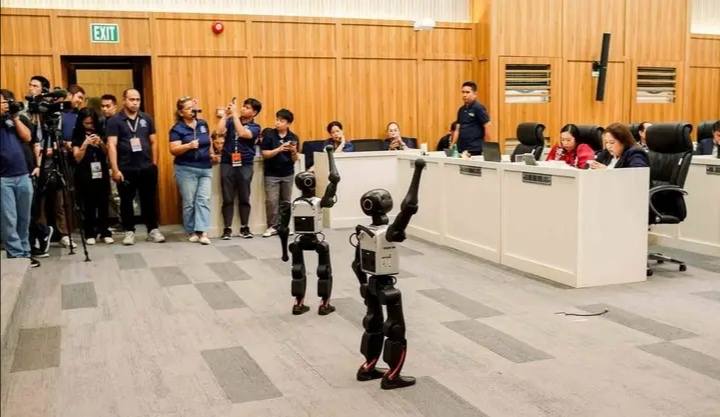
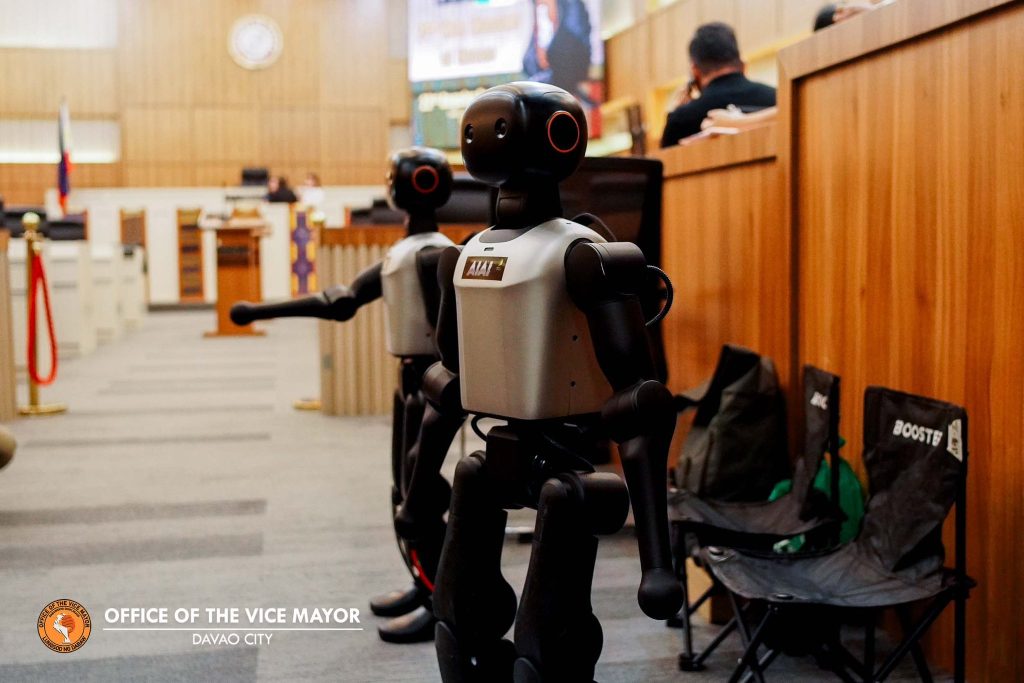
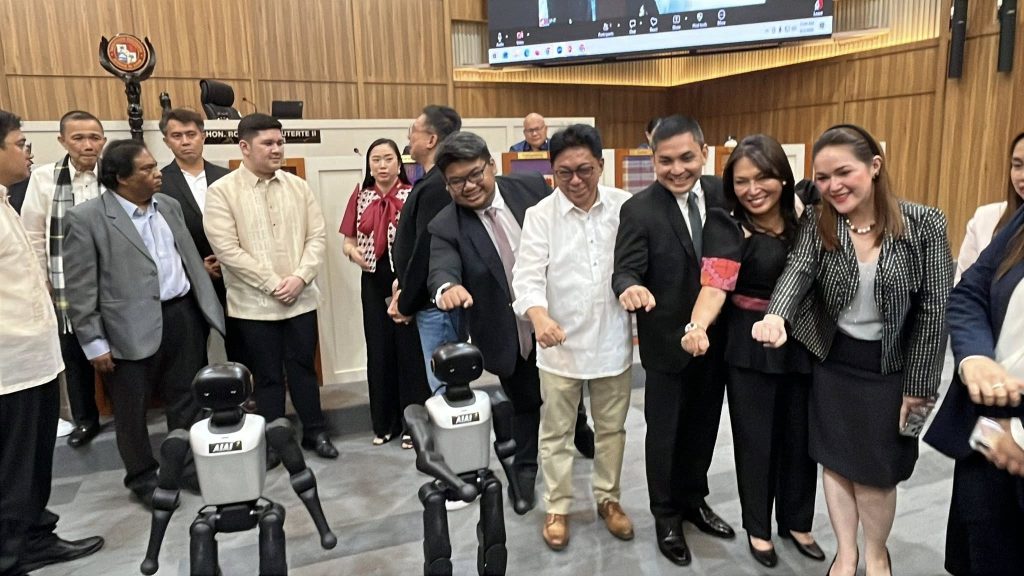
The vision took center stage during the regular session of the 21st City Council on June 2, where lawmakers witnessed a live demonstration of two AI-powered humanoid robots presented by East West International Education Specialist Inc. (EWIES), a company known for providing AI, robotics, and digital learning programs across the country.
The presentation, led by EWIES President and Chief Executive Officer Dennis Franco M. Layug and partner Jeffrey Peter, offered city officials a glimpse into what could become the next phase of Davao’s digital transformation agenda.
Standing approximately three feet tall, the humanoid robots captured the attention of council members as they demonstrated their ability to communicate, answer questions, and interact with people in real time. Councilors themselves engaged the robots in conversation, testing their responsiveness and communication capabilities.
The initiative was highlighted following a privilege speech delivered by Councilor Bonz Andre Militar, chairperson of the Committee on Information Technology, who underscored the city government’s commitment to embracing emerging technologies and innovative solutions that could improve governance and public service.
AI as a Tool, Not a Replacement
While the prospect of robots working alongside government personnel may appear futuristic, city officials emphasized that the technology is not intended to replace human workers.
Instead, the AI systems are envisioned as support tools that can handle repetitive and time-consuming administrative functions, helping reduce long queues, paperwork bottlenecks, and routine inquiries that often consume significant government resources.
According to Militar, the goal is to empower employees rather than displace them.
By automating routine tasks, government workers would be able to devote more attention to complex responsibilities that require human judgment, decision-making, and personal interaction.
The proposed use of AI robots aligns with broader global trends where governments increasingly rely on artificial intelligence to improve efficiency, reduce processing times, and provide faster access to public services.
A Future Hub for Smart Governance
Should the project move forward, Davao City could emerge as a national leader in smart governance and AI-driven public administration.
Officials envision AI-powered systems supporting a range of services, including public information dissemination, citizen assistance, emergency response coordination, and disaster management operations.
In a city frequently confronted by natural disasters and rapid urban growth, AI technologies could potentially enhance situational awareness, facilitate quicker responses during emergencies, and improve communication between government agencies and residents.
Beyond government offices, the initiative could also encourage broader adoption of AI technologies in education, healthcare, transportation, and business sectors, further strengthening Davao’s reputation as one of the country’s most progressive and innovation-driven cities.
Observers note that becoming an AI robot-centered city would place Davao at the forefront of local government innovation, potentially serving as a model for other local government units nationwide.
Challenges and Considerations Ahead
Despite the excitement generated by the demonstration, city officials clarified that the proposal remains in its exploratory stage.
Before any implementation can take place, the initiative must undergo extensive review, including committee hearings, policy assessments, and budget deliberations.
Funding remains one of the major considerations, as city lawmakers will need to evaluate the financial requirements, long-term sustainability, and practical applications of deploying AI robots within government offices.
Questions regarding cybersecurity, data privacy, workforce adaptation, and operational effectiveness are also expected to be addressed as discussions progress.
The city government has yet to announce a specific budget allocation for the project, but officials expressed optimism that AI-assisted public service could begin as early as next year if approved.
Embracing the Future
For Davao City, the arrival of AI-powered robots inside the legislative hall was more than a technological showcase—it symbolized a growing ambition to redefine how government services are delivered in the digital age.
As cities around the world race to harness artificial intelligence, Davao’s initiative reflects a willingness to explore transformative technologies that could reshape governance and improve the everyday lives of residents.
Whether the city ultimately becomes the country’s first AI robot-centered city will depend on policy decisions, funding availability, and public acceptance. But for now, the demonstration has sparked a conversation about the future of governance—one where humans and intelligent machines may work side by side in delivering faster, smarter, and more efficient public services.
If realized, Davao’s experiment with AI-powered governance could mark a historic milestone not only for the city but for the Philippines’ broader journey toward digital transformation.