
KIDAPAWAN CITY — In a major step toward strengthening environmental protection and community resilience in Mindanao, the DENR-PENRO Cotabato has turned over 15,000 indigenous tree seedlings to the College of Forestry and Environmental Studies of Mindanao State University-Maguindanao for an agroforestry and climate resilience initiative in Datu Blah Sinsuat.
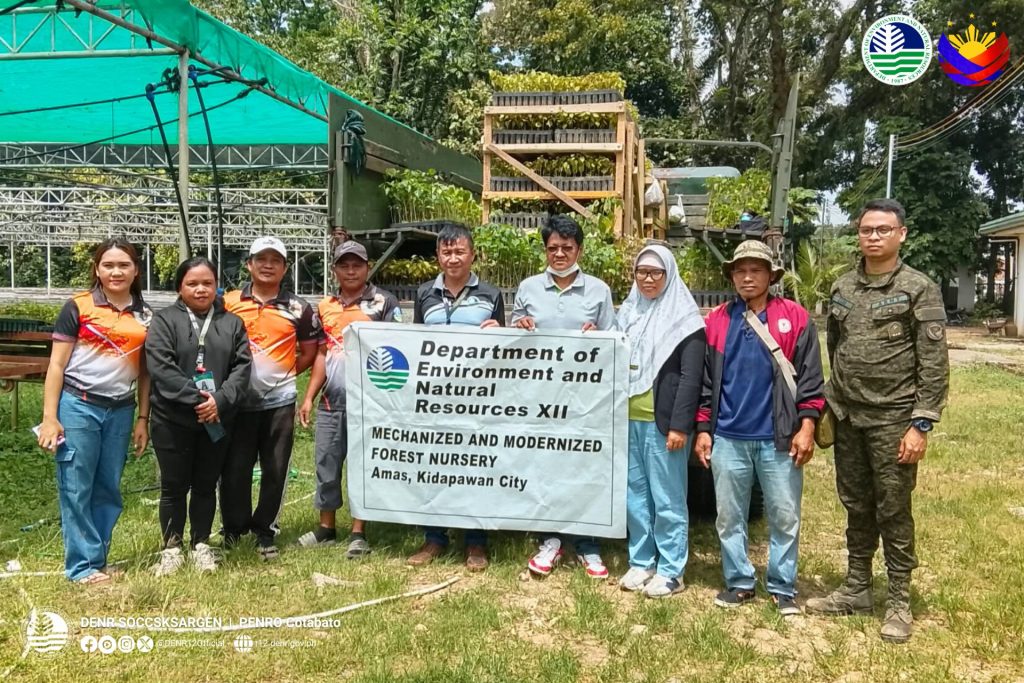
The ceremonial turnover was facilitated through the agency’s Mechanized and Modernized Forest Nursery (MMFN) in Kidapawan City, highlighting the government’s growing investment in modern, science-based forest restoration programs.
Restoring Nature, Protecting Communities
The seedlings include native and high-value species such as Bayok, Narra, and Lumbayao—trees known for their ecological importance, soil-stabilizing capacity, and long-term economic potential.
These will be planted in carefully identified sloping and high-risk areas in Maguindanao del Norte, where communities are increasingly vulnerable to landslides, flooding, and soil erosion.
According to DENR-PENRO Cotabato, the project is designed to restore degraded landscapes while serving as a natural defense against climate-related disasters.
“By planting indigenous trees in critical areas, we are not only rehabilitating forests but also protecting lives, livelihoods, and future generations,” an official said.
Supporting BARMM’s Climate Goals
The initiative aligns with broader environmental and development efforts in the Bangsamoro Autonomous Region in Muslim Mindanao (BARMM), where climate change continues to threaten agriculture, water sources, and rural communities.
Through agroforestry, the project integrates tree growing with sustainable farming practices, allowing residents to benefit from forest resources while preserving biodiversity.
Experts say this approach helps communities adapt to climate risks by improving soil fertility, reducing surface runoff, and creating buffer zones against extreme weather.
Academic-Government Partnership
The collaboration between DENR-PENRO Cotabato and Mindanao State University-Maguindanao underscores the growing role of academic institutions in environmental governance.
Students and faculty members from the university’s College of Forestry and Environmental Studies will take part in seedling propagation, site assessment, and monitoring, ensuring that scientific research supports on-the-ground conservation.
“This partnership transforms classrooms into living laboratories,” a university representative noted. “Our students gain hands-on experience, while communities benefit from sustainable solutions.”
Long-Term Commitment to Reforestation
The seedling turnover is part of DENR-PENRO Cotabato’s continuing reforestation and forest protection program, which prioritizes areas exposed to climate hazards and ecological degradation.
By working closely with schools, local governments, and grassroots organizations, the agency aims to build a network of “forest stewards” who will protect and manage natural resources over the long term.
Officials emphasized that planting trees is only the first step. Regular maintenance, community engagement, and policy support will be crucial to ensuring the project’s success.
A Green Investment for the Future
As climate threats intensify across Mindanao, initiatives like this serve as vital investments in environmental security and social stability.
With 15,000 indigenous seedlings now ready to take root, communities in Maguindanao del Norte are being given not just trees—but a stronger foundation for resilience, sustainability, and hope for generations to come.