
Bayang, Lanao del Sur — In a region long challenged by clan feuds and cycles of violence, a significant breakthrough in peacebuilding unfolded this week as two rival families in Lanao del Sur formally ended a community-based conflict, locally known as “rido,” through a mediation effort led by the Philippine Army’s 64th Infantry “Knights” Battalion.
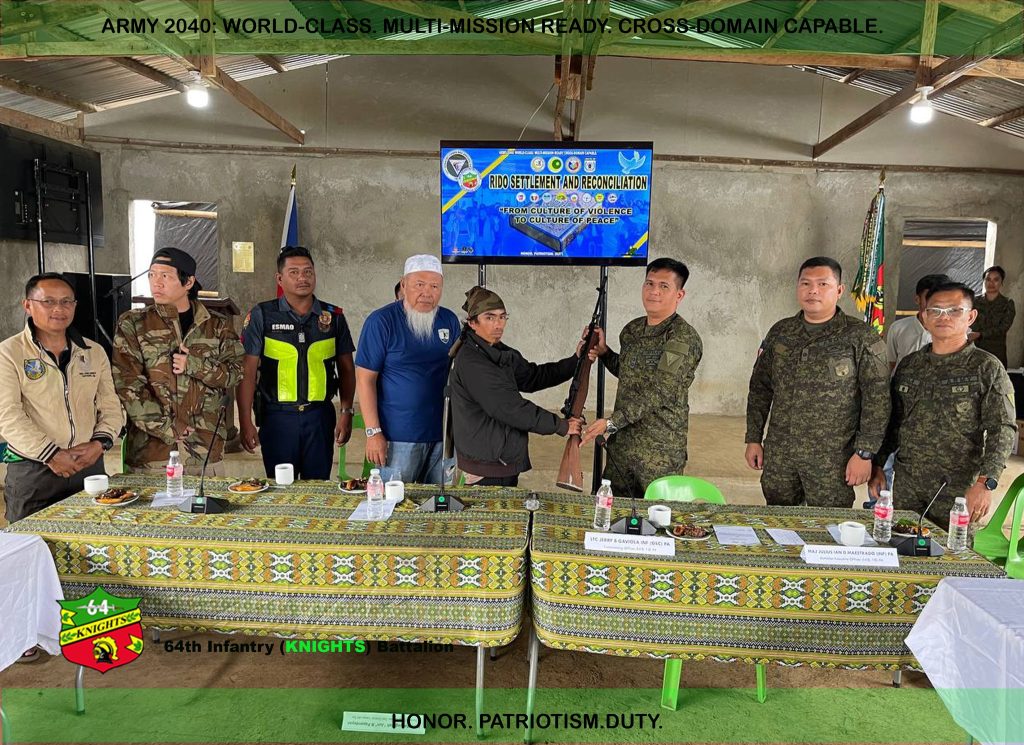
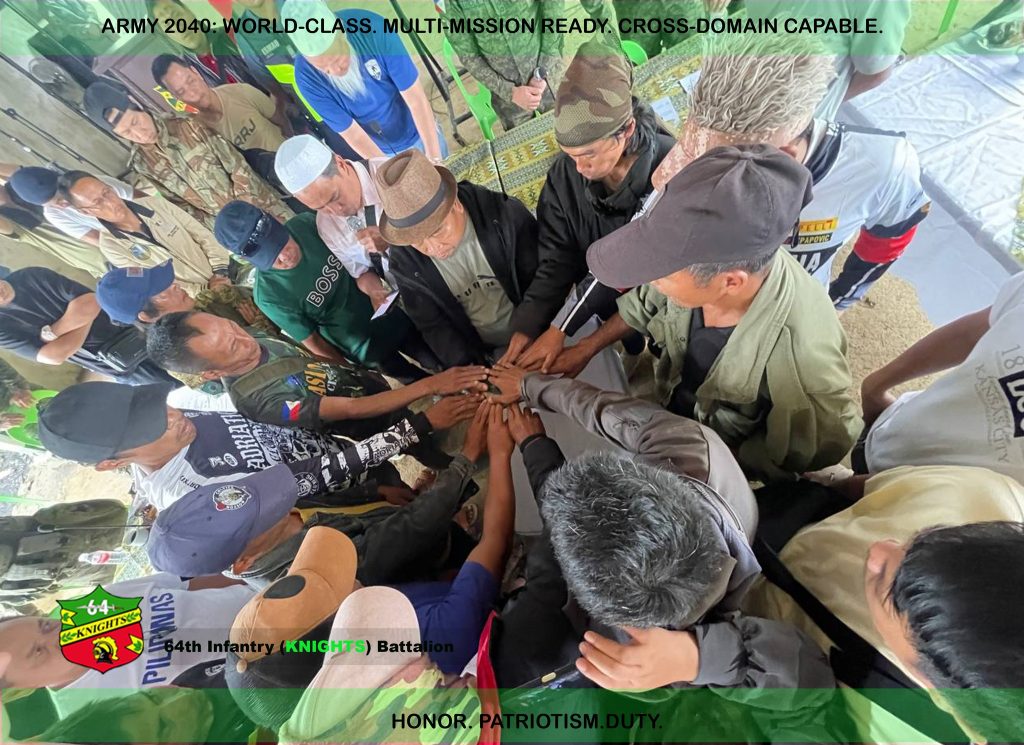
The peaceful settlement between the Solaiman Cosain Bantuas Family and the Bulawan Family was successfully facilitated on May 27, 2026, at the headquarters of the 64IB in Barangay Liong, Bayang, under the leadership of Lieutenant Colonel Jerry B. Gaviola.
The reconciliation marked not only the end of hostilities between the two families but also a renewed hope for unity and stability in communities often torn apart by deeply rooted clan disputes.
Rido, a long-standing issue in many parts of Mindanao, has historically resulted in retaliatory violence, displacement of civilians, disruption of livelihoods, and loss of lives. In many cases, such conflicts persist for years and even generations, making peaceful settlements both difficult and rare.
However, through the combined efforts of military authorities, local government leaders, traditional elders, and law enforcement agencies, both parties agreed to settle their differences peacefully and restore harmony within their communities.
Among the key figures who took part in the mediation were former Lanao del Sur 2nd District Congressman Mauyag “Jun” B. Papandayan, former Tubaran Mayor Khalidyassin D. Papandayan, ABC President Amir Ayaon, and personnel from the Tubaran Municipal Police Station led by Police Staff Sergeant Joseph Esmao.
As a symbolic gesture of reconciliation and their sincere commitment to peace, the feuding parties voluntarily surrendered one M14 rifle during the settlement ceremony. The turnover of the firearm served as a powerful indication that both families were willing to abandon violence and move forward toward peaceful coexistence.
Military officials described the surrender as more than a ceremonial act, saying it represented the formal cessation of hostilities and a collective decision to prioritize dialogue over armed confrontation.
In his message during the settlement, LTC Gaviola emphasized the importance of ending long-standing divisions that hinder development and peace in local communities.
He urged both families to leave behind hatred and mistrust and instead work together in rebuilding relationships founded on respect, cooperation, and unity.
According to Gaviola, sustainable peace in Lanao del Sur can only be achieved if communities themselves actively choose reconciliation over revenge and collaboration over conflict.
The successful mediation also carried a deeper meaning as it coincided with the observance of Eid al-Adha, one of Islam’s most sacred occasions that highlights sacrifice, forgiveness, compassion, and unity.
Community leaders said the timing of the settlement reflected the true spirit of the religious celebration, reminding residents that peace and reconciliation remain essential values in preserving the social fabric of Mindanao communities.
Residents and local stakeholders expressed hope that the agreement would prevent future violence and encourage other families involved in similar disputes to pursue peaceful dialogue instead of armed retaliation.
The 64th Infantry Battalion reaffirmed its commitment to sustaining peace and security efforts across Lanao del Sur through strengthened partnerships with local government units, traditional leaders, religious elders, and law enforcement agencies.
Officials stressed that preventing the recurrence of rido is crucial not only for public safety but also for economic progress, education, and long-term community development in conflict-affected areas.
For many in Bayang, the settlement was more than just the resolution of a feud — it was a powerful reminder that even deeply rooted conflicts can end when communities choose understanding, forgiveness, and peace over violence.