
October 23, 2025 – Datu Odin Sinsuat, Maguindanao del Norte
The Office of Civil Defense in the Bangsamoro Autonomous Region (OCD-BAR), under the leadership of Regional Director Joel Q. Mamon, conducted an Aerial Rapid Damage Assessment and Needs Analysis (RDANA) over the flood-affected areas in Maguindanao del Sur following the recent heavy rains brought by the Intertropical Convergence Zone (ITCZ) and localized thunderstorms.
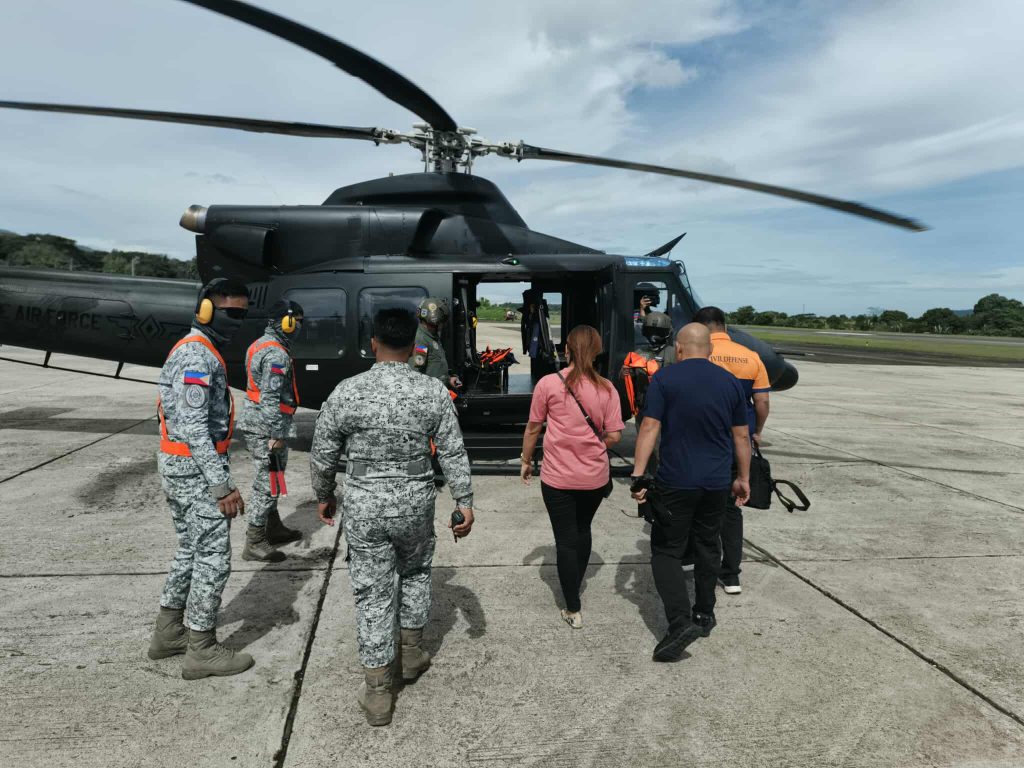
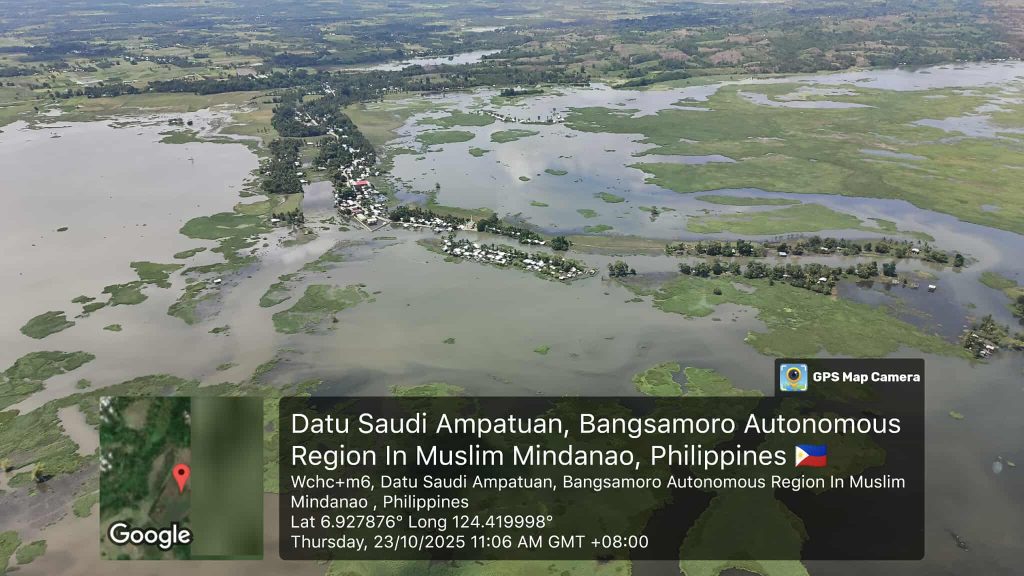
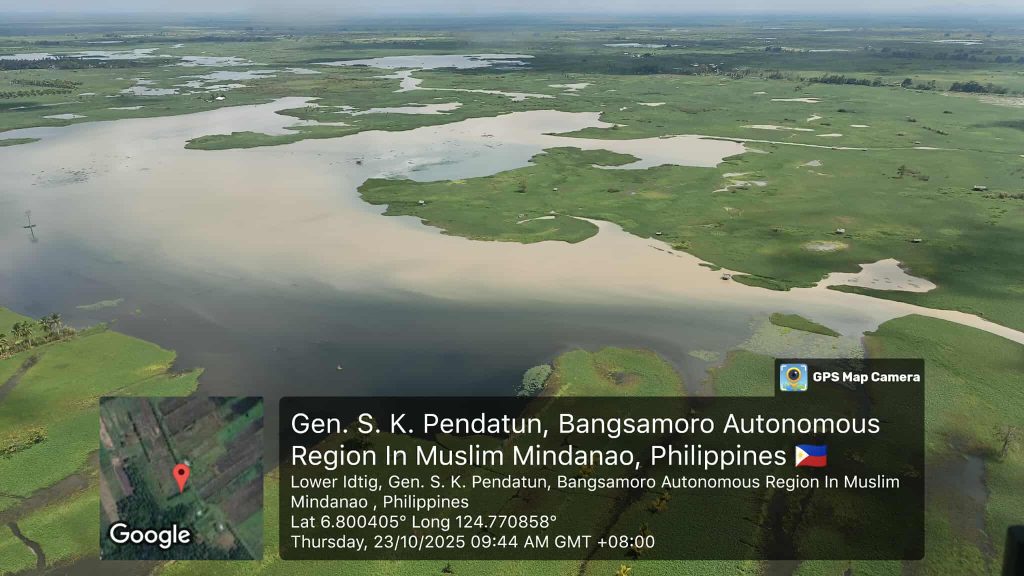
The joint operation was conducted in coordination with the Tactical Operations Group 12 (TOG 12) of the Philippine Air Force and the 6th Infantry Division of the Philippine Army. Officials onboard included Vice Governor Hisham Nando, Provincial Engineer Engr. Abdulwahab Tunga, Board Members Faujiah Mangelen and Engr. Saidali Makakena, Brig. Gen. Edgar Catu of the 601st Infantry Brigade, and Datu Anggal Midtimbang Mayor Datu Nathaniel Midtimbang, among others.
The aerial survey, led by Col. Edwin L. Parcia and Maj. Kiet John N. Pascua, covered the municipalities of Buluan, Pandag, Paglat, and General Salipada K. Pendatun (GSKP). Initial findings showed that five municipalities and 35 barangays were affected, displacing 7,664 households or 38,329 individuals. Eight houses were reported partially damaged in Datu Montawal due to strong winds.
A meeting followed the aerial mission, during which officials noted that the Buluan River’s main channel had been blocked by siltation and water hyacinths—causing overflow and severe flooding in nearby low-lying areas. Recommended actions include a river dredging plan, an ocular inspection to trace the river’s original flow, and further studies on small water impounding systems to prevent agricultural losses.
Despite these coordinated efforts, the situation in Maguindanao underscores a recurring national problem: provinces most vulnerable to flooding receive disproportionately less attention and funding compared to other, less disaster-prone regions.
Opinion: A Case of Neglect and Misplaced Priorities
Maguindanao—known to be one of the most flood-prone provinces in the Philippines—has repeatedly borne the brunt of natural calamities. Yet, the province continues to receive minimal support from national disaster management programs. Billions are poured into flood control projects in urban centers, while rural provinces like Maguindanao, where lives and livelihoods depend heavily on farmlands, are left struggling with recurring floods and damaged infrastructure.
This disparity raises critical questions about governance, transparency, and equity. Where does the money for disaster preparedness really go? Why do places like Maguindanao, which face floods almost yearly, remain in the same state of vulnerability? Reports of corruption and mismanagement have long plagued public works projects in the region—leaving communities defenseless even after millions of pesos have supposedly been allocated for “flood control.”
If the government is serious about resilience and equitable development, it must treat Maguindanao not as a perpetual victim, but as a priority area for sustainable flood management and infrastructure rehabilitation. Otherwise, the cycle of disaster, relief, and neglect will continue—and so will the suffering of its people.
OCD-BAR’s recent aerial assessment is a step in the right direction. But without sustained investment, transparent governance, and genuine accountability, such efforts will remain mere photo opportunities while floodwaters rise and livelihoods drown.