
The proposal to rename the General Santos City International Airport to SOCCSKSARGEN International Airport has ignited an unusually intense debate—one that goes beyond semantics and cuts into questions of identity, governance, regional equity, and, most importantly, public service. At its core, the controversy forces a difficult but necessary question: Does changing the name of an airport meaningfully improve the experience of those who use it, or does it merely rebrand a structure whose deeper challenges remain unaddressed?

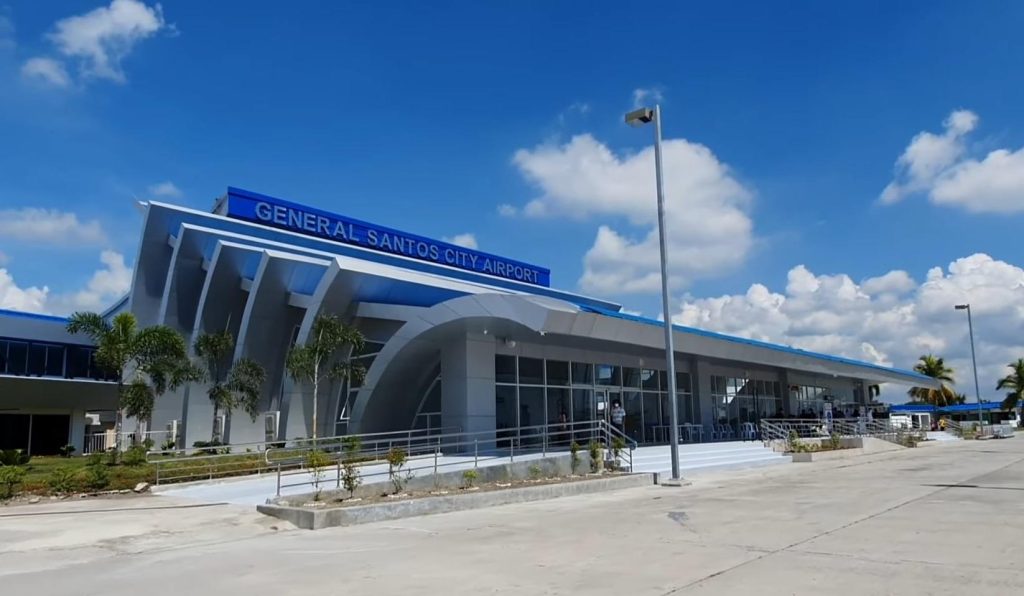
The Regional Development Council (RDC) XII Advisory Committee’s conditional approval of the proposed renaming—pending consultations with the General Santos City government—has been framed as a strategic move. Proponents argue that a regional name would reduce what they describe as a “parochial” perception, allowing the airport to be seen not as a city asset alone, but as a shared gateway for the entire SOCCSKSARGEN region. In theory, this could encourage stronger buy-in from regional offices, lawmakers, and stakeholders, potentially unlocking broader political and financial support, especially as the national government moves toward privatizing the operations and maintenance of regional airports.
This argument is not without logic. Airports, after all, are not merely transport facilities; they are symbols of connectivity and economic ambition. Naming can shape perception, and perception can influence policy priorities. From this vantage point, “SOCCSKSARGEN International Airport” signals inclusivity and shared ownership, implying that the region as a whole has both a stake and a say in its future.
Yet this is precisely where the counterarguments gain force.
General Santos City officials, led by Mayor Lorelie Pacquiao and the 21st Sangguniang Panlungsod, have strongly opposed the proposal, framing it as an erosion of history and identity. Their position is rooted in a documented past: the airport was one of several multibillion-peso projects implemented under the Philippine Aid Plan after the EDSA Revolution, with General Santos City serving as the primary local partner of the national government. The city provided counterpart funding, hosted preparatory forums, facilitated environmental assessments, and carried much of the institutional burden that ensured the project’s success.
From this perspective, the airport’s name is not merely geographic—it is historical recognition. To remove “General Santos City” from the airport, critics argue, is to downplay the city’s role in shaping one of Mindanao’s most important gateways. It is also, they contend, a risky move in branding terms. The airport already enjoys national and growing international recognition under its current name, reinforced by its distinctive design inspired by tuna fins—a nod to General Santos’ identity as the Tuna Capital of the Philippines.
Beyond history and symbolism, however, lies the most critical—and often under-discussed—dimension of the debate: service quality.
Whether called General Santos City International Airport or SOCCSKSARGEN International Airport, passengers experience the same queues, the same seating areas, the same security checks, and the same terminal environment. Travelers pay terminal fees, airline charges, and ancillary costs with the expectation of safety, efficiency, comfort, and dignity. For them, the name on the façade matters far less than the condition of restrooms, the reliability of baggage handling, the availability of seating, the clarity of information, and the overall ease of transit.
This raises an uncomfortable but necessary question: Does the proposed renaming come with concrete guarantees of improved service, or is it a symbolic change untethered from measurable passenger benefits?
Supporters of the renaming suggest that a regional identity could attract more lobbying power and accelerate upgrades. But critics counter that this logic appears selective. When the airport’s facilities were aging and substandard, regional lobbying was far less visible. Now that the airport has undergone significant improvements and is approaching readiness for expanded international operations, the push to rebrand has intensified. This timing has fueled suspicion that the renaming may be less about service enhancement and more about positioning—particularly in light of the Department of Transportation’s plan to privatize several regional airports by 2028.
Indeed, reports that a regional politician is actively lobbying for the name change, coupled with insider claims that renaming could affect who has influence over privatization decisions, have added a layer of political complexity. While none of these claims have been conclusively proven, their mere existence underscores the need for transparency. If renaming the airport alters governance structures, decision-making power, or revenue-sharing arrangements, then the public deserves a clear explanation of how these changes will ultimately benefit passengers and the broader region.
The comparison with other regional airports is also instructive. Bacolod–Silay International Airport, for instance, serves a wide area beyond a single city, yet it retains its original name without apparent disadvantage in funding or development. This suggests that regional service does not automatically require regional renaming, weakening the argument that a name change is a prerequisite for inclusive development.
Ultimately, the debate should not be reduced to a binary choice between “regional pride” and “city pride.” Both can coexist. An airport can proudly bear the name of its host city while explicitly functioning—and being funded, promoted, and governed—as a regional gateway. The real measure of pride, after all, is not what the airport is called, but how it performs.
If the airport is indeed a “pride of the city,” then that pride must be reflected in consistent, high-quality service: clean and adequate facilities, efficient processing, passenger-friendly layouts, transparent fees, and accountability in operations—whether publicly managed or privatized. If it is to be a “gateway of the region,” then regional leaders must demonstrate their commitment not just through branding, but through sustained investment, cooperative governance, and policies that place passengers—not politics—at the center.
In the end, names matter—but they matter most when they stand for something tangible. Without clear, enforceable improvements in service quality and passenger experience, a new name risks becoming exactly what critics fear: a cosmetic change layered over unresolved issues. Whether the sign reads “General Santos City International Airport” or “SOCCSKSARGEN International Airport,” the public will judge it the same way—by how well it serves the people who pass through its doors, and whether their money buys not just access, but comfort, efficiency, and respect.