
The growing controversy surrounding the proposed joint venture between South Cotabato II Electric Cooperative (SOCOTECO II) and IGNITE Power is no longer just a corporate or legal issue. It has become a moral, social, and democratic issue that cuts to the heart of public accountability, people’s participation, and the future of essential services in South Cotabato.
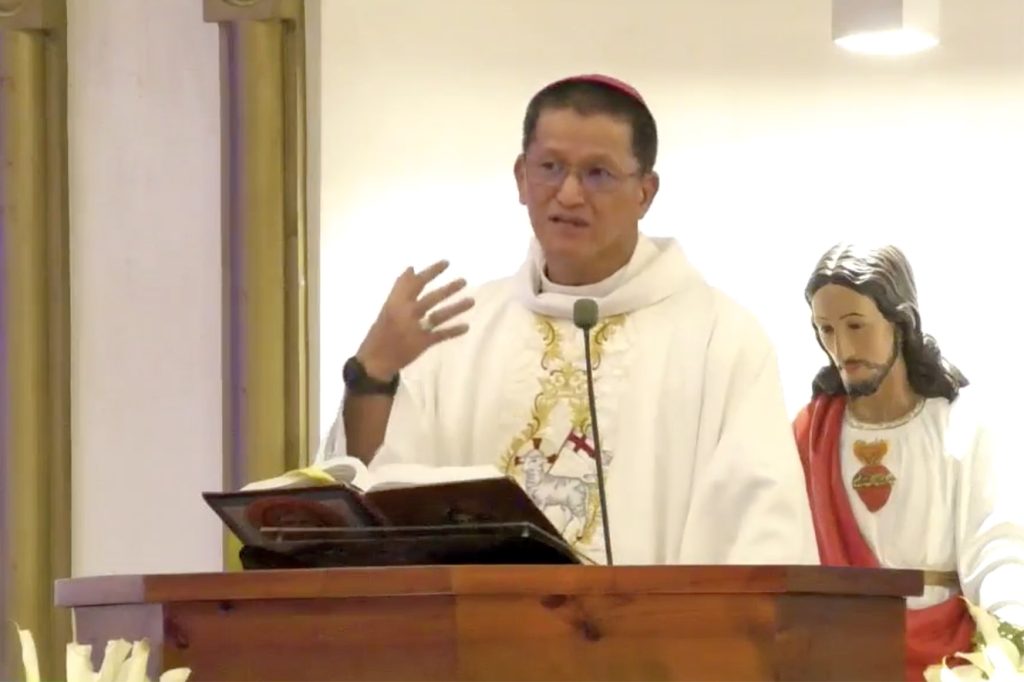
When the Diocese of Marbel, led by Bishop Cerilo Casicas, issued a strongly worded statement condemning the lack of transparency surrounding the deal, it signaled that public concern has reached a critical point. The bishop’s intervention was not mere political commentary. It was a moral warning against secrecy, exclusion, and decisions made without the informed consent of the very people who own the cooperative — the member-consumer-owners.
Electric cooperatives were never meant to operate like private empires controlled by a few powerful individuals behind closed doors. They were established precisely because electricity is not an ordinary commodity. It is a public necessity tied directly to education, healthcare, livelihoods, communication, and economic survival. In many communities, electricity determines whether businesses thrive or collapse, whether students can study at night, whether hospitals can function effectively, and whether ordinary families can live with dignity.
This is why the people’s outrage over the SOCOTECO II issue is justified.
The biggest concern is not merely the proposed joint venture itself. Reform, modernization, and financial sustainability are legitimate goals. Cooperatives must improve services, address inefficiencies, and adapt to modern energy demands. But reform done without transparency is dangerous. Modernization without consultation becomes exploitation. And partnerships negotiated in secrecy naturally breed suspicion.
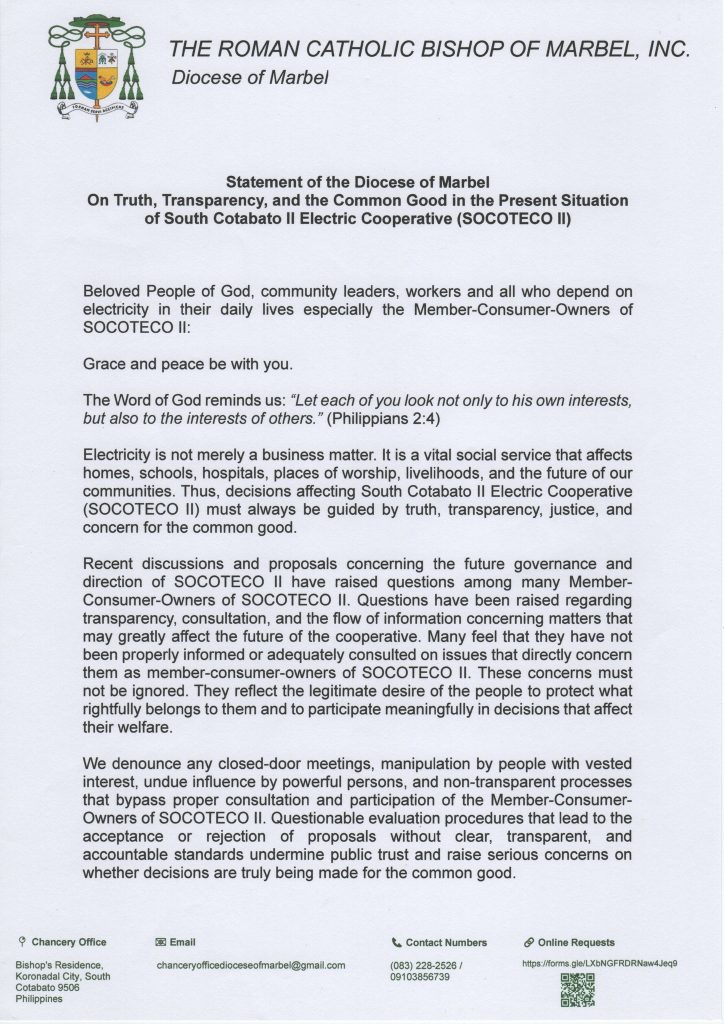
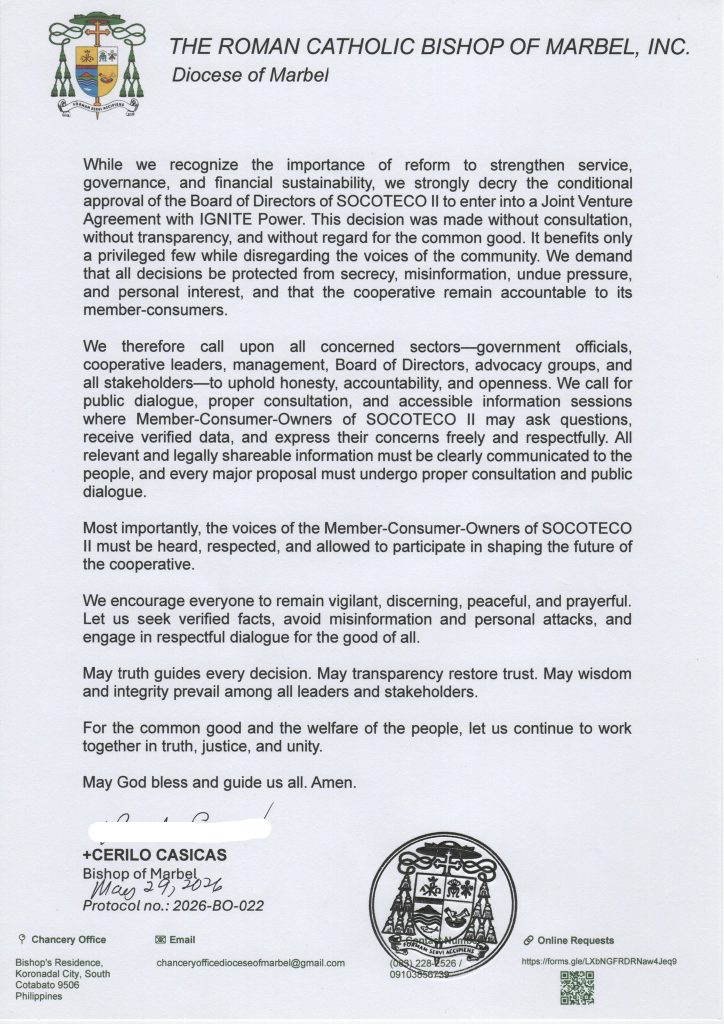
The Diocese of Marbel was correct in denouncing “closed-door meetings, manipulation by people with vested interest, undue influence by powerful persons, and non-transparent processes.” These are not minor procedural lapses. These are red flags that strike at the integrity of governance itself.
If the proposed agreement with IGNITE Power is truly beneficial for the people, then why are member-consumer-owners complaining that they were not adequately informed? Why are consultations being questioned? Why do many consumers feel excluded from a process that will directly affect their lives and finances for years to come?
The answer is simple: people do not fear truth. They fear secrecy.
Public trust cannot survive where information is withheld, where major decisions are rushed, and where ordinary stakeholders are treated as spectators instead of owners. SOCOTECO II is not a private corporation owned by a handful of elites. It is a cooperative built by the contributions, payments, and trust of thousands of consumers across South Cotabato.
The danger here extends beyond one power deal. If this situation continues unchecked, it could establish a troubling precedent where public utilities and cooperatives gradually drift away from community ownership and become vulnerable to privatization schemes disguised as “joint ventures” or “reforms.” Once public accountability weakens, profit inevitably becomes the dominant priority.
And history has repeatedly shown that when essential services are treated primarily as profit-driven enterprises, ordinary consumers usually pay the price through rising costs, reduced accountability, and weakened public oversight.
The bishop’s statement should therefore not be dismissed as interference. It is a legitimate call for ethical governance and democratic participation. The Church, especially in the Philippines, has long played an important role in defending social justice, human dignity, and the welfare of marginalized communities. Speaking out against secrecy and exclusion in matters affecting public welfare is consistent with that mission.
What is needed now is not hostility, propaganda, or political maneuvering. What is needed is full transparency.
SOCOTECO II’s leadership must immediately open the process to genuine public scrutiny. All legally shareable documents related to the proposed joint venture should be disclosed. Public consultations must be conducted honestly and extensively. Independent experts should be invited to explain the long-term implications of the agreement, including its impact on rates, ownership structure, governance, labor, and consumer protection.
Most importantly, the voices of member-consumer-owners must not be treated as obstacles to development. They are the very foundation of the cooperative itself.
The people deserve facts, not carefully managed narratives. They deserve participation, not token consultations. And they deserve leaders who understand that public trust is earned through honesty, openness, and accountability.
At its core, this issue is about who truly controls public services — the people or a privileged few.
If the process surrounding SOCOTECO II continues to be clouded by secrecy and exclusion, public resistance will only grow stronger. But if leaders choose transparency, dialogue, and accountability, then perhaps trust can still be restored.
The future of SOCOTECO II must never be decided in silence.
Because electricity powers communities. But truth and transparency are what keep democracy alive.