
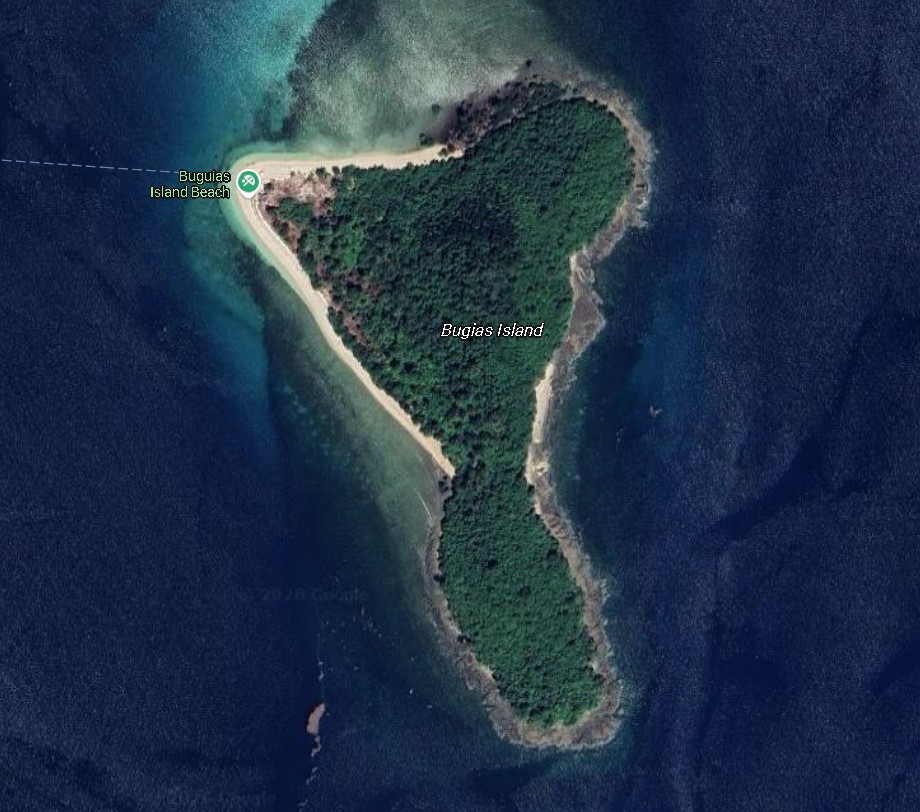
If the confirmed sale of part of Bugias Island within the Onse Islas area is truly legal, then perhaps the greater question is no longer legality — but morality, accountability, and the future of Zamboanga City’s natural heritage.
Because for many Zamboangueños, this issue cuts deeper than land titles and property transactions.
Onse Islas is not merely a tourism project. It is not just a postcard destination or a collection of islands marketed to visitors. It is part of the soul of Zamboanga City — a symbol of identity, pride, culture, and ecological stewardship.
That is why the phrase now circulating among residents — “From Onse Islas to Dies Islas” — may sound witty on the surface, but behind the humor lies genuine fear and heartbreak.
What happens when public treasures slowly disappear?
What happens when islands celebrated as symbols of shared heritage become commodities?
And what happens when future generations inherit not eleven islands, but the memory of what used to be theirs?
The confirmation by Barangay Captain Rajal Aracani that Bugias Island was indeed sold has shaken public confidence and triggered questions that can no longer be ignored. Even if the transaction happened years ago, as clarified by Mayor Khymer Olaso, the public deserves transparency about how such sales occurred, who benefited, what laws governed the process, and whether environmental protections were adequately enforced.
Legality alone does not automatically make something right.
Many environmentally destructive actions throughout history were technically legal. Forests were legally logged. Coastal areas were legally reclaimed. Mountains were legally mined. Yet communities later paid the price through environmental degradation, displacement, and irreversible ecological loss.
The danger here is not just one island sale.
The danger is the precedent.
If one island can be sold today, what prevents another tomorrow? And another after that? At what point does an eco-cultural tourism destination cease to belong to the people and begin belonging only to those wealthy enough to acquire pieces of it?
This is precisely why the city government’s decision to conduct a comprehensive inventory of Onse Islas is both necessary and overdue. The planned coordination among the DENR, CENRO, the City Assessor’s Office, the City Tourism Office, and other agencies is a welcome development. The inspections conducted to assess infrastructure, tourism concerns, and unregulated developments also indicate that city officials now recognize the gravity of the situation.
But inventory alone is not enough.
What Zamboanga needs now is political courage.
The proposal to legislate stronger protection for Onse Islas deserves urgent and serious action. Declaring the area as a fully protected zone would provide stronger legal safeguards against unchecked privatization, unregulated development, and environmental exploitation.
Because the reality is painfully simple: once these islands are altered beyond recognition, no ordinance, no tourism campaign, and no press release can truly restore what has been lost.
Supporters of private investment argue — correctly — that development can generate jobs and economic growth. No reasonable person opposes responsible investments. But development must never come at the expense of public heritage and environmental sustainability.
There is a profound difference between development that coexists with conservation and development that quietly erodes the very reason people value a place in the first place.
Onse Islas was envisioned not just as a tourist attraction, but as an eco-cultural sanctuary that highlights the rich heritage of the Sama Banguingui people while preserving marine ecosystems and empowering local communities. That vision cannot survive if commercial interests eventually overpower environmental and cultural stewardship.
The public also has every right to ask difficult questions:
Who monitors these transactions?
Were local communities fully consulted?
Were environmental impact studies conducted?
How much of the islands remain protected from future privatization?
And most importantly — who truly owns Onse Islas?
The answer should never be limited to names written on titles.
Because places like Onse Islas belong, in many ways, to collective memory and shared identity. They belong to fishermen whose livelihoods depend on healthy waters. They belong to indigenous communities whose histories are tied to the islands. They belong to children who deserve to inherit natural wonders that still exist outside photographs and old tourism brochures.
Mayor Olaso’s statement expressing sadness over the sale is understandable. His openness to lawful investments is likewise reasonable. But this moment requires more than sadness.
It requires decisive action.
Zamboanga City now stands at a crossroads.
One path leads toward sustainable stewardship — where environmental protection, cultural preservation, and responsible tourism remain at the center of policy decisions.
The other path leads toward gradual commodification, where paradise is divided piece by piece until the public wakes up one day realizing that what once belonged to everyone now belongs to only a few.
The people of Zamboanga are not merely counting islands.
They are counting what remains of their heritage.
Because once an island is sold, recovering it may be far more difficult than counting backward from eleven to ten.