
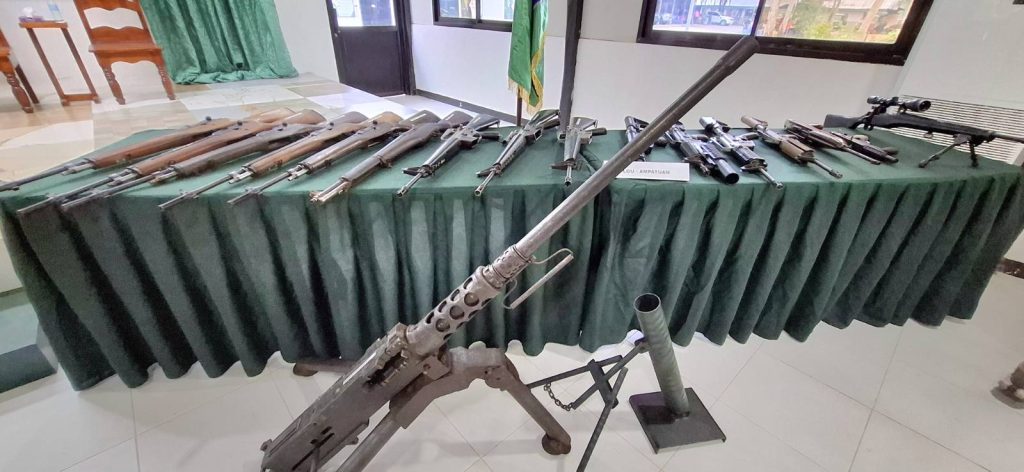
Ampatuan, Maguindanao del Sur – April 26, 2025 — In a symbolic ceremony at the headquarters of the 601st Infantry (UNIFIER) Brigade, forty high-powered firearms — including assault rifles, mortars, grenade launchers, and heavy machine guns — were voluntarily surrendered by local officials across Maguindanao del Sur.
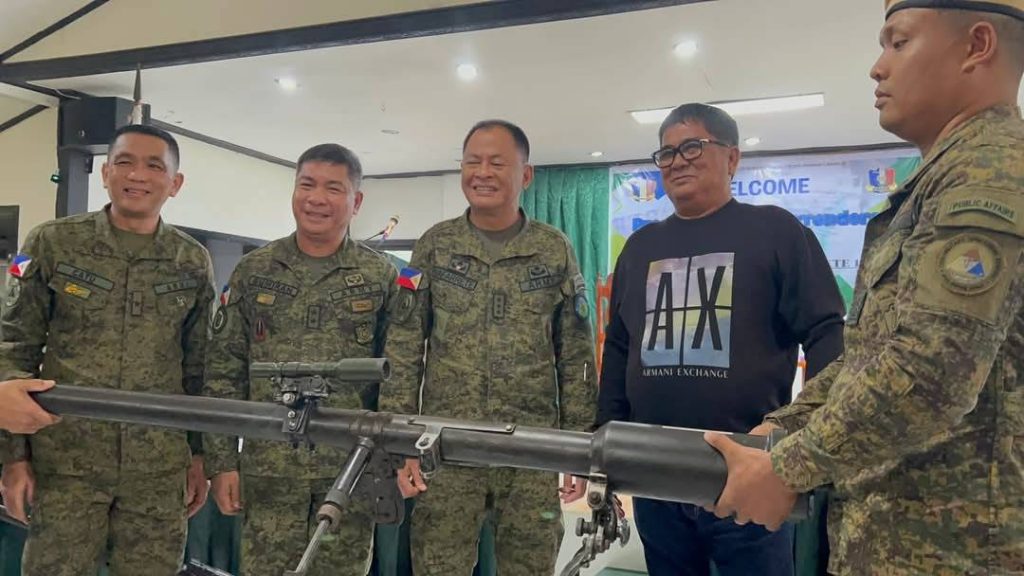
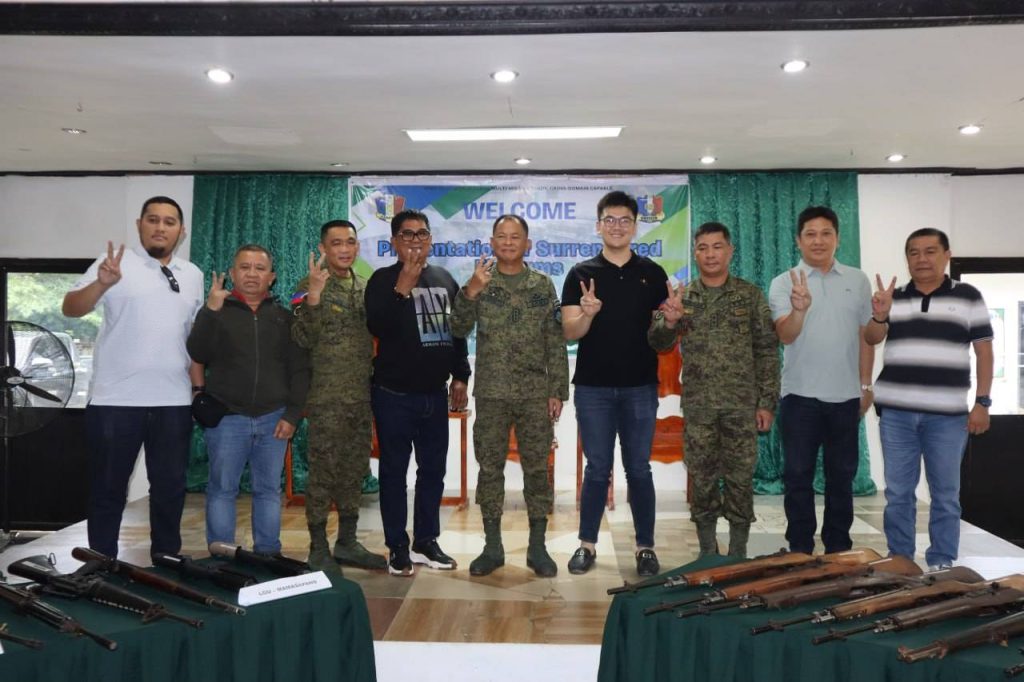
The event, led by Brig. Gen. Edgar L. Catu and witnessed by Western Mindanao Command chief Lt. Gen. Antonio G. Nafarrete, was hailed as a triumph for the military’s Small Arms and Light Weapons (SALW) Management Program. Senior commanders from the 6th Infantry (Kampilan) Division and Joint Task Force Central also praised the cooperation of local leaders, noting that “every firearm surrendered is a crime prevented.”
But while the turnover was celebrated, it also exposed a troubling reality: How many more loose firearms remain hidden in the region? And why does the flow of deadly weapons seem endless, despite repeated government campaigns?
A closer look reveals that the surrender of these 40 firearms — impressive as it is — barely scratches the surface. Mindanao has long been a fertile ground for gun proliferation, fueled by a complex web of local conflict, weak law enforcement, and a thriving black market.
An Endless Arsenal
The surrendered firearms came from six municipalities: Datu Saudi Ampatuan, Shariff Aguak, Mamasapano, Sultan sa Barongis, Ampatuan, and Datu Abdullah Sangki. Some of the weapons, such as the M14 rifles, M16s, and Barrett-style improvised sniper rifles, suggest not just battlefield readiness but also access to sophisticated modifications and high-powered armaments.
Where do these weapons come from? Intelligence sources and former combatants cite multiple channels: smuggling routes from nearby countries, weapons left behind by foreign fighters, diversion from military stockpiles, and even local blacksmiths specializing in gun manufacturing.
In interviews, some local officials — speaking on condition of anonymity — admitted that in many areas, firearms are considered an essential possession. “Here, a gun is not just a weapon. It’s life insurance,” said one barangay captain.
Deep Roots of a Culture of Armed Security
The historical context cannot be ignored. Decades of clan wars (rido), the rise of separatist and extremist groups, and systemic distrust of formal law enforcement have normalized firearm ownership among civilians and politicians alike. In some towns, private armed groups rival the strength of official police forces.
“Disarmament is not just about collecting guns,” said a retired military officer who spent years in the region. “It’s about changing mindsets built on generations of violence and insecurity.”
Weak Borders, Strong Markets
The Philippines’ porous maritime borders, particularly around Mindanao, are a major factor. Weapons are reportedly smuggled in from Malaysia and Indonesia, slipping through the gaps in the country’s coastal security. At the same time, local black markets thrive, with an AK-47 or M16 rifle reportedly fetching between ₱50,000 to ₱150,000, depending on the source and quality.
Despite intensified campaigns like SALW, authorities admit they are often outpaced by the speed of arms trading.
A First Step, But Not the Last
Lt. Gen. Nafarrete’s remarks captured both hope and caution: “Once these firearms were tools of conflict. Now, they sit quietly before us. Their surrender symbolizes courage and a great step toward healing.”
Yet if the goal is to stop the cycle of violence, military officials, peace advocates, and community leaders agree: the solution must go beyond gun collections. It must involve strengthening institutions, providing real economic opportunities, promoting grassroots reconciliation, and enforcing stricter controls on borders and political financing.
Until then, events like the surrender in Maguindanao del Sur, while important, are just the beginning of a much larger and more complicated battle for lasting peace.