
Alabel, Sarangani Province — Two juvenile Eastern Grass Owls (Tyto longimembris) found in Barangay Kawas were successfully released back into their natural habitat on January 8, 2025, after undergoing thorough care and health assessments.
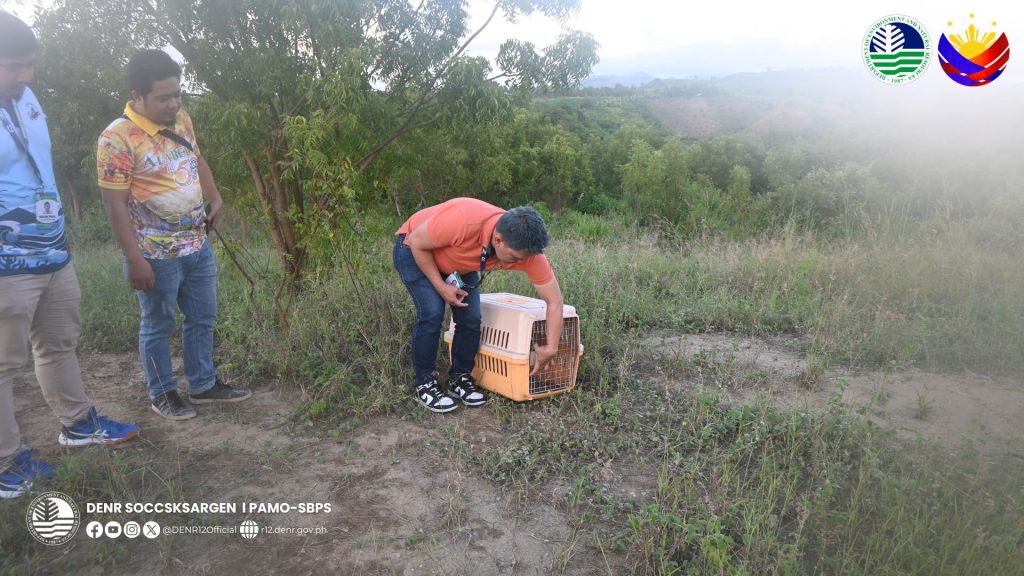
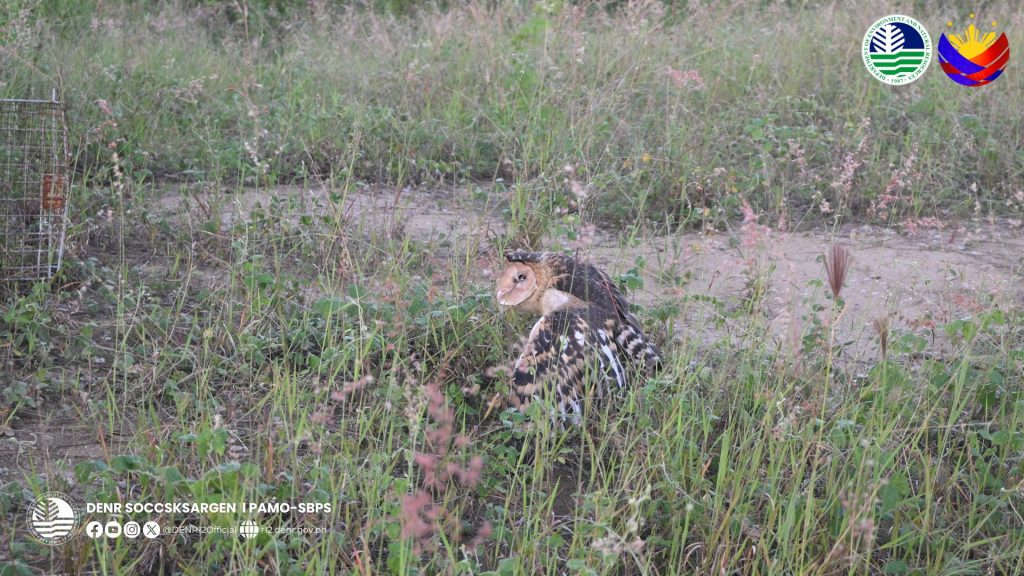
The owls, discovered on December 16, 2024, under a cogon grass patch, were still bearing their juvenile down feathers. They were turned over to the Department of Environment and Natural Resources (DENR) Provincial Environment and Natural Resources Office (PENRO) in Sarangani by a concerned local rescuer, Mr. Julie Galupo. Following their rescue, the birds were placed under the care of the SBPS Marine Wildlife Rescue Center in Barangay Ladol, Alabel, for over three weeks.
During their stay at the rescue center, the owls underwent close monitoring and veterinary assessments led by DENR 12 Veterinarian Dr. Roy O. Mejorada. Their health and development were carefully observed until both birds successfully molted into their adult plumage, a critical sign that they were fit to thrive in the wild.
The Eastern Grass Owl is a nocturnal species protected under Republic Act 9147, also known as the Wildlife Resources Conservation and Protection Act of 2001. This legislation safeguards the species against illegal possession, hunting, and trade, underscoring its importance in maintaining ecological balance.
This rescue and release operation highlights the vital role of public awareness and community cooperation in wildlife conservation. According to PAMO SBPS and PENRO Sarangani, the successful reintegration of the owls into their natural habitat demonstrates the collective effort needed to preserve the country’s rich biodiversity.
“We urge communities to remain vigilant in reporting wildlife encounters and to actively support conservation initiatives,” the DENR offices stated. “Together, we can ensure that future generations continue to benefit from the Philippines’ extraordinary natural heritage.”
The event serves as a reminder of the critical need for conservation efforts and the collaborative role between government agencies, local communities, and concerned citizens in protecting wildlife.