
BAGANGA, Davao Oriental — More than a decade after the catastrophic onslaught of Super Typhoon Pablo (international name: Bopha), the coastal communities of Baganga continue to bear witness to a remarkable story of resilience—one where loss gave way to hope, and broken coastlines became symbols of renewal.
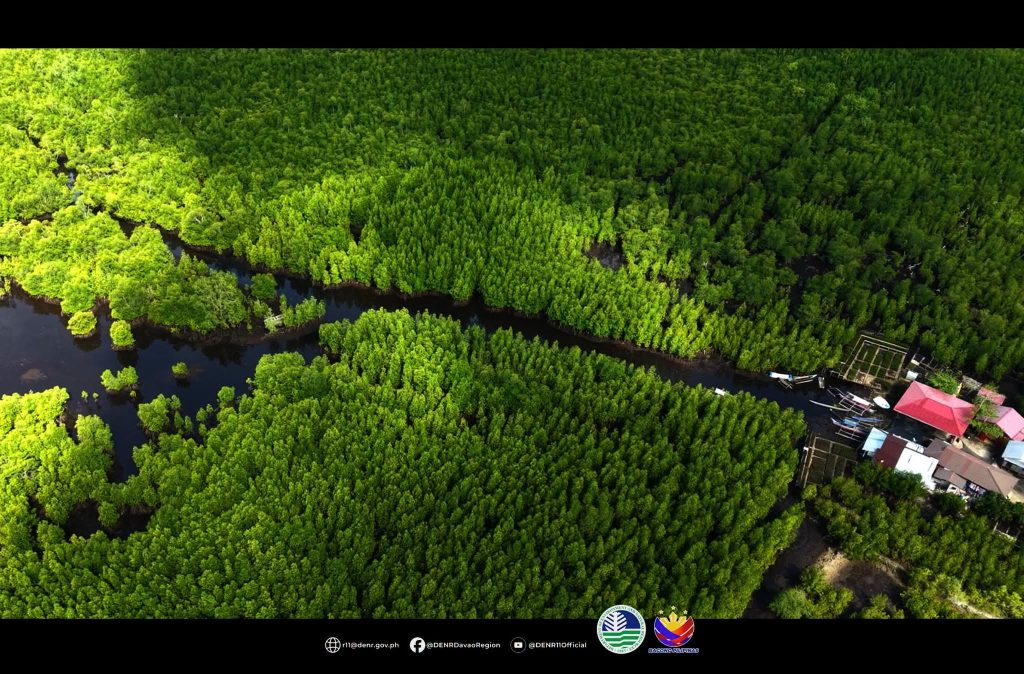
At the heart of this transformation is the Lucod Mangrove Rural Women’s Association (LUMARWA), a community organization that has successfully converted tragedy into a thriving movement for environmental conservation, climate resilience, and inclusive community development.
Formed on January 15, 2015, LUMARWA began as a small group of determined Mandaya women committed to restoring the mangrove forests devastated by Typhoon Pablo in 2012. Today, the organization has evolved into a dynamic association of 42 members, composed of 24 women, 18 men, and 10 active youth members, demonstrating that environmental stewardship flourishes when entire communities work together.
Under the leadership of President Mary Joy A. Monteza, the association has become a model of grassroots conservation, proving that local communities are among the most effective guardians of the country’s natural resources.
From Disaster to Determination
When Typhoon Pablo battered eastern Mindanao in December 2012, it left widespread destruction across Davao Oriental. Coastal ecosystems, particularly mangrove forests that serve as natural barriers against storm surges and coastal erosion, suffered significant damage.
Recognizing the vital role of mangroves in protecting communities and sustaining marine biodiversity, local residents organized themselves with a shared vision: restore what nature had lost and secure a safer future for the next generation.
Their determination soon opened the door to a major opportunity through the government’s National Greening Program (NGP).
A Turning Point Through the National Greening Program
In 2015, LUMARWA secured its first major project under the National Greening Program—a three-year contract valued at ₱883,200 to rehabilitate 40.8 hectares of mangrove forest.
The project involved planting 20,482 mangrove seedlings, primarily Rhizophora mucronata (Bakuan Babae) and Rhizophora apiculata (Bakuan Lalaki), species known for their ability to stabilize coastlines, reduce erosion, and provide nursery grounds for fish and other marine life.
What began as a rehabilitation effort soon became a learning journey.
Through the Expanded National Greening Program (ENGP), association members received extensive training in mangrove nursery establishment, propagule collection, seedling production, proper planting techniques, and long-term maintenance of rehabilitation sites.
The program not only restored ecosystems but also equipped community members with valuable technical knowledge that strengthened their capacity as environmental stewards.
Restoring More Than Forests
The association’s achievements have since expanded well beyond its original target.
Following field validation, LUMARWA successfully propagated and planted an impressive 1.48 million mangrove seedlings across 114 hectares of coastal areas.
The rehabilitation efforts covered eight native mangrove species, including:
- Rhizophora mucronata (Bakuan Babae)
- Rhizophora apiculata (Bakuan Lalaki)
- Aegiceras floridum (Karamkam)
- Ceriops tagal (Tungog)
- Xylocarpus granatum (Tabigi)
- Xylocarpus moluccensis (Piag-ao)
- and other indigenous mangrove varieties essential to maintaining healthy coastal ecosystems.
These native species play critical roles in protecting shorelines from storm surges, reducing coastal erosion, storing significant amounts of carbon, and serving as breeding habitats for fish, crabs, shellfish, and countless marine organisms that support local fisheries.
Building Climate Resilience Through Community Action
For LUMARWA, mangrove rehabilitation has become more than an environmental project—it has evolved into a community movement that strengthens livelihoods while preparing coastal villages for the growing impacts of climate change.
Healthy mangrove forests act as natural shields against powerful waves and extreme weather events, helping reduce the vulnerability of coastal communities to disasters.
The association’s work has also fostered stronger collaboration among women, men, and young people, ensuring that environmental conservation becomes a shared responsibility across generations.
Their inclusive approach demonstrates how empowering local communities—particularly women—can produce lasting environmental and social benefits.
A Legacy Rooted in Hope
More than ten years after Typhoon Pablo altered the landscape of Baganga, the mangrove forests nurtured by LUMARWA now stand as living symbols of resilience.
What was once a coastline scarred by one of the country’s most destructive typhoons has gradually transformed into a thriving ecosystem that protects communities, supports marine biodiversity, and inspires collective action.
LUMARWA’s journey reflects the true spirit of the National Greening Program: that restoring forests is not simply about planting trees, but about cultivating hope, empowering communities, and ensuring that future generations inherit healthier, safer, and more resilient coastlines.
Rooted in the tides and strengthened by unity, the people of Lucod have shown that when communities come together with a common purpose, even the deepest scars left by disaster can grow into forests of opportunity.