
MURCIELAGOS ISLAND, Zamboanga del Norte — A routine nighttime biodiversity monitoring activity at the Murcielagos Island Protected Landscape and Seascape (MIPLS) turned into a remarkable wildlife conservation success after environmental personnel safely guided 95 critically endangered Hawksbill sea turtle (Eretmochelys imbricata) hatchlings to the sea, giving the vulnerable species a greater chance of survival.
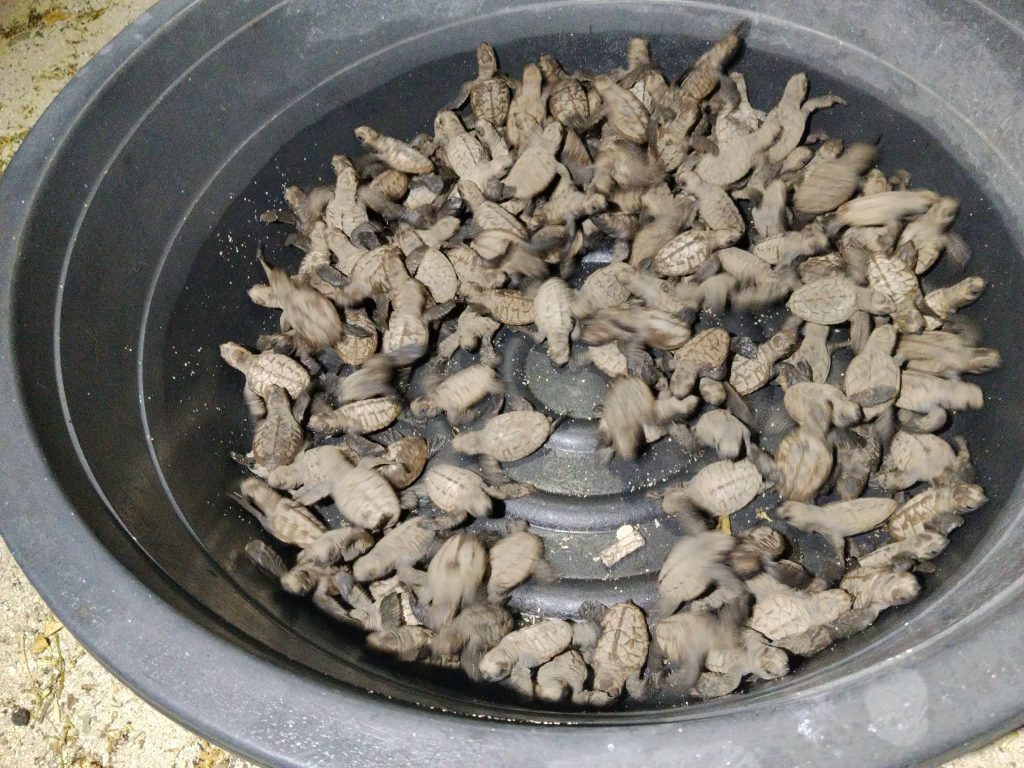
The successful release was carried out by the Community Environment and Natural Resources Office (CENRO) Liloy, through the Protected Area Management Office (PAMO) of MIPLS, after the hatchlings naturally emerged from their nest at the MIPLS Eco Park at approximately 8:40 p.m. during a recent biodiversity monitoring patrol.
Race Against Nature
While sea turtle hatchlings instinctively make their way toward the ocean immediately after emerging from their nests, environmental officers discovered that this particular nest posed a significant challenge.
The nest had been laid farther inland than usual, with the hatchlings’ natural path to the shoreline blocked by dense beach vegetation. The difficult terrain greatly increased the likelihood that the tiny turtles would become trapped, exhausted, or fall prey to predators before reaching the safety of the sea.
Recognizing the immediate danger, trained personnel intervened in accordance with established wildlife conservation protocols.
Using a clean basin specifically intended for wildlife handling, the hatchlings were carefully collected and transferred to a safer release site much closer to the shoreline.
Once released, the hatchlings resumed their instinctive crawl across the beach and into the sea—an important stage in their life cycle. Conservation experts note that allowing hatchlings to crawl naturally over the sand enables them to imprint the unique characteristics of their natal beach, increasing the likelihood that surviving females will return decades later to lay their own eggs in the same area.
A Species Fighting for Survival
The Hawksbill sea turtle is listed as Critically Endangered, making it one of the world’s most threatened marine turtle species.
Protected under Philippine environmental laws, Hawksbill turtles continue to face numerous threats both at sea and on land. Habitat destruction, illegal wildlife trade, marine pollution—particularly plastic waste—climate change, coastal development, and other human activities have drastically reduced their global population.
Only a small fraction of sea turtle hatchlings naturally survive to adulthood, making every successful nesting event and hatchling release crucial to the species’ long-term recovery.
Sanctuary for Marine Wildlife
The successful release of the 95 hatchlings underscores the vital role of the Murcielagos Island Protected Landscape and Seascape as one of the country’s important marine biodiversity refuges.
Protected areas such as MIPLS provide safe nesting grounds for marine turtles and other wildlife, while continuous monitoring by conservation personnel helps address threats that could otherwise prevent hatchlings from reaching the ocean.
The operation also highlights the commitment of CENRO Liloy and the Protected Area Management Office to safeguarding endangered wildlife through science-based conservation efforts and regular biodiversity monitoring.
Public Participation Remains Essential
The Department of Environment and Natural Resources (DENR) emphasized that protecting marine turtles is a shared responsibility and encouraged the public to contribute to conservation efforts by keeping beaches free from litter, reducing marine pollution, respecting nesting sites, and reporting wildlife sightings or illegal activities involving marine species to authorities.
For conservationists, each hatchling that successfully reaches the sea represents more than just another turtle entering the ocean—it represents renewed hope for the survival of a species that has inhabited the world’s oceans for more than 100 million years.
Although the odds remain stacked against them, the successful journey of these 95 Hawksbill hatchlings serves as a powerful reminder that timely conservation action and protected habitats can make a meaningful difference in securing the future of one of the planet’s most iconic and endangered marine creatures.