
A Defining Moment for Peace
More than a decade after the signing of the Comprehensive Agreement on the Bangsamoro (CAB), the Bangsamoro peace process stands at one of its most critical crossroads. The optimism that once accompanied the historic agreement is now increasingly overshadowed by growing concerns over delayed implementation, weakened trust, and uncertainty surrounding the future of the transition. The warning no longer comes solely from political observers or peace negotiators—it comes from the very communities that have invested their hopes in peace. More than one hundred civil society organizations, together with Moro leaders, women, youth, labor groups, religious institutions, Non-Moro Indigenous Peoples, the academe, and development partners, have spoken with one voice: the greatest threat to the Bangsamoro peace process today is no longer armed conflict, but the failure to faithfully implement the commitments already made.
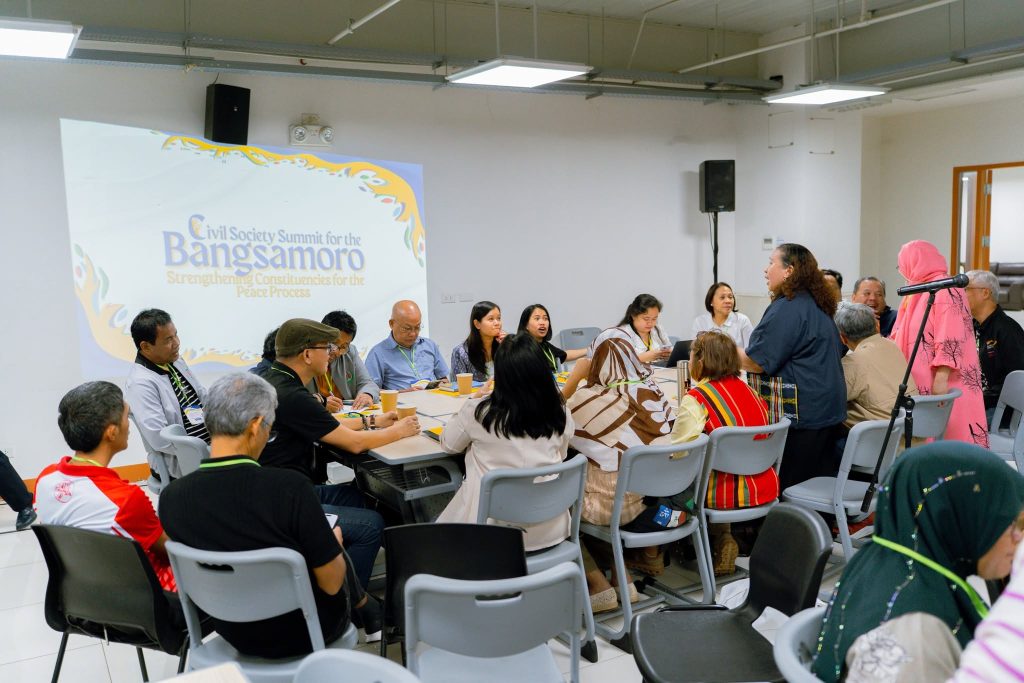
Their message, articulated during the Civil Society Summit for the Bangsamoro held from July 1 to 3 in Davao City, is both timely and urgent. Peace, they stressed, is no longer about negotiating another agreement. It is about honoring the one that already exists.
An Urgent Appeal to President Marcos
At the center of the multisectoral call is a direct appeal to President Ferdinand Marcos Jr. to exercise personal political leadership by meeting with the leadership of the Moro Islamic Liberation Front (MILF). The call is not symbolic. It reflects a growing belief among peace stakeholders that only direct engagement at the highest level can restore the confidence that has steadily eroded between the government and its principal peace partner.
The civil society coalition expressed concern over what it described as “serious breaches” in the implementation of the Comprehensive Agreement on the Bangsamoro. Among the issues raised were the prolonged vacancy in the chairmanship of the Government Peace Implementing Panel, the suspension of the decommissioning process, the slow progress in normalization, and uncertainty over whether joint peace mechanisms continue to function effectively. The government’s decision to replace MILF Chairman Al Haj Murad Ebrahim as Interim Chief Minister of the Bangsamoro Transition Authority (BTA) with Abdulraof Macacua has also fueled perceptions that political commitments under the peace agreement are being weakened.
Peace agreements are built on trust. When confidence between the parties begins to deteriorate, the stability of the entire process becomes vulnerable. The coalition therefore believes that a direct meeting between the President and the MILF leadership is necessary to reaffirm commitments, resolve outstanding issues, and demonstrate that the national government remains fully committed to the peace agreement.
The First Parliamentary Elections Must Protect, Not Endanger, Peace
The urgency of these concerns is magnified by the approaching first Bangsamoro Parliamentary Elections this September. Rather than merely being an electoral exercise, these elections represent the culmination of years of negotiations, reforms, and sacrifices that sought to replace armed struggle with democratic governance.
Civil society organizations emphasized that the elections must remain peaceful, credible, inclusive, and free from violence, intimidation, coercion, and misinformation. Political competition should strengthen democratic institutions rather than revive divisions that the peace process has worked so hard to overcome. Preventing election-related violence requires close coordination among the Government of the Philippines, the Bangsamoro Transition Authority, the MILF, the Commission on Elections, local governments, law enforcement agencies, revolutionary groups, and civil society organizations.
The success or failure of these elections will inevitably influence public confidence in the entire Bangsamoro peace process.
The Government Must Complete Its Commitments
The multisectoral coalition likewise called on the national government, particularly through the Office of the Presidential Adviser on Peace, Reconciliation and Unity (OPAPRU), to reinvigorate the peace implementation architecture by immediately appointing the Chairperson of the Government Peace Implementing Panel and resuming formal meetings between the government and the MILF. They also urged greater transparency through regular public updates on the status of normalization, decommissioning, socio-economic commitments, and other remaining obligations under the Comprehensive Agreement on the Bangsamoro.
The coalition further stressed the need to complete long-standing national commitments, including the full rehabilitation of Marawi, ensuring the safe and dignified return of internally displaced persons, the immediate passage of a national Transitional Justice and Reconciliation law, and the establishment of programs that address the recovery, healing, and rehabilitation of victims of terrorism, rido, and other forms of violence. They also called for greater attention to border governance, particularly in Tawi-Tawi, where concerns involving stateless Filipinos in Malaysia, human trafficking, and cross-border security continue to affect local communities.
The Bangsamoro Transition Authority Must Deepen Inclusive Governance
While national leadership remains essential, the coalition emphasized that the Bangsamoro Transition Authority also carries significant responsibility in safeguarding the gains of the peace agreement. The BTA was urged to strengthen democratic governance by ensuring meaningful political and civic education ahead of the parliamentary elections, particularly for first-time voters and marginalized communities.
The recommendations also call for stronger participation of women, youth, Non-Moro Indigenous Peoples, settlers, faith-based organizations, persons with disabilities, traditional leaders, internally displaced persons, and civil society organizations in governance and policymaking. Beyond representation, the coalition stressed that communities must experience tangible peace dividends through improved education, healthcare, infrastructure, livelihood opportunities, environmental protection, and social services, especially in geographically isolated and conflict-affected areas.
Among the specific recommendations were the completion of camp transformation programs, the establishment of a permanent Sulu Desk within the Office on Other Bangsamoro Communities, the enactment of the Gender and Development Code, the Magna Carta for Persons with Disabilities, and the issuance of Certificates of Ancestral Domain Titles for Non-Moro Indigenous Peoples.
The MILF Must Continue Demonstrating Responsible Stewardship
The Civil Society Summit likewise recognized the MILF’s central role as steward of the peace agreement while reminding the organization that leadership carries continuing responsibilities. The coalition called on the MILF to reaffirm its commitment to the full implementation of the Comprehensive Agreement on the Bangsamoro, continue constructive engagement with the national government and the Bangsamoro government, and ensure that internal political differences do not undermine public trust or democratic participation.
The MILF was also urged to continue supporting normalization and decommissioning while maintaining transparent communication with former combatants and affected communities. Civil society organizations emphasized the importance of strengthening engagement with women, youth, Indigenous Peoples, settlers, persons with disabilities, faith-based leaders, and other sectors whose voices must remain integral to the peace process. Above all, they urged the MILF to reject intimidation, coercion, and the use of armed influence in political processes.
Peace Belongs to the People
One of the summit’s strongest messages is that peace cannot remain the exclusive responsibility of governments and revolutionary movements. It must be sustained by the people themselves. The coalition therefore called for institutionalizing meaningful participation of civil society organizations in monitoring, consultation, advisory mechanisms, and policy implementation related to the peace process.
This vision was echoed by several respected peace advocates. Former Peace Adviser Teresita “Ging” Deles reminded participants that peace remains unfinished work that must be continuously defended and renewed. Initiatives for International Dialogue Executive Director Gus Miclat emphasized that peace must have a constituency willing to protect it when commitments remain unfulfilled. SENTRO Secretary General Josua Mata likewise stressed that citizens who believe in peace must actively ensure that all parties remain faithful to the agreement. MILF Peace Implementing Panel Chair Mohagher Iqbal reaffirmed that the peace process remains internationally respected because it has always been built on joint implementation, mutual partnership, and shared accountability.
During the summit, newly appointed Presidential Adviser on Peace, Reconciliation and Unity Mel Senen Sarmiento assured participants that their concerns would be conveyed directly to President Marcos and announced that the appointment of the new Government Peace Implementing Panel Chair is expected soon. The summit was also attended by Ireland’s Ambassador Emma Hickey, Switzerland’s Chargé d’Affaires Livia Meisser, Japan’s Deputy Consul General Junya Inoue, and representatives from numerous international development partners, reflecting the continued global support for the Bangsamoro peace process.
A Test of Political Will
The Bangsamoro peace process remains one of the Philippines’ greatest democratic achievements. It transformed decades of armed conflict into an opportunity for self-governance, reconciliation, and development. Yet history teaches that peace agreements do not fail overnight. They weaken gradually when commitments are delayed, institutions become inactive, public confidence declines, and political leadership loses urgency.
The Civil Society Summit did not issue an ultimatum. It issued a reminder. Peace is not self-executing. It requires constant political courage, faithful implementation, transparent governance, inclusive participation, and accountability from every actor entrusted with its future.
As the Bangsamoro prepares for its first parliamentary elections, the responsibility now rests with the Government of the Philippines, the Bangsamoro Transition Authority, the MILF, civil society, and every stakeholder who believes that the promise of the Comprehensive Agreement on the Bangsamoro must not become another unfinished chapter in Philippine history.
The agreement has already been signed. The institutions have already been created. The framework already exists.
What remains to be demonstrated is the political will to finish what was started.
About the Multisectoral Call
The positions and recommendations discussed in this opinion are drawn from the Multisectoral Call to Action for the Bangsamoro Peace Process, adopted during the Civil Society Summit for the Bangsamoro held on July 2, 2026, following consultations involving more than 100 civil society organizations, Moro and Non-Moro Indigenous Peoples, women, youth, religious leaders, labor groups, the academe, and other peace constituencies across the Bangsamoro.
The summit was convened by the Initiatives for International Dialogue (IID), Sentro ng mga Nagkakaisa at Progresibong Manggagawa (SENTRO), INCITEGov, Tindig Pilipinas, the Institute for Autonomy and Governance (IAG), Balay Mindanaw Foundation, Inc., CODE-NGO, the Consortium of Bangsamoro Civil Society (CBCS), the Gaston Z. Ortigas Peace Institute (GZOPI), the International Center for Innovation, Transformation and Excellence in Governance (INCITEGov), IDEALS, Inc., Kusog Mindanaw, the League of Bangsamoro Organizations (LBO), the Philippine Center for Islam and Democracy (PCID), and Women Engaged in Action on 1325 (WE Act 1325).
The summit was supported by the Catholic Educational Association of the Philippines (CEAP), the Philippine Business for Social Progress (PBSP), the PHINMA Foundation, Friedrich-Ebert-Stiftung (FES), The Asia Foundation, the United Nations Development Programme (UNDP), the Embassy of Australia in the Philippines, and the Embassy of Switzerland in the Philippines.