
The powerful earthquake that struck several parts of Mindanao has left a devastating impact on the region’s education sector, with hundreds of schools and more than a thousand classrooms sustaining damage, raising serious concerns over student safety and the continuity of learning.
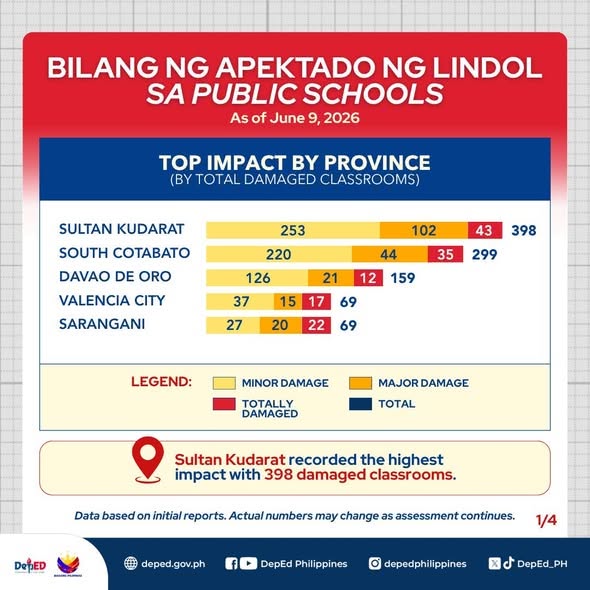
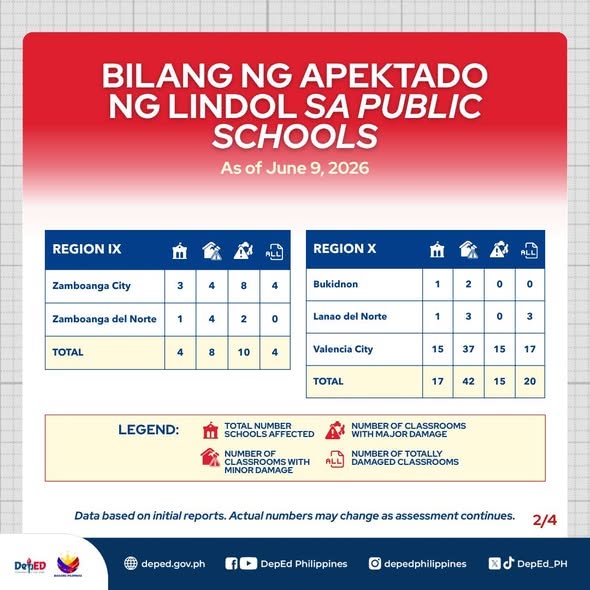
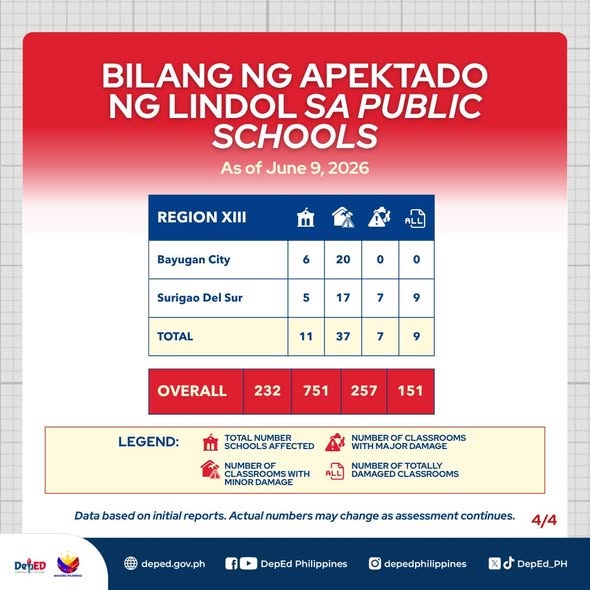
According to the latest data released by the Department of Education (DepEd) as of June 9, 2026, a total of 232 public schools across Mindanao have been affected by the earthquake. Initial assessments show that 1,159 classrooms suffered varying degrees of damage, including 751 classrooms with minor damage, 257 with major structural damage, and 151 classrooms that were completely destroyed.
Education officials warned that the figures remain provisional as structural assessments continue in affected areas. The ongoing inspections aim to determine whether damaged school buildings remain safe for students, teachers, and school personnel.
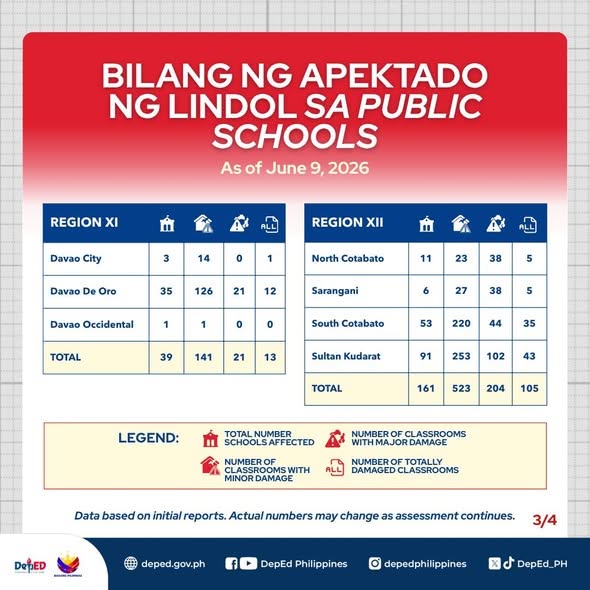
Among the hardest-hit areas is Sultan Kudarat, which recorded the highest number of damaged classrooms at 398. Of these, 253 sustained minor damage, 102 suffered major damage, and 43 classrooms were totally destroyed.
South Cotabato followed with 299 affected classrooms, while Davao de Oro reported 159 damaged classrooms. Valencia City also sustained significant losses, with 69 damaged classrooms, including 37 with minor damage, 15 with major damage, and 17 that were completely destroyed. Meanwhile, Sarangani recorded 69 damaged classrooms, comprising 27 minor damages, 20 major damages, and 22 totally damaged classrooms.
Regional data showed that the impact of the earthquake extended across multiple areas of Mindanao. The SOCCSKSARGEN Region recorded the largest number of affected schools with 161 schools and 832 damaged classrooms. The Davao Region reported 39 affected schools with 175 damaged classrooms, while Northern Mindanao recorded 17 affected schools with 77 damaged classrooms. The CARAGA Region reported 11 affected schools with 53 damaged classrooms, while the Zamboanga Peninsula recorded four affected schools with 22 damaged classrooms.
The extensive damage poses a significant challenge to the education sector, particularly in communities where schools already face shortages in classrooms and educational facilities. With many buildings deemed unsafe for occupancy, thousands of students could face disruptions in their studies as authorities determine alternative learning arrangements.
Education experts warn that prolonged classroom closures could result in learning losses, especially among elementary learners who require face-to-face instruction and structured classroom environments. The destruction of school infrastructure may also lead to overcrowding in remaining usable classrooms, forcing schools to adopt shifting schedules or temporary learning spaces.
Beyond academic disruptions, the earthquake has also affected the psychological well-being of students. Many children and teachers experienced the traumatic effects of the strong tremor, and returning to damaged or partially damaged school facilities may heighten fears and anxiety among learners.
DepEd officials are currently coordinating with local government units, disaster response agencies, and engineering teams to conduct thorough structural evaluations and identify schools requiring immediate rehabilitation or reconstruction.
As assessments continue, authorities are appealing for swift support to restore damaged educational facilities and ensure that students can safely return to school. With hundreds of classrooms either severely damaged or completely destroyed, education leaders stress that rebuilding efforts must be prioritized to prevent long-term disruptions to learning and safeguard the future of thousands of students across Mindanao.