
A rare and encouraging sighting of a juvenile Philippine Eagle has renewed urgent calls for stronger conservation and protection efforts in the Panigan-Tamugan Subwatershed in Davao City, one of the region’s most critical ecological areas and the largest source of the city’s water supply.

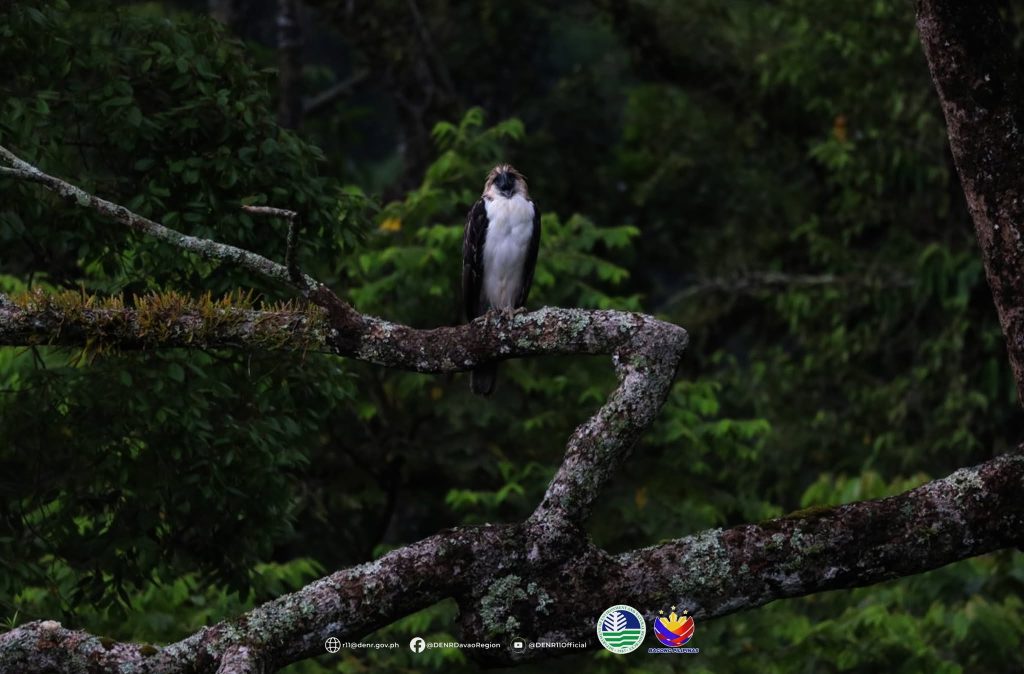
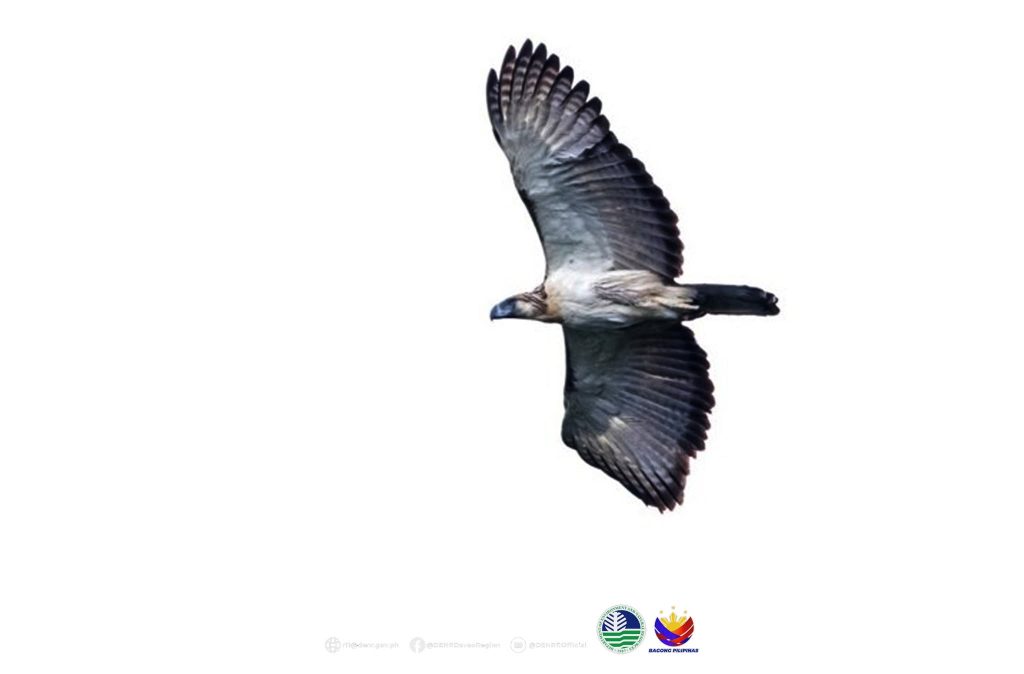
The young Philippine Eagle (Pithecophaga jefferyi), one of the world’s largest and rarest birds of prey, was spotted perched deep within the dense forests of the Panigan-Tamugan Subwatershed during an on-site habitat assessment conducted from May 5 to 8, 2026.
The assessment was carried out by a multi-sectoral team composed of personnel from the regional office of the Department of Environment and Natural Resources-CENRO Davao City, biologists from the Philippine Eagle Foundation, the Public Safety and Security Office, and members of the Obu-Manuvu Indigenous Peoples community in Tambobong.
According to the assessment team, the eagle remained visible within the monitoring site throughout the duration of the activity, providing researchers and conservationists a valuable opportunity to observe the critically endangered species in its natural habitat.
As part of intensified conservation interventions, the Philippine Eagle Foundation fitted the juvenile eagle with a tracking device to monitor its movements, flight paths, and habitat use. Experts said the initiative is crucial in studying the species’ long-term survival and population viability in the wild.
The latest sighting adds to previous recorded observations of Philippine Eagles in the same area during biodiversity and habitat assessments conducted in 2024 and 2025. Conservation advocates said the repeated sightings strongly support proposals to declare the area a critical habitat for the Philippine Eagle, which remains classified as “Critically Endangered.”
The proposed conservation zone covers approximately 2,964 hectares of forested land within the Panigan-Tamugan Subwatershed. The area serves not only as a refuge for diverse wildlife and plant species but also holds deep cultural and ecological significance for the Obu-Manuvu Indigenous Peoples community.
Environmental groups emphasized that the continued presence of the Philippine Eagle signals the ecological importance of the watershed and the urgent need to shield it from destructive activities that threaten biodiversity and water security.
The habitat assessment, conducted through collaboration between DENR Region XI and Apo Agua Infrastructura Inc., was described as a significant step toward protecting the watershed’s fragile upland ecosystems and natural resources.
In a statement, the environmental advocacy group Interfacing Development Interventions for Sustainability, through Executive Director Mark Penalver, stressed that the sighting underscores the urgent necessity of preserving the Panigan-Tamugan watershed.
“The sighting of a juvenile Philippine Eagle in the Panigan-Tamugan Subwatershed further validates the urgent need to protect the area,” Penalver said. “Beyond serving as a vital source of the city’s drinking water, PTW is also home to Davao’s pride and national symbol, the Philippine Eagle.”
He added that stronger policies and regulations are needed to safeguard water quality while ensuring the protection and preservation of critical wildlife habitats.
The Philippine Eagle, considered the national bird of the Philippines, faces continuing threats from deforestation, habitat destruction, hunting, and human encroachment. Conservationists warned that without aggressive forest protection and stricter environmental enforcement, remaining eagle populations could further decline.
Environmental advocates are now calling on government agencies, local leaders, private stakeholders, and communities to work together to preserve the Panigan-Tamugan Subwatershed and other remaining forest ecosystems across the country.
“The survival of the Philippine Eagle depends on the survival of our forests,” conservation groups emphasized. “Protecting these habitats means protecting biodiversity, securing clean water sources, and preserving the ecological future of the next generation.”