
TAWI-TAWI, BARMM — Swift and coordinated action by government authorities and social welfare agencies led to the successful rescue and repatriation of two female victims of trafficking in persons (TIP) who were reportedly bound for Malaysia without proper travel documents.
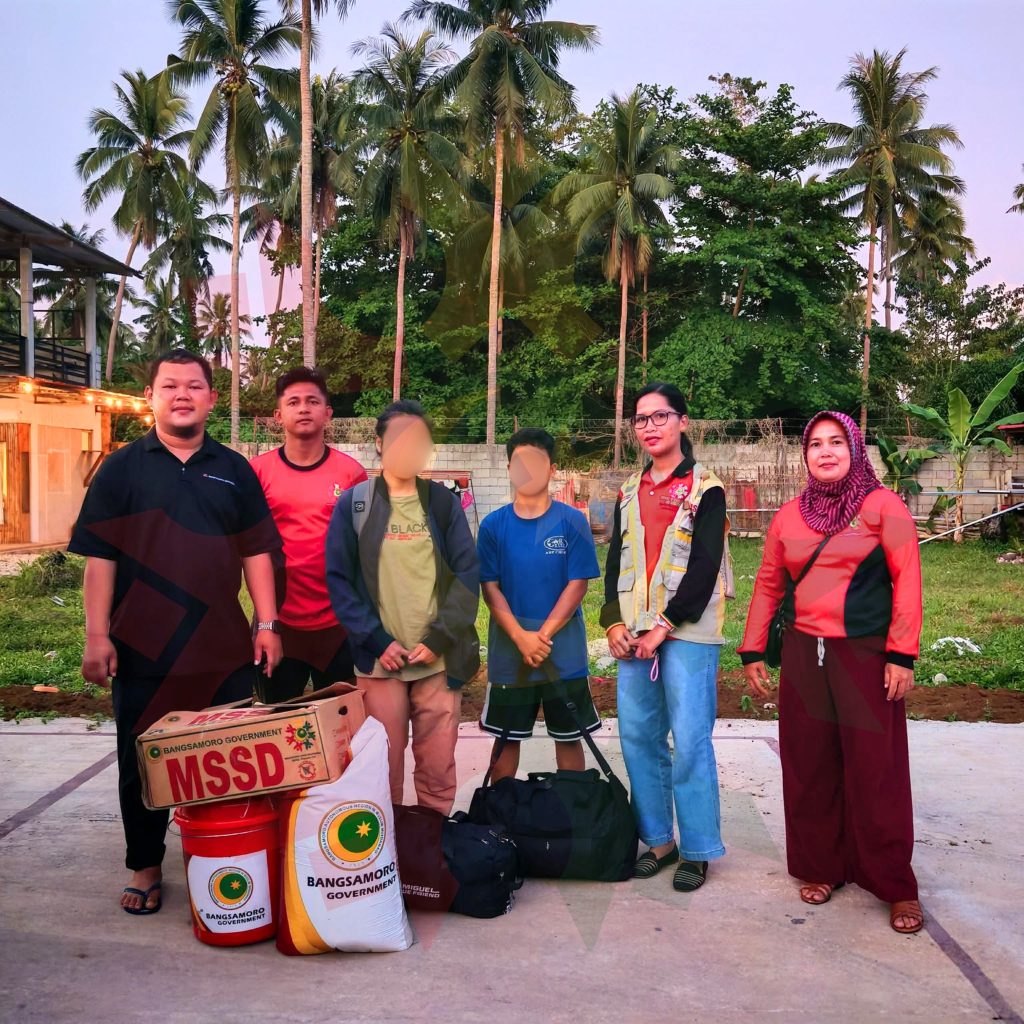
The victims, both residents of Palawan, were intercepted on March 25, 2026 in the municipality of Mapun by joint operatives of the Philippine Coast Guard and the Philippine Marine Corps. Authorities flagged the pair due to the absence of legal documents required for international travel, raising red flags of possible human trafficking.
Following their interception, local government officials in Mapun ensured the victims’ immediate safety by providing temporary shelter while arrangements for their return were being organized.
The Ministry of Social Services and Development (MSSD) Mapun Unit Office promptly took custody of the victims, facilitating thorough assessment and counseling sessions. These interventions were aimed at helping the victims understand the grave risks and consequences associated with trafficking schemes, which often prey on vulnerable individuals seeking employment abroad.
In addition to psychosocial support, the victims were provided with essential assistance, including sleeping kits, hygiene kits, and welfare goods containing 25 kilograms of rice, canned food, and coffee to address their immediate needs.
On March 28, the MSSD Mapun formally referred the case to the Department of Social Welfare and Development (DSWD) office in Brooke’s Point. Through rapid inter-agency coordination, the victims were safely transported and officially turned over to their families the following day, March 29.
Officials said the successful rescue and reintegration effort was carried out under the Humanitarian Assistance and Transfer for Individuals in Distress (HATID) Program of the MSSD, an initiative designed to safeguard vulnerable sectors, including trafficking victims and locally stranded individuals.
Authorities reiterated their warning against illegal recruitment and trafficking operations, emphasizing the importance of proper documentation and vigilance, especially in border areas frequently exploited by transnational trafficking networks.
The incident underscores the continuing threat of human trafficking in maritime regions of the southern Philippines, while also highlighting the critical role of inter-agency collaboration in protecting at-risk individuals and ensuring their safe return home.