
Matanog, Maguindanao del Norte — A three-decade-old family feud that once cast a long shadow over this coastal municipality has finally come to an end, as two feuding clans formally reconciled in a historic rido settlement on December 28, 2025.
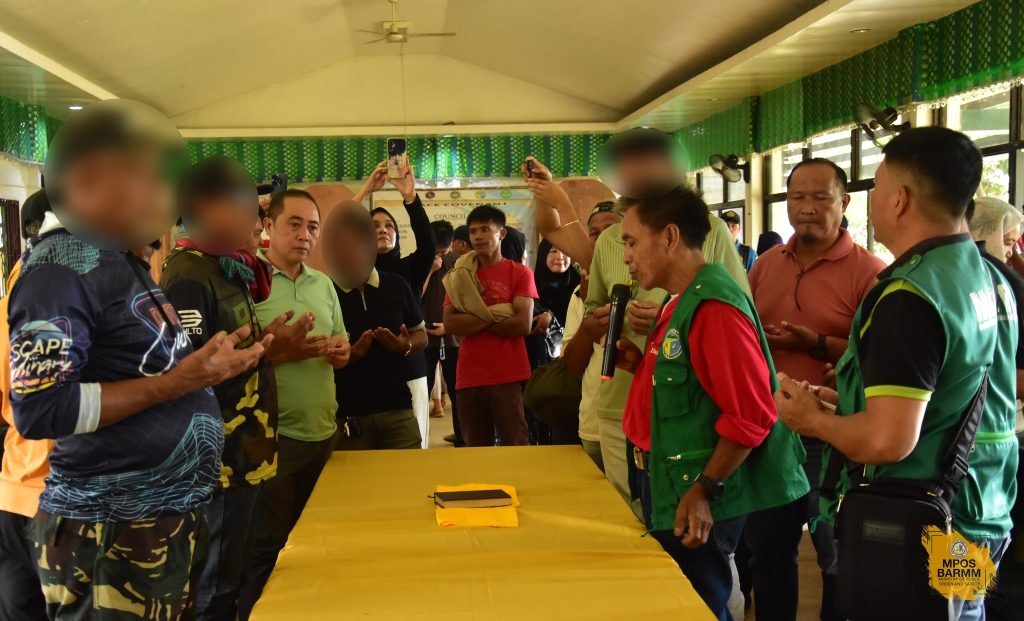
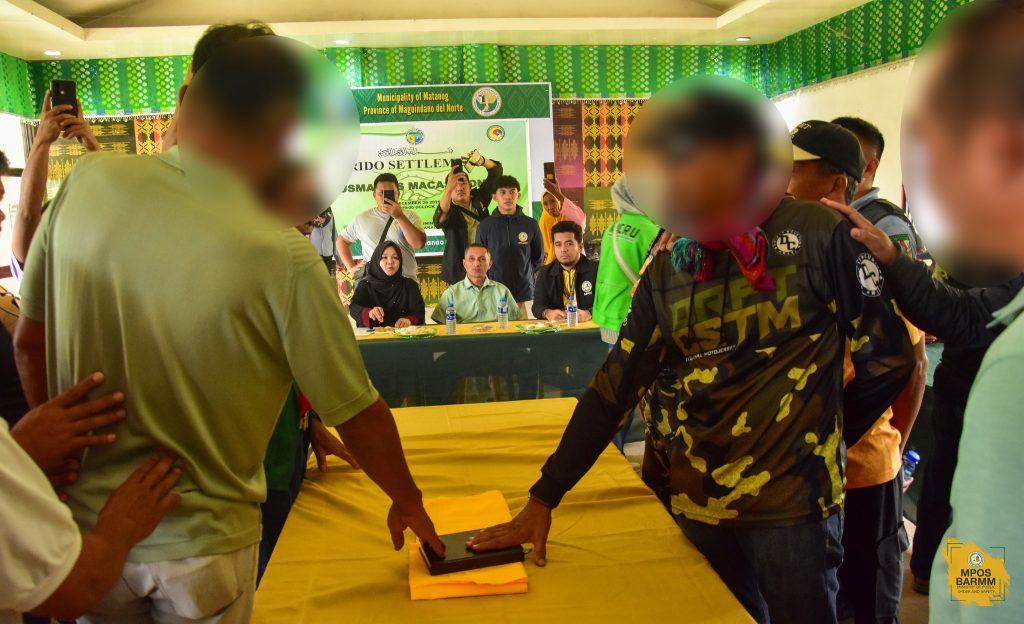
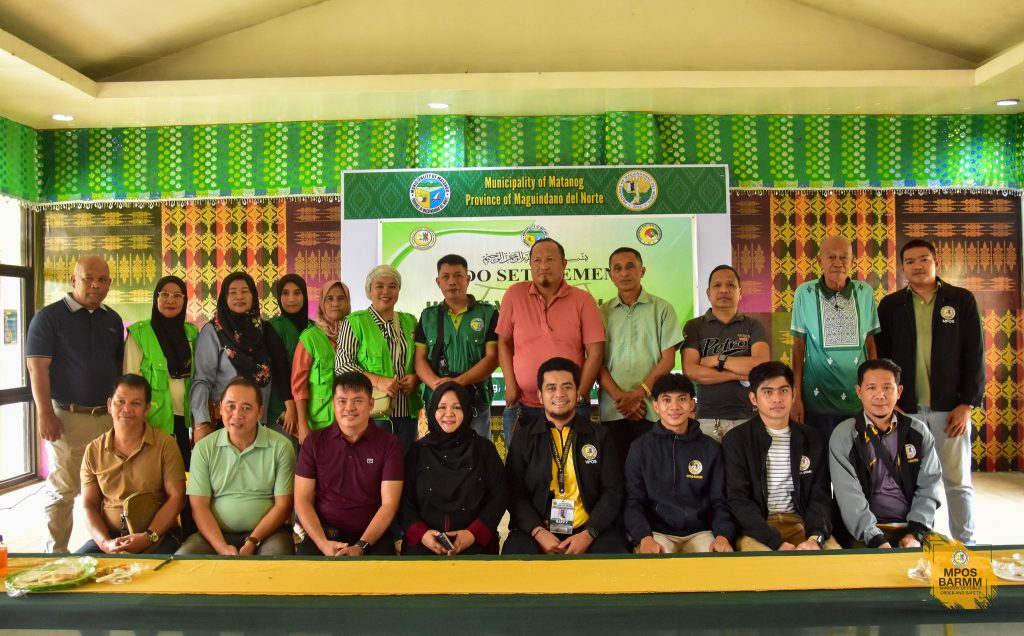
The landmark peace agreement was sealed during a ceremony at the Women Development and Training Center in Barangay Bugasan Sur, marking the end of more than 30 years of hostility, fear, and division that had gripped the community.
The settlement was spearheaded by the Local Government Unit of Matanog, in close coordination with the Provincial Government of Maguindanao del Norte and the Ministry of Public Order and Safety (MPOS), with strong backing from religious leaders, traditional elders, and peace advocates. Through a combination of dialogue, cultural practices, and formal peace mechanisms, both families agreed to put down their long-standing grievances and embrace reconciliation.
For many residents, the moment was deeply emotional.
“This is not just a settlement. This is healing,” said one community elder who witnessed the signing. “For years, our children grew up afraid. Now, they can grow up in peace.”
Peace as the Foundation of Progress
Matanog Mayor Zohria S. Bansil emphasized that ending rido is crucial to unlocking development and stability in the municipality.
“Nakikita na natin ngayon ang effort ng bawat isa sa mga ganitong aktibidad na patuloy nating ginagawa. Dahil isa sa mga nagiging balakid sa development ng ating lugar ay ang rido sa pagitan ng iba’t ibang pamilya dito sa ating Iranun Municipality, Matanog,” Mayor Bansil said.
She stressed that peace is a shared responsibility and a prerequisite for progress, noting that conflicts not only claim lives but also stall economic growth, disrupt education, and discourage investments.
For years, the feud had affected daily life in the community—limiting mobility, instilling fear among residents, and discouraging projects from entering the area.
From ‘War Zone’ to ‘Economic Zone’
Community Affairs Officer V Rafsan Jonny A. Abdul, Division Chief of the MPOS Alternative Dispute Resolution Division, underscored the broader impact of peace on development.
“Kami po sa MPOS ay patuloy ang aming support at hangarin na magkaroon ng mas mapayapang komunidad. Dahil ang gusto natin sa bayan ng Matanog ay, sabi nga ni Mayor, ‘from war zone to economic zone.’”
He explained that conflict directly hampers government services, infrastructure projects, and educational opportunities for children.
“Kung ang lugar ay di mapayapa, kulang ang pag-unlad, kulang ang pumapasok na proyekto mula sa iba’t ibang ahensya, at naaapektuhan ang pag-aaral ng ating mga anak,” Abdul said.
A Model for Other Communities
The successful reconciliation highlights the effectiveness of collaborative peacebuilding—where government, traditional leaders, religious authorities, and communities work hand in hand. It also serves as a powerful model for other conflict-affected areas across the Bangsamoro region.
MPOS officials reaffirmed their commitment to strengthening alternative dispute resolution, reconciliation, and unity as pillars of lasting peace.
“This is proof that dialogue works,” an MPOS representative said. “No matter how long the conflict has lasted, peace is still possible.”
A New Chapter for Matanog
As the ceremony concluded, tears, embraces, and prayers replaced decades of anger and suspicion. For the families involved—and for the wider community—the agreement signals not just the end of a feud, but the beginning of a new chapter.
Residents now hope that with peace restored, development will finally take root, children will return to school without fear, and Matanog will move closer to its vision of becoming a thriving, stable, and progressive municipality.
In a place once defined by conflict, the message was clear: reconciliation is stronger than revenge, and peace is the true path to progress.