
The government’s plan to make more than 500,000 hectares of Mindanao’s production forests available for potential private investment presents an enormous economic opportunity. But as lawyer and independent researcher Atty. Neil Y. Pacamalan argues, the real test of the policy is not how much forest land can be packaged and marketed to investors, but whether the government has done enough to establish that these areas are environmentally suitable, legally available, and socially acceptable before promoting them for commercial development.
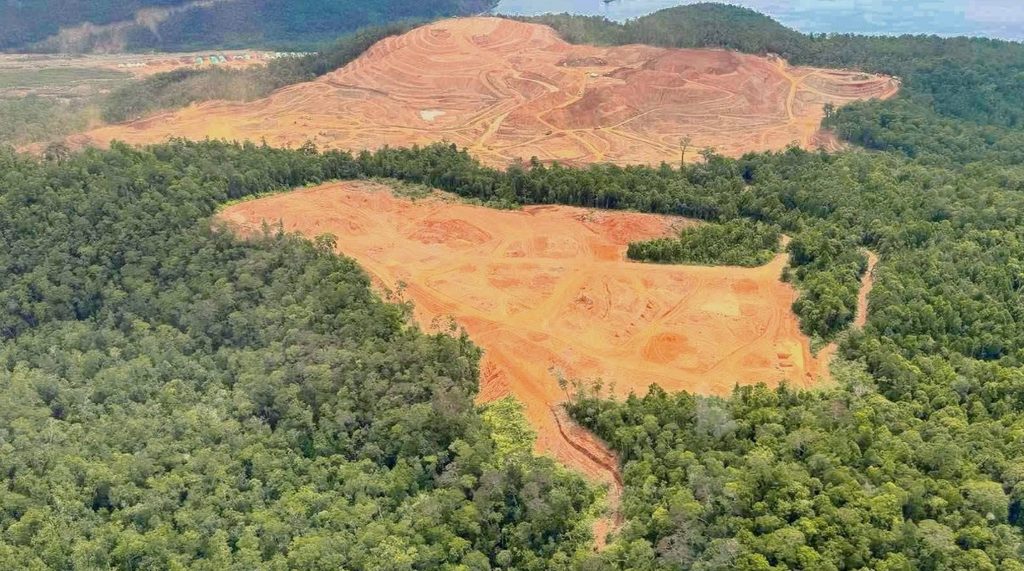
The Department of Environment and Natural Resources (DENR) is preparing to open a substantial portion of Mindanao’s production forest lands to private investment, presenting what could become one of the country’s most ambitious attempts to turn forest resources into drivers of economic growth. Under DENR Administrative Order No. 2026-34, titled Guidelines in the Promotion and Operationalization of Potential Investment Areas (PIAs) within Forest Land, the government has identified approximately 500,011 hectares across Mindanao for potential investments in agroforestry, commercial tree plantations, ecotourism, grazing, renewable energy, and related infrastructure.
The scale is significant. The Davao Region accounts for 144,035 hectares distributed across 1,195 parcels, representing approximately 28.8 percent of the total identified area. Caraga has the largest allocation at 177,201 hectares, followed by SOCCSKSARGEN with 105,124 hectares, the Zamboanga Peninsula with 39,130 hectares, and Northern Mindanao with 34,522 hectares.
Nationwide, the DENR has tasked its Forest Management Bureau with identifying approximately 1.18 million hectares of Potential Investment Areas, with the administration projecting ₱38 trillion in cumulative production value between 2027 and 2052. The initiative is anchored on the Sustainable Forest Land Management Agreement (SFLMA), a proposed 25-year production-sharing arrangement renewable for another 25 years.
At first glance, the initiative appears to offer a compelling development proposition: mobilize private capital, generate employment, improve rural livelihoods, expand agricultural production, and support the country’s transition toward climate-resilient economic activities. The government has also emphasized that the identified areas exclude protected forests, critical watersheds, natural forests, and existing valid forest tenures, while prohibiting housing developments and sanitary landfills.
However, the announcement of hundreds of thousands of hectares being made available for potential investment raises a more fundamental question: Is the government sufficiently prepared to determine which forest lands should be developed, which should be conserved, and which should remain under the stewardship of the communities that depend on them?

For Atty. Neil Y. Pacamalan, a lawyer, independent researcher, and author whose work focuses on Mindanao, governance, security, and environmental policy, the answer requires a closer examination of the safeguards embedded in Administrative Order No. 2026-34. His commentary offers an important distinction that should not be lost amid the government’s economic projections: identifying forest lands for potential investment is not the same as approving development projects, but the process of identifying and promoting those lands is itself an exercise of significant government responsibility.
Investment promotion is not yet project approval, but it is not an ordinary administrative exercise
In his commentary on AO-34, Pacamalan clarifies that the issuance does not automatically authorize private companies to undertake specific projects or acquire unrestricted rights over the identified forest lands.
Rather, the administrative order establishes a framework for identifying, assessing, packaging, and promoting Potential Investment Areas through the Forestry Investment Portal and related investment mechanisms. Actual investments remain subject to separate legal and regulatory requirements, including applicable environmental and other government approvals.
This distinction is important because the public should not automatically interpret the announcement of 500,011 hectares in Mindanao as meaning that all these areas have already been awarded to private corporations or cleared for immediate commercial exploitation.
Nevertheless, Pacamalan cautions against treating the identification and packaging process as a merely technical or bureaucratic undertaking.
Once the DENR delineates a forest parcel, prepares its profile, and presents it through the Forestry Investment Portal as a potential investment opportunity, the government effectively communicates to prospective investors that the property has undergone an initial assessment and may be suitable for development.
That representation carries considerable implications.
Investors are unlikely to commit substantial financial resources without relying on the government’s assessment of the land’s investment potential. Communities, meanwhile, may reasonably expect that the government has already examined the parcel’s environmental significance, existing land claims, customary resource use, and possible social consequences.
Consequently, the quality of the government’s initial screening can determine whether future investments become legitimate development opportunities or sources of protracted environmental disputes, legal challenges, and community conflict.
Pacamalan’s central argument is that the government must exercise greater diligence before presenting these forest lands to the private sector.
The missing piece: Comprehensive biodiversity and ecosystem assessments
One of the most important concerns raised by Pacamalan involves the apparent imbalance between the investment-oriented assessments required under AO-34 and the environmental safeguards necessary to establish the actual ecological suitability of a forest parcel.
The administrative order provides for the preparation of a General Potential Investment Area Profile, a Climate Risk and Vulnerability Assessment (CRVA), an Economic and Financial Analysis (EFA), and a Social Risk Assessment (SRA).
These assessments are intended to establish the climate-related risks, economic feasibility, and social characteristics of potential investment areas.
While these are necessary components of responsible investment planning, Pacamalan points out that they do not necessarily amount to comprehensive environmental and social due diligence.
In particular, his review identifies the absence of a dedicated biodiversity assessment framework, a protected-area compatibility review, and a comprehensive ancestral-domain screening process before potential investment areas are packaged and promoted.
This is a significant concern in Mindanao, where forest ecosystems are not simply unused or economically idle spaces. They are interconnected ecological systems that sustain watersheds, regulate water flows, support wildlife populations, preserve carbon stocks, and maintain biodiversity.
A forest parcel may be classified as production forest and remain outside a formally designated protected area, yet still contain important habitats, threatened species, ecological corridors, or environmental features essential to the integrity of a larger ecosystem.
The absence of a protected-area designation does not automatically mean that a particular location has limited conservation value.
This is particularly relevant to the Pantaron Mountain Range, whose extensive forest ecosystems and watershed functions have attracted government attention for stronger protection. The existence of such ecologically significant landscapes underscores why forest classification alone should never become the principal basis for determining investment suitability.
Pacamalan’s position is not that all production forests must be permanently excluded from economic activities. Rather, the government should establish whether a particular parcel can accommodate the proposed activity without undermining the ecological functions that make the forest valuable in the first place.
That requires more than establishing whether a project is financially viable or whether an area is exposed to climate-related risks.
It requires understanding what lives in the forest, how its ecosystems function, how it connects with surrounding habitats, and what environmental consequences may arise from changing its existing land use.
The danger of overlooking ancestral domains and Indigenous Peoples’ rights
Perhaps the most consequential issue in Mindanao concerns the relationship between forest investment and Indigenous Peoples’ ancestral rights.
The region’s forest lands overlap with landscapes that have long sustained Indigenous communities through customary land ownership, traditional resource management, farming, hunting, gathering, and other livelihood practices.
These relationships are not always adequately reflected in conventional land classifications or government mapping systems.
Pacamalan emphasizes that the Indigenous Peoples’ Rights Act (IPRA), or Republic Act No. 8371, makes ancestral-domain recognition and protection central considerations in decisions affecting Indigenous communities.
He acknowledges that AO-34 recognizes matters involving Certificates of Ancestral Domain Titles (CADTs), Certificates of Ancestral Land Titles (CALTs), National Commission on Indigenous Peoples (NCIP) clearances, Indigenous Peoples, and customary resource use.
However, he questions whether the Social Risk Assessment provided under the administrative order is sufficiently comprehensive to address unresolved ancestral-domain and tenure concerns before an area is promoted to investors.
The distinction is crucial.
Identifying the existence of Indigenous communities or possible ancestral-domain concerns is not the same as resolving competing claims, establishing the boundaries of customary territories, or determining whether proposed activities would interfere with Indigenous Peoples’ rights.
A preliminary social assessment may identify potential risks, but it cannot substitute for the necessary legal processes and safeguards governing ancestral domains and Indigenous participation.
Under IPRA, the recognition and protection of Indigenous Peoples’ rights cannot be reduced to a procedural requirement that is addressed only after an investment opportunity has already attracted private-sector interest.
The Free, Prior and Informed Consent (FPIC) process, where legally required, must be respected in accordance with applicable law and regulations.
For Pacamalan, the danger is that unresolved tenure and ancestral-domain issues may only become apparent after investors have already made financial commitments, creating avoidable legal uncertainty and potentially intensifying tensions between communities, government agencies, and private companies.
In Mindanao, where questions of land ownership, historical displacement, resource control, and Indigenous identity have long been intertwined with broader governance and peacebuilding challenges, this is not a minor administrative concern.
It is a matter of social justice, legal accountability, and the credibility of government-led development.
Environmental laws cannot become secondary to investment readiness
Pacamalan also situates his concerns within the broader framework of Philippine environmental legislation and international commitments.
The National Integrated Protected Areas System Act, or Republic Act No. 7586, as amended by Republic Act No. 11038, establishes restrictions and management requirements governing activities within protected areas and their management zones.
Meanwhile, the Wildlife Resources Conservation and Protection Act, or Republic Act No. 9147, provides protections for wildlife species and their habitats.
These laws demonstrate that the government’s responsibility does not end with identifying land that may be available for economic utilization. It must also ensure that proposed activities remain consistent with existing environmental protections.
A screening process that focuses primarily on identifying wildlife presence, for example, may fail to capture the broader ecological significance of an area. Threatened species, critical habitats, breeding grounds, migration routes, and ecological corridors may not be adequately represented through a limited assessment.
The same problem applies to watersheds and interconnected forest systems.
An investment parcel might technically fall outside a designated protected area but still influence water availability, soil stability, biodiversity, and the environmental conditions of surrounding communities.
This is why environmental suitability must be evaluated beyond the boundaries of individual investment parcels.
A project that appears commercially viable when assessed in isolation may produce considerable environmental costs when its cumulative impacts on an entire landscape are considered.
The government’s responsibility, therefore, is not simply to determine whether an investment can be undertaken. It must determine whether the investment is compatible with the ecological and social systems within which it will operate.
Nature-based solutions must mean more than climate-friendly business
Another important dimension of Pacamalan’s commentary is the growing recognition of natural capital as a foundation of sustainable development.
He references the Asian Development Bank’s 2025 Climate Change Report, which underscores the importance of nature in sustaining prosperity across East Asia and the Pacific.
The Philippines, as one of the world’s megadiverse countries, possesses natural resources that provide economic, ecological, and social benefits. In Mindanao, forests, watersheds, biodiversity corridors, and ancestral domains support livelihoods while providing opportunities for climate adaptation and Nature-based Solutions (NbS).
Pacamalan also draws attention to DENR Administrative Order No. 2026-30, through which the department adopted the International Union for Conservation of Nature’s Global Standard for Nature-based Solutions.
This provides an important policy context for evaluating the government’s new forest investment framework.
Nature-based Solutions should not become a convenient label for projects that generate commercial returns while retaining only superficial environmental benefits.
Genuine NbS must deliver meaningful benefits for biodiversity, ecosystem integrity, climate resilience, and communities.
An agroforestry project, for example, should not automatically be considered sustainable simply because trees are planted. Its ecological value will depend on the species selected, the land’s previous condition, the management system, soil and water impacts, and whether the project preserves or improves existing biodiversity.
Likewise, commercial tree plantations should not be treated as ecological equivalents of natural forests. A plantation may contribute to timber production and carbon storage, but it cannot necessarily reproduce the biodiversity, ecological complexity, and interconnected functions of an intact natural forest.
Renewable energy projects may support the country’s transition toward cleaner energy, but their infrastructure requirements, access roads, transmission facilities, and land-use impacts must also be assessed.
Ecotourism can create employment and support conservation, but poorly managed tourism infrastructure can place additional pressure on fragile ecosystems.
The lesson is that the environmental merits of an investment must be established through actual ecological assessment rather than inferred from the industry to which it belongs.
If the government intends to promote climate-smart investments, climate resilience and biodiversity protection must be treated as equally important objectives.
The economic promise must be measured against long-term public costs
The projected ₱38 trillion in cumulative production value between 2027 and 2052 is an ambitious economic target. It signals the administration’s expectation that forest-based investments can become an important contributor to national development.
However, production value alone does not establish whether the initiative will produce equitable and sustainable outcomes.
The more important questions concern who will benefit, who will bear the risks, and whether the economic gains will justify the environmental and social costs.
Will local communities receive meaningful employment and livelihood opportunities? Will Indigenous Peoples retain control over their legally recognized ancestral territories and customary resources? Will local governments have sufficient capacity to monitor projects? Will the economic benefits remain within the communities where these investments are implemented?
These questions deserve attention before the investment program moves into full implementation.
The proposed 25-year SFLMA, renewable for another 25 years, also makes the quality of initial assessments especially important. Agreements of this duration can shape land use, local economies, and environmental conditions across several generations.
A poorly screened investment may create consequences that cannot easily be reversed once infrastructure has been built, land has been converted, or forest ecosystems have been degraded.
Conversely, rigorous screening can protect investors from entering projects that are likely to encounter legal disputes, community opposition, environmental violations, or operational disruptions.
In this respect, stronger environmental and social safeguards should not be viewed as obstacles to investment.
They are essential components of investment security.
The DENR must strengthen safeguards before marketing forest lands
Pacamalan proposes a practical direction for improving the implementation of AO-34: strengthen environmental, biodiversity, and tenure assessments at the Potential Investment Area packaging stage.
This does not mean replacing the existing environmental permitting system or eliminating the need for project-level assessments and approvals.
Rather, it means introducing an additional layer of due diligence before the government formally presents forest parcels as investment opportunities.
The DENR should establish a more comprehensive biodiversity screening mechanism that identifies critical habitats, threatened species, ecological corridors, and other conservation values.
It should also undertake a more systematic assessment of the relationship between proposed investment areas and protected areas, critical watersheds, and other environmentally sensitive landscapes.
Equally important is the need for comprehensive ancestral-domain and tenure screening, undertaken in coordination with the NCIP and relevant agencies, to identify overlapping claims, customary resource use, and unresolved land-related concerns before investment promotion.
The government should also ensure that local communities and Indigenous Peoples are meaningfully involved in the assessment process, rather than being treated merely as stakeholders to be consulted after investment opportunities have already been developed.
The proposed Forestry Investment Portal could become an important transparency mechanism if it provides more than investment profiles and economic information.
It should also make relevant environmental, biodiversity, tenure, and social assessment information accessible to the public, subject to appropriate safeguards for sensitive Indigenous and ecological data.
For a program involving more than a million hectares nationwide, transparency must be built into the process from the beginning.
The public should be able to understand not only where investment opportunities are located, but also why particular parcels have been considered suitable, what environmental and social risks have been identified, and what safeguards must be observed.
Mindanao’s forests are not vacant economic spaces
The debate surrounding AO-34 ultimately reflects a larger question about the country’s development priorities.
Mindanao needs investments. Its rural communities need sustainable livelihoods, better infrastructure, employment opportunities, and economic alternatives that can reduce poverty and strengthen local economies.
But development must not be measured solely by the amount of land made available to investors or the projected value of future production.
Forests provide benefits that are not always reflected in conventional economic accounting. They regulate water systems, protect communities from environmental hazards, preserve biodiversity, store carbon, sustain traditional livelihoods, and support the cultural identity of Indigenous Peoples.
Once these functions are degraded, the costs are often borne by communities that have the least capacity to absorb them.
This is particularly significant in a region where forest degradation, watershed vulnerability, land-use pressures, and competing resource interests have consequences extending well beyond individual project boundaries.
The government must therefore resist the temptation to equate investment readiness with development readiness.
A parcel may be legally classified as production forest and appear commercially attractive, but that does not automatically establish that it is ecologically suitable or socially appropriate for the proposed activity.
The distinction should guide every stage of AO-34’s implementation.
A development policy must first demonstrate that it can protect the public interest
Pacamalan’s commentary provides an important reminder that the success of the DENR’s forest investment initiative will depend not merely on its ability to attract capital, but on the strength of the safeguards that govern the use of public forest lands.
The State’s authority over lands of the public domain is grounded in the Constitution and the Regalian Doctrine. However, that authority carries a corresponding responsibility to manage these resources for the greatest public benefit while minimizing environmental harm.
The Revised Forestry Code likewise recognizes the economic, social, and environmental functions of forest lands.
These principles should not be treated as competing considerations. They must be reconciled through policies that recognize conservation, sustainable utilization, community rights, and economic development as interconnected responsibilities.
AO-34 may provide a framework for mobilizing private investment, but its long-term credibility will depend on whether the DENR can demonstrate that every parcel promoted to investors has undergone sufficiently rigorous environmental, legal, and social scrutiny.
The government’s challenge is not simply to unlock 1.18 million hectares of forest land for potential economic activity. It is to ensure that the country’s natural capital is managed in a manner that does not sacrifice long-term ecological security for short-term commercial gains.
For Mindanao, the stakes are particularly high. Its forests are part of the region’s economic foundation, environmental defense system, and cultural heritage. They sustain communities, protect watersheds, and preserve ecosystems whose benefits extend far beyond the boundaries of any proposed investment.
The ₱38-trillion ambition may be impressive, but its true measure should be the quality of development it produces, the livelihoods it sustains, the communities whose rights it respects, and the forests it leaves standing for future generations.
As Pacamalan’s analysis makes clear, the government must do more than identify forest lands that investors might find attractive. It must first establish, with credible evidence and enforceable safeguards, that those lands can responsibly accommodate investment without compromising biodiversity, ancestral rights, and the public interest.
Because ultimately, the value of Mindanao’s forests cannot be measured solely by what can be extracted, cultivated, constructed, or generated from them. Their greatest value may lie in the ecological systems, human communities, and future generations that depend on their continued existence.
About the commentator: Atty. Neil Y. Pacamalan is a lawyer, independent researcher, and author whose work focuses on Mindanao, governance, security, and environmental policy. He holds a Doctor of Civil Law degree and is engaged in full-time litigation practice. He recently contributed the chapter “Women and Security in Addressing Violent and Hateful Extremism in the Bangsamoro” to Civil Society Responses to Extremism in the Philippine Bangsamoro, published by Routledge, Taylor & Francis Group, in 2026.
Editorial note: This independent analysis draws on Atty. Neil Y. Pacamalan’s commentary on DENR Administrative Order No. 2026-34 and the accompanying information on the proposed forest investment program. His policy assessments and recommendations have been attributed to him; the article’s broader analytical framing is presented separately.