
ARAKAN, Cotabato — A remarkable glimpse into the private lives of one of the Philippines’ most threatened wildlife species has emerged from the forests of Kulaman Valley, where environmental personnel documented nursing, courtship, mating, and grooming behaviors among thousands of endangered Large Flying foxes during a three-day wildlife monitoring activity.
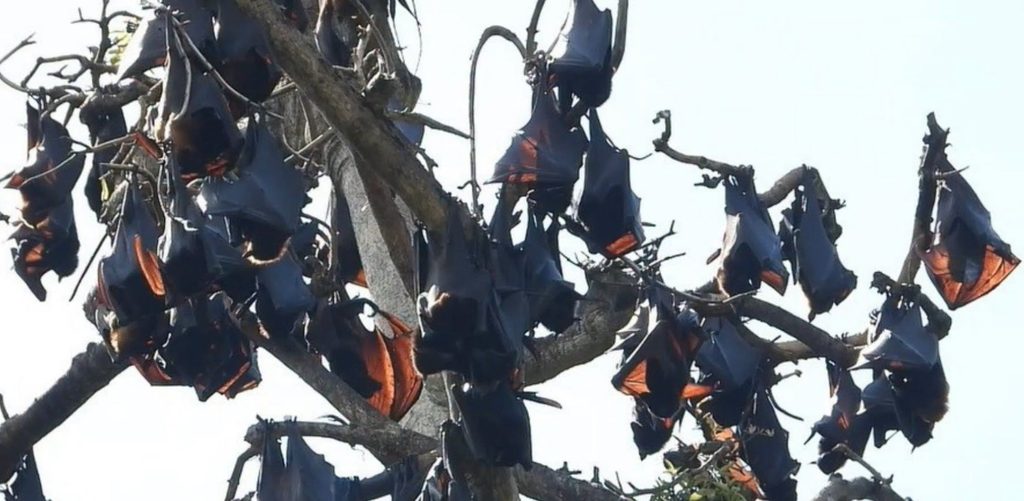
The Department of Environment and Natural Resources (DENR), through the Community Environment and Natural Resources Office (CENRO) Matalam, conducted its semestral monitoring from October 24 to 26, 2026, recording approximately 30,000 Large Flying foxes (Pteropus vampyrus) roosting across 39 trees of different species in the valley.
Beyond establishing the size of the colony, the monitoring offered valuable observations of the animals’ reproductive and social activities, providing a closer understanding of how the species survives, raises its young, and maintains its physical condition in its natural habitat.
One of the most significant observations involved a mother flying fox nursing her young pup, demonstrating the species’ maternal care and adaptation to life in the forest canopy.
During the observation, the mother was seen gently fanning her wings to regulate her pup’s temperature before wrapping it with her wings to keep it warm and protected. The young bat continued suckling milk from a specialized teat located near the mother’s armpit.
The behavior provided a rare look at the maternal relationship between the adult flying fox and its offspring, highlighting the importance of undisturbed roosting areas where mothers can safely nurture their young.

The monitoring also documented courtship and mating activities, with male and female flying foxes engaging in extensive grooming interactions. These behaviors offered insights into the species’ reproductive activities and the social interactions that take place within large roosting colonies.
Grooming, meanwhile, proved to be more than a routine cleaning activity. The flying foxes were observed using their long, flexible tongues to meticulously clean their fur, bodies, and delicate wing membranes.
This behavior helps remove accumulated dirt and debris, maintain their physical condition, and preserve the sensitivity and functionality of their wings—essential characteristics for an animal that depends on flight to move between feeding grounds and roosting sites.
Nature’s flying farmers
The presence of approximately 30,000 Large Flying foxes in Kulaman Valley underscores the ecological importance of the area, particularly its role in sustaining wildlife populations that contribute directly to forest regeneration.
The animals were recorded roosting in 39 trees belonging to several species, including Dipterocarpus, Parashorea, Astronia, Ficus, and Canarium.
Their dependence on these trees highlights the importance of protecting not only the bats themselves but also the diverse forest vegetation that provides their resting and breeding grounds.
Often described as nature’s flying farmers, Large Flying foxes perform essential ecological functions through pollination and seed dispersal. As they feed on fruits and nectar, they help transport seeds and pollen across different areas, supporting plant reproduction, forest recovery, and the maintenance of biodiversity.
Their contribution becomes particularly important in forest ecosystems where natural regeneration is necessary to sustain vegetation, restore degraded areas, and maintain habitats for other wildlife species.
In this sense, the survival of flying fox colonies is closely connected to the health of the forests they inhabit. Protecting their roosting trees and feeding areas also means protecting the ecological processes that allow forests to regenerate and remain productive.
An endangered species under pressure
Despite their ecological value, Large Flying foxes continue to face serious threats that put their populations and habitats at risk.
Habitat destruction and forest degradation reduce the availability of suitable roosting and feeding sites. Hunting for bushmeat further threatens their survival, while persecution driven by misconceptions about crop damage and disease transmission can lead to the unnecessary killing of these animals.
The species is classified as Endangered under DENR Administrative Order No. 2019-09 and the International Union for Conservation of Nature (IUCN) Red List, reflecting the serious conservation challenges facing its populations.
The observations in Kulaman Valley therefore carry significance beyond documenting animal behavior and counting individuals. They demonstrate that the area continues to support a substantial population of an endangered species and reinforce the need to preserve the natural conditions that allow the colony to survive.
Continuous wildlife monitoring is essential in tracking population trends, identifying changes in roosting patterns, and understanding the reproductive activities of the species. Equally important are habitat protection, stronger enforcement against illegal hunting, and public education to address misconceptions that contribute to wildlife persecution.
The presence of tens of thousands of flying foxes in Kulaman Valley is a reminder that forests are not simply collections of trees but living ecosystems sustained by complex relationships among plants, animals, and their environment.
The mother protecting her pup, the courtship between adult bats, and the meticulous grooming of their wings may appear to be ordinary moments in the lives of these animals. Yet each observation reveals why their continued survival matters.
Protecting the Large Flying foxes means safeguarding more than an endangered mammal. It means preserving the natural workers that help pollinate plants, disperse seeds, regenerate forests, and sustain the biodiversity upon which healthy ecosystems depend.