
COTABATO CITY, BARMM — The Bangsamoro Ministry of Basic, Higher and Technical Education (MBHTE-BARMM) is facing scrutiny over separate administrative concerns involving ₱1.14 million in alleged scholarship fund irregularities and the discovery of thousands of defective or undistributed educational resources during an inspection of ministry warehouses.
The developments have brought attention to the ministry’s financial controls, procurement practices, inventory management, and distribution systems, raising questions about whether public funds and educational resources are reaching their intended beneficiaries.
In the latest administrative action, MBHTE Minister Atty. Naguib Sinarimbo ordered two ministry officials to submit written explanations within 72 hours over separate transactions involving scholarship funds under the Access to Higher and Modern Education–Scholarship Program (AHME-SP).
The directives were contained in separate memoranda dated November 16, 2026, following a review by the Office of the Director General for Higher Education, which reportedly identified discrepancies between the program’s records and the Payroll Credit Systems Validation (PACSVAL).
The first case involves approximately ₱450,000 after investigators reportedly found that the same bank account number had been repeatedly used for different scholarship beneficiaries across various cohorts.
A separate case involves approximately ₱690,000, where the review identified repeated use of identical savings account numbers and substantial inconsistencies between payroll records and bank validation documents.
According to the ministry, the questioned account numbers allegedly continued to appear in transactions even after legitimate beneficiaries had already been assigned their own bank accounts.
One of the officials was specifically directed to explain why they should not be held administratively liable for grave dishonesty. The ministry warned that failure to submit a reasonable and acceptable explanation within the prescribed period could result in the filing of appropriate criminal charges, as provided in the memoranda.
The combined amount involved in the two separate cases reaches ₱1.14 million. However, the allegations remain subject to administrative investigation, and the issuance of notices requiring explanations does not, by itself, establish the guilt of the officials concerned.
Warehouse inspection uncovers thousands of unused and defective educational resources
The scholarship fund investigation comes alongside another internal review initiated by the ministry involving educational equipment and learning materials that have remained in storage instead of being delivered to schools.
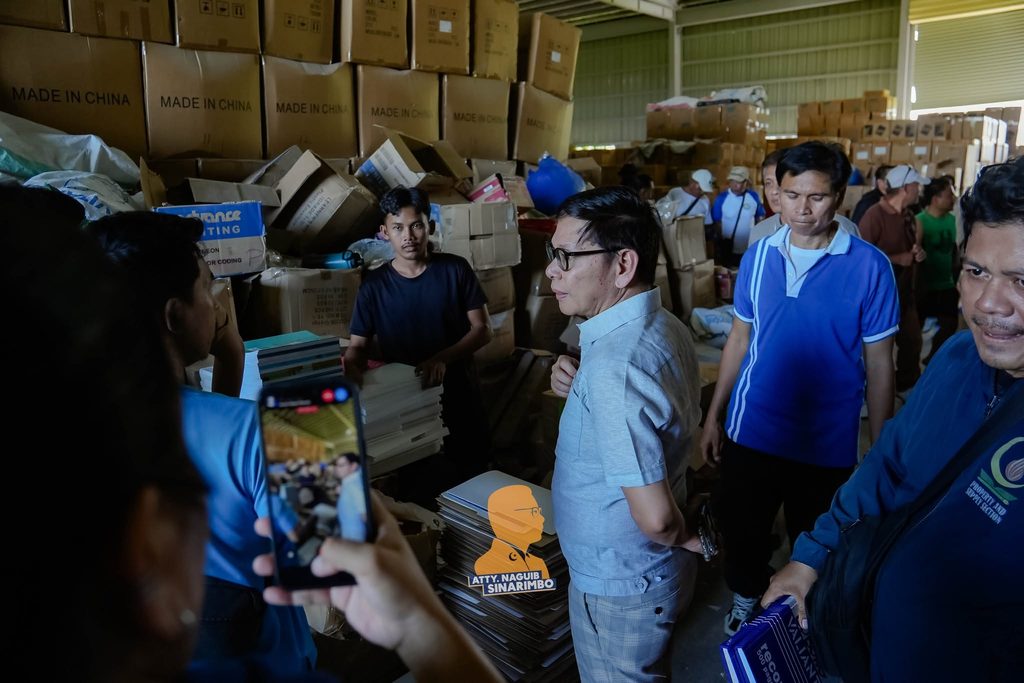
During an inspection of two MBHTE warehouses, ministry leadership reportedly discovered 1,304 tablets that had been returned because of defects, books that had remained in storage since 2022, and hundreds of classroom ceiling and wall fans that had yet to be distributed to their intended schools.
The findings raised concerns about delays and possible weaknesses in the ministry’s procurement, quality control, inventory, logistics, and distribution processes.
Particularly troubling is the situation of students attending classrooms with inadequate ventilation, especially during periods of extreme heat associated with El Niño conditions. In some schools, students have reportedly resorted to pooling their own money to purchase electric fans simply to make their classrooms more conducive to learning.
The situation highlights the disconnect between educational resources already purchased or acquired using public funds and the actual needs of schools, teachers, and students.
The ministry’s leadership acknowledged that having sufficient budgets, completed procurement transactions, and programs reflected in official reports would mean little if the equipment and materials failed to reach their intended beneficiaries.
Ministry orders inventory review, records reconciliation and faster distribution
In response to the warehouse findings, Sinarimbo directed the reorganization and reconciliation of ministry records and a fresh inventory of supplies to determine whether the documented quantities and corresponding prices accurately match the actual stocks.
The review is expected to cover the number, condition, and value of educational resources, with particular attention to identifying discrepancies between recorded inventories and physical stocks.
The minister also ordered the accelerated preparation of student learning kits to ensure that the materials are distributed while students still need them.
He emphasized that a substantial portion of the ministry’s budget is allocated for school equipment and educational resources, making proper accountability essential because the funds come from the taxes paid by the Bangsamoro people.
The directive also calls for a broader examination of institutional systems, including management structures, staffing, procurement, logistics, inventory control, and distribution procedures.
The ministry must determine where failures occurred, identify those responsible where warranted, and implement corrective measures to prevent similar problems from recurring.
Accountability and delivery of education services under scrutiny
Taken together, the scholarship fund discrepancies and the warehouse inspection findings point to two critical areas of public administration that require close examination: the proper management of financial assistance intended for students and the effective delivery of educational resources to schools.
Scholarship funds are intended to help qualified students pursue higher and modern education, while classroom equipment, learning materials, and other supplies are supposed to support teachers and improve the learning environment.
When financial records contain questionable entries or purchased educational resources remain undistributed for extended periods, the consequences extend beyond administrative paperwork. They potentially affect students who depend on scholarship assistance and children who continue attending schools without equipment that may already have been procured for their benefit.
For the MBHTE-BARMM, the immediate challenge is to establish the facts behind the questioned transactions, reconcile its financial and inventory records, determine accountability where evidence warrants, and ensure that educational resources are delivered to the schools for which they were intended.
The ministry’s leadership has acknowledged that substantial work remains to improve the quality of education across the Bangsamoro region, stressing that institutional reforms must begin within the ministry itself.
Ultimately, public accountability should not be measured solely by the amount of money allocated, the number of items purchased, or the programs recorded as completed. It must also be measured by whether scholarship assistance reaches legitimate beneficiaries and whether books, tablets, fans, and other essential learning resources actually reach classrooms.
For the Bangsamoro education system, the central question is no longer simply what the ministry has purchased or funded, but whether those investments are translating into tangible benefits for students, teachers, and schools.