
ZAMBOANGA CITY, Philippines — A total of 802 Filipinos returning from Sabah, Malaysia, received coordinated government assistance upon their arrival at the Zamboanga City Port on November 6, 2026, as migrant welfare agencies and their partner institutions mobilized a multi-agency response to facilitate their safe reception and eventual reintegration into Philippine communities.
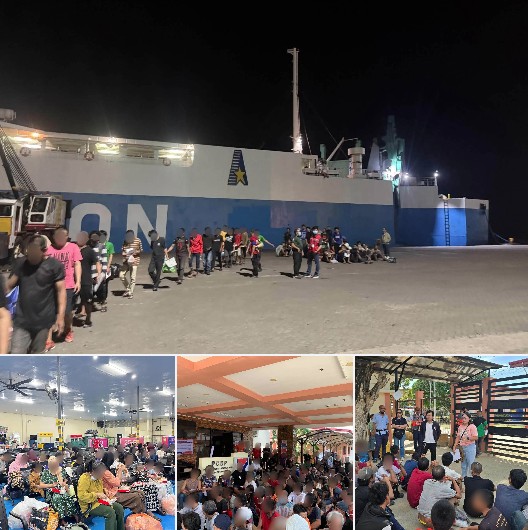
The returning Filipinos, composed of 517 adult males, 146 adult females, 74 boys, and 65 girls, arrived as the third batch of returnees from Sabah this year. Their arrival prompted the coordinated deployment of government agencies tasked with providing immediate humanitarian assistance, identifying protection concerns, and assessing their needs for long-term social and economic recovery.
The Department of Migrant Workers Regional Office IX (DMW IX), in coordination with the Overseas Workers Welfare Administration Regional Welfare Office IX (OWWA IX), led the frontline reception and assistance operations. These included managing the orderly disembarkation and processing of the returnees, conducting initial profiling, and facilitating their safe transfer from the port to the Department of Social Welfare and Development’s Processing Center for Displaced Persons (PCDP) in Mampang, Zamboanga City.
Food packs were distributed directly to the returning Filipinos by DMW IX and OWWA IX to address their immediate needs following their arrival.
Beyond the initial humanitarian response, authorities initiated a broader assessment of the returnees’ circumstances to determine the government interventions necessary to support their transition back into their communities.
On November 7, DMW IX conducted a comprehensive profiling activity alongside an Anti-Illegal Recruitment and Trafficking in Persons (AIRTIP) campaign and a Safe Labor Migration Seminar at the processing center. The initiative sought to identify the returnees’ individual circumstances, immediate concerns, vulnerabilities, and possible eligibility for government assistance programs.

The profiling process is particularly important in determining whether returning migrants require financial assistance, livelihood support, skills development, or employment opportunities. By identifying their specific needs, government agencies can better connect them with available programs intended to help them rebuild their lives and establish sustainable sources of income after returning home.
Protection Against Illegal Recruitment and Human Trafficking
The November 7 activities also placed emphasis on protecting returning Filipinos from illegal recruitment and human trafficking, particularly those who may have experienced exploitation or other forms of abuse during their stay or employment overseas.
Through the AIRTIP campaign and safe labor migration briefings, DMW IX sought to identify potential victims of illegal recruitment and trafficking in persons and provide information about their rights and available legal remedies.
The screening process also serves as an opportunity to identify individuals who may need immediate legal assistance, psychosocial support, and other protective interventions. Authorities emphasized the importance of ensuring that returning migrants understand the risks associated with unauthorized recruitment and the safeguards they should observe when considering future overseas employment.
The inclusion of children among the 802 returnees also highlights the need for coordinated social welfare interventions that address the particular circumstances and protection requirements of minors and other vulnerable individuals.
Government Agencies Join Reintegration Effort
The reception and assistance operations involved an extensive network of national and local government institutions, reflecting the scale of coordination required to manage the arrival of hundreds of returning Filipinos.
Participating agencies included DMW IX, OWWA IX, the Department of Labor and Employment Regional Office IX, DSWD Field Office IX, Bureau of Immigration, Bureau of Quarantine, Department of Health, Department of Agriculture, Office of Civil Defense, Technical Education and Skills Development Authority, Philippine Statistics Authority, Philippine Coast Guard, and Philippine National Police.
The Ministry of Social Services and Development of the Bangsamoro Autonomous Region in Muslim Mindanao (BARMM) also participated, together with the Zamboanga City Government, the Zamboanga City Disaster Risk Reduction and Management Office, and the City Engineer’s Office.
Their involvement covered various aspects of the return process, including reception, health and welfare-related concerns, documentation, security, social services, emergency coordination, and preparations for the returnees’ subsequent reintegration.
While the immediate priority was to ensure the safe and orderly reception of the 802 Filipinos, the subsequent profiling and referral activities underscore the government’s responsibility to provide assistance beyond their physical return to the country.
DMW IX reiterated its commitment to protecting the rights, dignity, and welfare of overseas Filipino workers and returning migrants through coordinated humanitarian assistance, legal protection, and reintegration support.
The latest arrival highlights the continuing importance of sustained government coordination in addressing the needs of Filipinos returning from Sabah, particularly those who may require assistance in rebuilding their lives, securing employment, and accessing protection services after coming home.