
DAVAO CITY — The National Bureau of Investigation (NBI) is investigating properties allegedly linked to Vice President Sara Duterte and her brother, Davao City Representative Paolo “Pulong” Duterte, after an initial field inspection found a substantial discrepancy between the declared value of two agricultural lots in the vice president’s Statement of Assets, Liabilities and Net Worth (SALN) and the estimated value of a developed property in Barangay Catigan, Davao City.
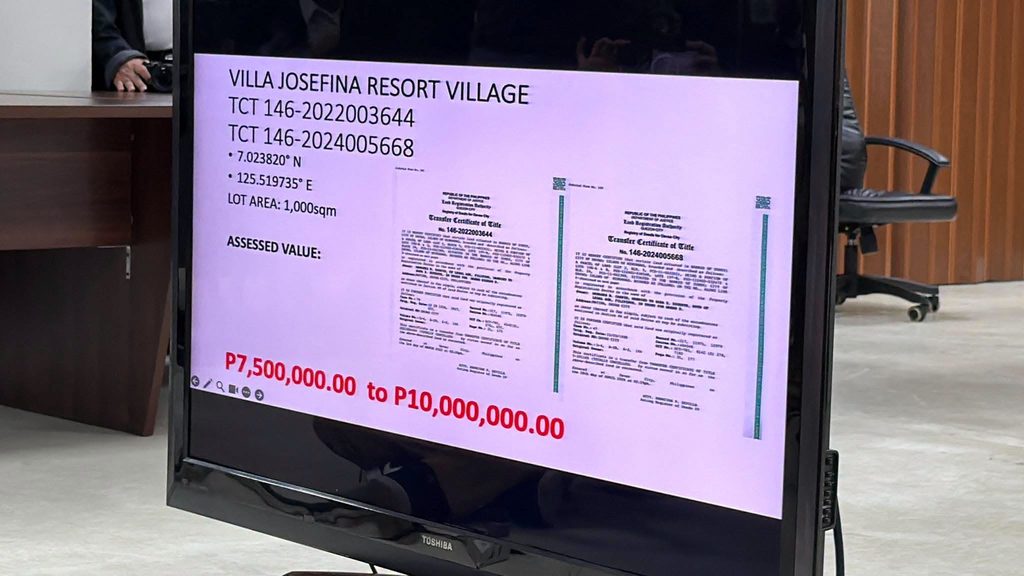
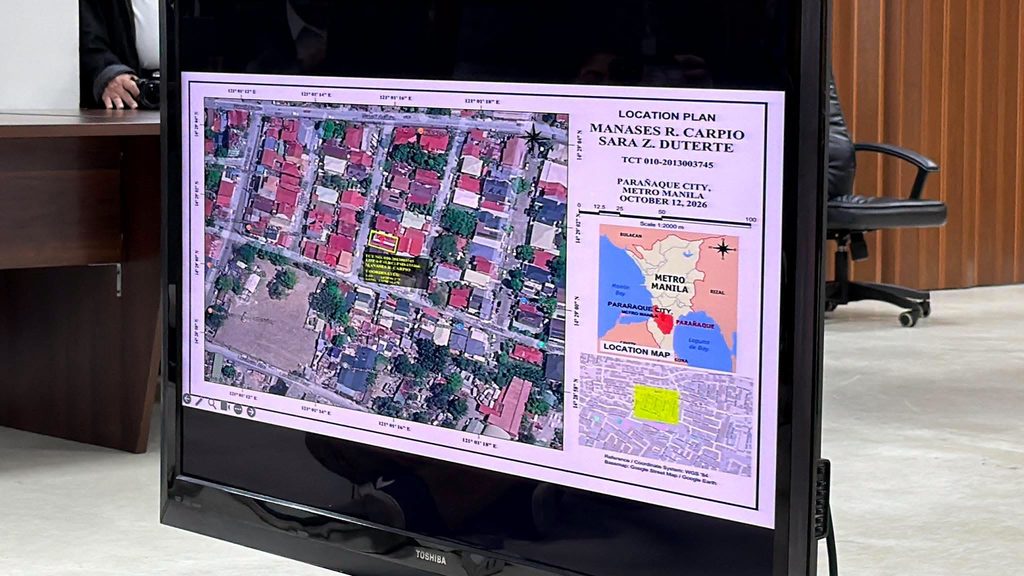
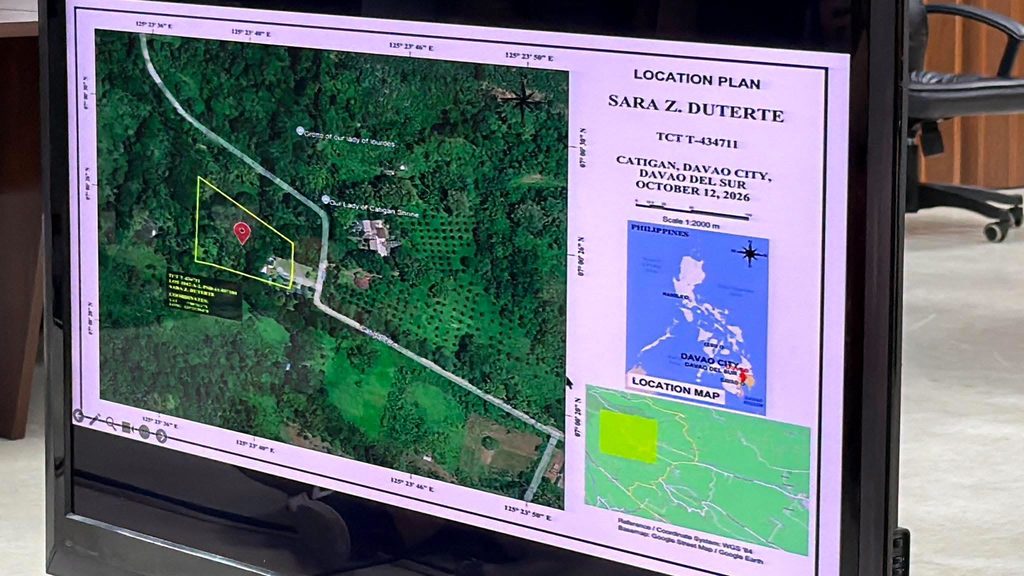
NBI Director Melvin Matibag disclosed the findings on Monday, October 12, 2026, presenting photographs and surveillance footage of several properties that the agency is examining as part of a broader investigation into alleged financial transactions and property acquisitions associated with the Duterte family.
According to Matibag, two agricultural lots in Catigan were declared at ₱437,000 and ₱453,000, respectively, for a combined declared value of ₱890,000. However, following an on-site inspection and consultation with an assessor, investigators estimated that the developed property could be worth between ₱50 million and ₱60 million.
Another report cited a wider estimated range of ₱14 million to ₱61 million, underscoring that the valuation remains subject to verification.
NBI questions undeclared improvements and property classification
Matibag said investigators found a developed property featuring a mansion, swimming pools and a helipad, prompting questions about whether the property’s actual condition and improvements were accurately reflected in the relevant declarations.
The NBI chief emphasized that the inquiry is not limited to the difference between the declared acquisition cost and the property’s present market value. Investigators are also examining the classification of the land as agricultural despite the presence of substantial residential or resort-type development, as well as whether the improvements were properly declared.
The distinction is significant because a property’s current market value does not automatically establish that its original SALN declaration was inaccurate. The relevant questions include the applicable declaration requirements, the acquisition cost, the ownership or beneficial ownership of the property, and whether buildings and other improvements should have been separately reflected in the official records.
Matibag said some residents in the area had identified the property as belonging to the Duterte family. Such identifications, however, must be assessed alongside documentary evidence, including land titles, tax declarations, acquisition records and other documents establishing ownership or control.
The NBI has yet to establish publicly, through the information presented at the briefing alone, a final legal determination that the questioned property belongs to the vice president or that a violation has occurred.
NBI examining 121 properties
Matibag said the investigation covers 121 properties allegedly linked to the Duterte family in Davao City and the province of Davao del Norte. Of these, 24 properties associated with Vice President Sara Duterte are reportedly under investigation.
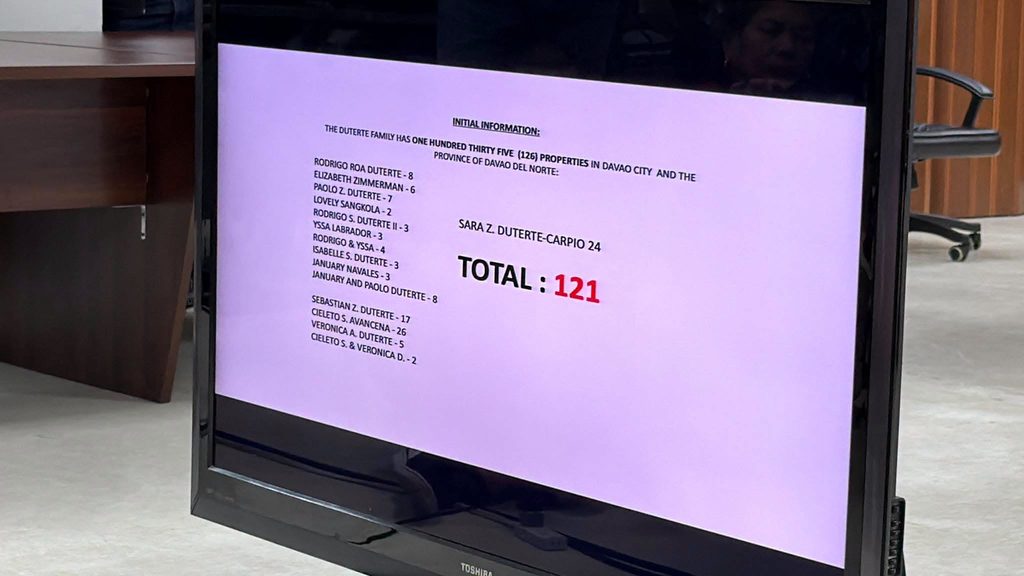
The NBI said it began examining the properties after allegations raised in an affidavit by former police officer Rodulfo Gracioso Jr., who was also described in reports as a former aide to former House Speaker Lord Allan Velasco.
Matibag said investigators were following what he characterized as a pattern involving money, property acquisitions and possible land banking. He referred to the allegations in the Gracioso affidavit as a starting point for tracing the movement of funds and determining whether property holdings could be connected to the transactions under investigation.
These statements describe the direction of the NBI’s inquiry and should not be treated as established findings of wrongdoing. The allegations and any possible financial links remain subject to verification and the evaluation of documentary evidence.
The bureau said it intends to refer its initial findings to the Department of Justice (DOJ) and the Office of the Ombudsman for further assessment and possible action.
The NBI has also called on the vice president and her brother to cooperate with the investigation and respond to questions concerning the properties.
Samal Island resort also under scrutiny
Another property presented during the NBI briefing was a parcel of land on Samal Island, Davao del Norte, which Matibag alleged was linked to Representative Paolo Duterte.
The property was reportedly identified as a resort and was said by the NBI chief to be absent from the relevant SALN declaration. Investigators are examining whether the property is connected to the congressman and whether its ownership and valuation have been properly documented.
The presentation also brought attention to Casas Con Vistas, a beachfront boutique resort in Pangubatan, Kaputian District, on the Island Garden City of Samal. The resort is described as featuring private villas, an infinity pool and views of the sea and surrounding mountains.
However, the resort’s appearance in public discussion surrounding the investigation does not, by itself, establish that Paolo Duterte or his family owns it. The NBI’s allegations, the identity of the property presented at the briefing and the documentary basis for any ownership claim must be distinguished from independently established facts.
Paolo Duterte has denied owning the property presented by the NBI and challenged Matibag to produce documentary or legal evidence linking him to it. He questioned the basis of the allegations and argued that photographs or aerial images alone do not establish legal ownership.
The congressman’s response places ownership documentation at the center of the dispute. Relevant evidence could include land titles, deeds of sale, corporate records, beneficial ownership documents and other records that establish who legally owns, controls or benefits from a property.
VP Sara rejects NBI’s claim
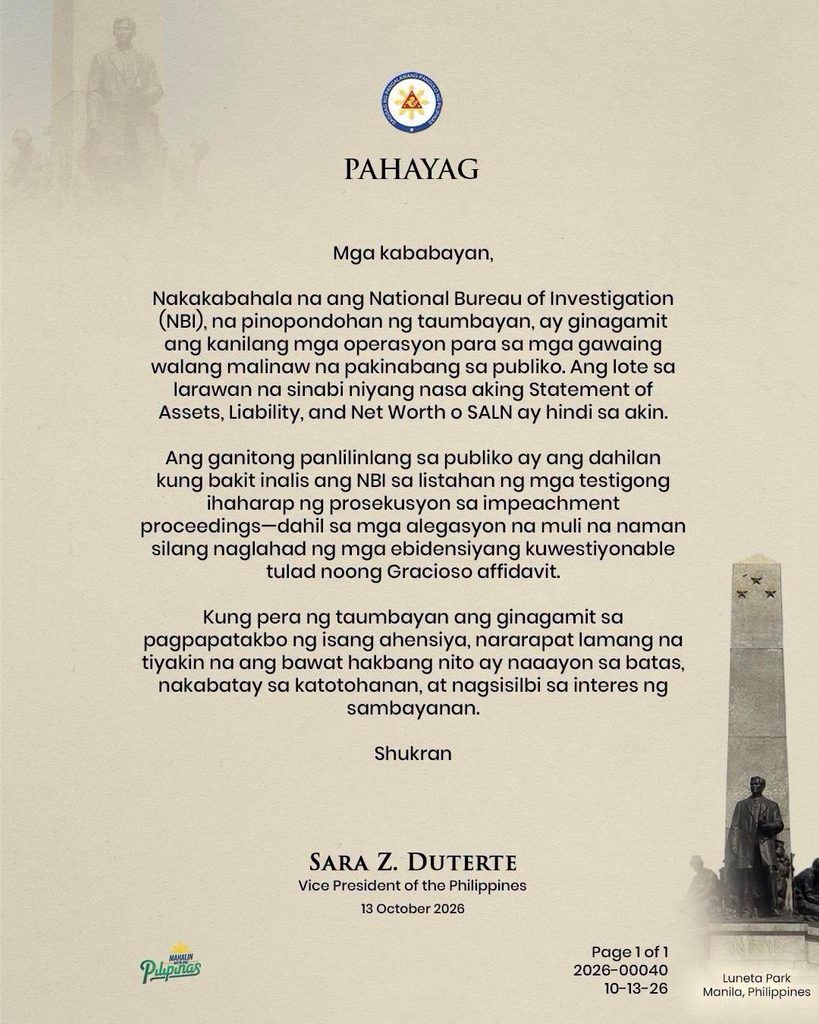
In a statement dated October 13, 2026, Vice President Sara Duterte denied owning the lot shown by the NBI and criticized the agency’s investigation.
“The lot in the picture that he said is in my Statement of Assets, Liabilities, and Net Worth or SALN is not mine,” Duterte said in her statement.
She questioned the use of public funds for what she described as operations without a clear public benefit and accused the NBI of misleading the public.
Duterte also linked the controversy to the Gracioso affidavit, alleging that the agency had presented questionable evidence and referring to the NBI’s exclusion from the list of prosecution witnesses in the impeachment proceedings.
Her statement represents a direct denial of ownership and a challenge to the credibility of the NBI’s presentation. The agency’s allegations and the vice president’s response will require evaluation against the relevant records and evidence.
Questions of accountability and due process
The investigation raises questions about the accuracy and completeness of asset declarations by public officials, the disclosure of property improvements and the standards used to establish ownership and valuation.
Under the SALN system, public officials are required to disclose assets, liabilities and net worth in accordance with applicable law and implementing rules. Determining whether a declaration is inaccurate requires more than comparing an acquisition-cost figure with an estimated current market value. Investigators must establish the relevant ownership, acquisition details, applicable valuation rules and whether reportable improvements or other assets were omitted.
The next steps will depend on the documentary evidence gathered by the NBI and the assessment of the DOJ and the Office of the Ombudsman, which may determine whether further investigation or legal proceedings are warranted.
For now, the figures presented by the NBI remain preliminary estimates, while both Duterte siblings have challenged or denied aspects of the allegations concerning the properties attributed to them.
The central issue is whether official records accurately reflect the ownership, acquisition and development of the properties under investigation—and whether the evidence establishes any violation of law. That determination must be made through a transparent process that respects both public accountability and the right of those accused to due process.