
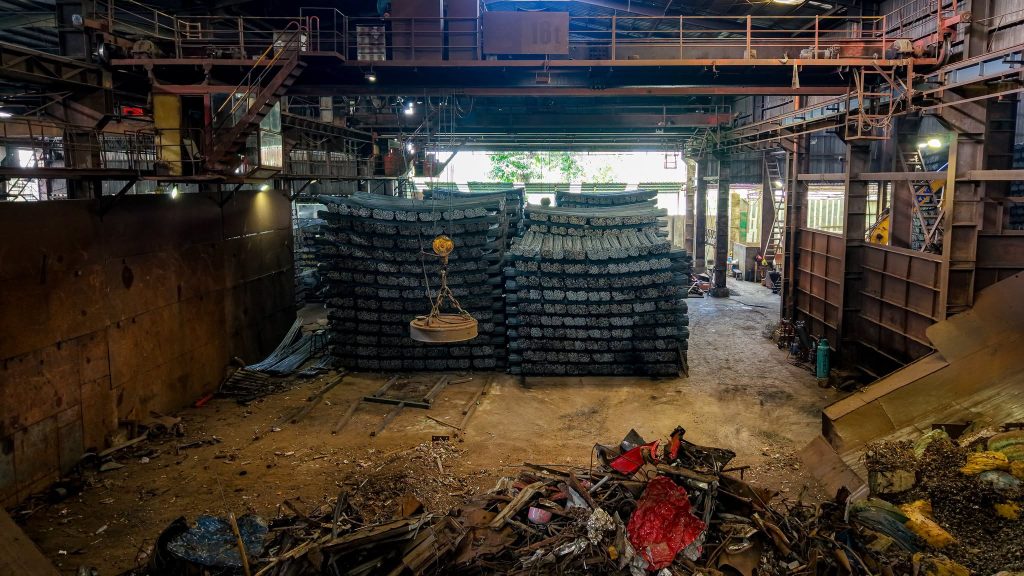
DAVAO CITY — A joint government operation at a steel manufacturing facility in Davao City uncovered suspected radioactive materials and reinforcing steel bars that allegedly failed mandatory product standards, prompting authorities to remove 174 Filipino workers from what investigators described as a potentially hazardous industrial environment.
National Bureau of Investigation (NBI) Director Atty. Melvin Matibag arrived at the Davao International Airport shortly after 11 a.m. Friday, August 14, as authorities moved to pursue the investigation and enforcement action against the Davao Mighty Steel Corporation (DMS).
Matibag and Presidential Anti-Organized Crime Commission (PAOCC) Undersecretary Benjamin Acorda went to Davao City to lead and oversee the operation against the company.
According to PAOCC, the raid was conducted Thursday pursuant to a search warrant issued following an NBI investigation into allegations that the company’s plant in Barangay Ilang, Bunawan, Davao City had been manufacturing and distributing substandard steel reinforcing bars.
The operation yielded findings that significantly broadened the scope of the investigation.
Radioactive isotopes detected
Authorities said technical examinations confirmed the presence of several radioactive isotopes in different areas and stages of the company’s operations.
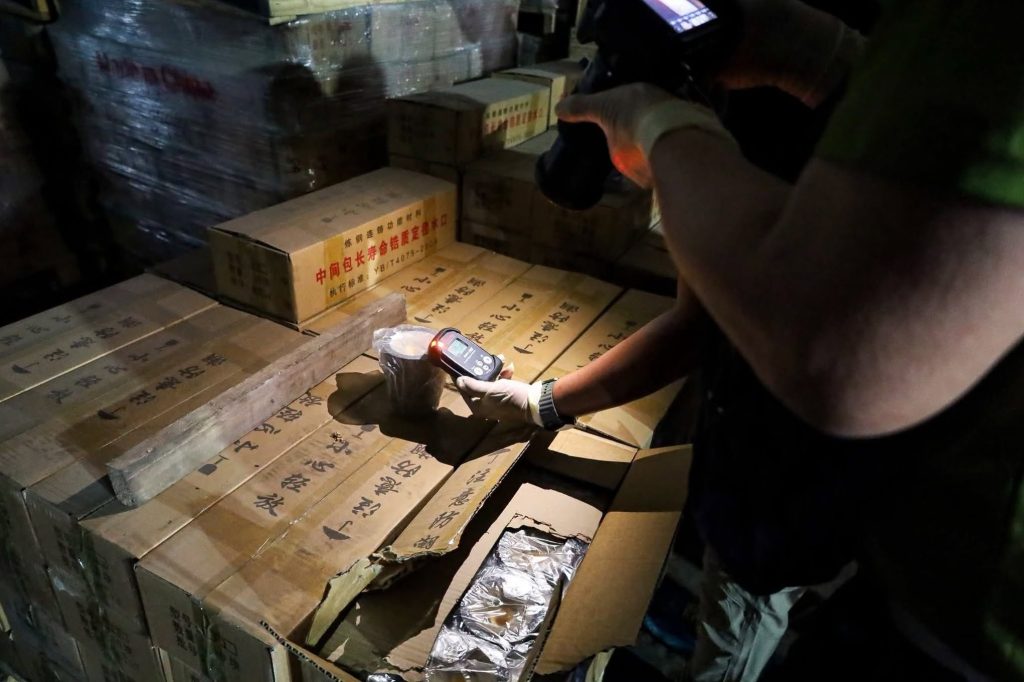
Among those identified were Uranium-238, Thorium-228, Thorium-232 and Radium-226.
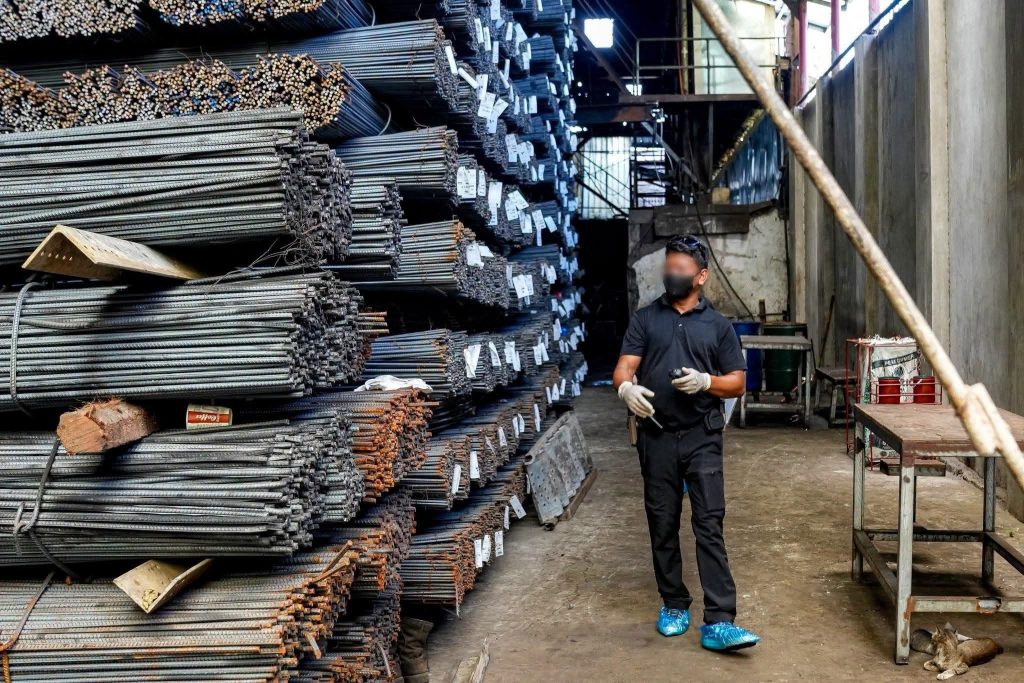
PAOCC said the radioactive materials were documented not only in production areas but also in finished reinforcing bars marked “DMS,” furnace-related materials, residual black sand, industrial powders, dust, waste, wastewater and other production and stored materials.
The discovery raised concerns over possible occupational exposure among workers who had been operating inside the facility.
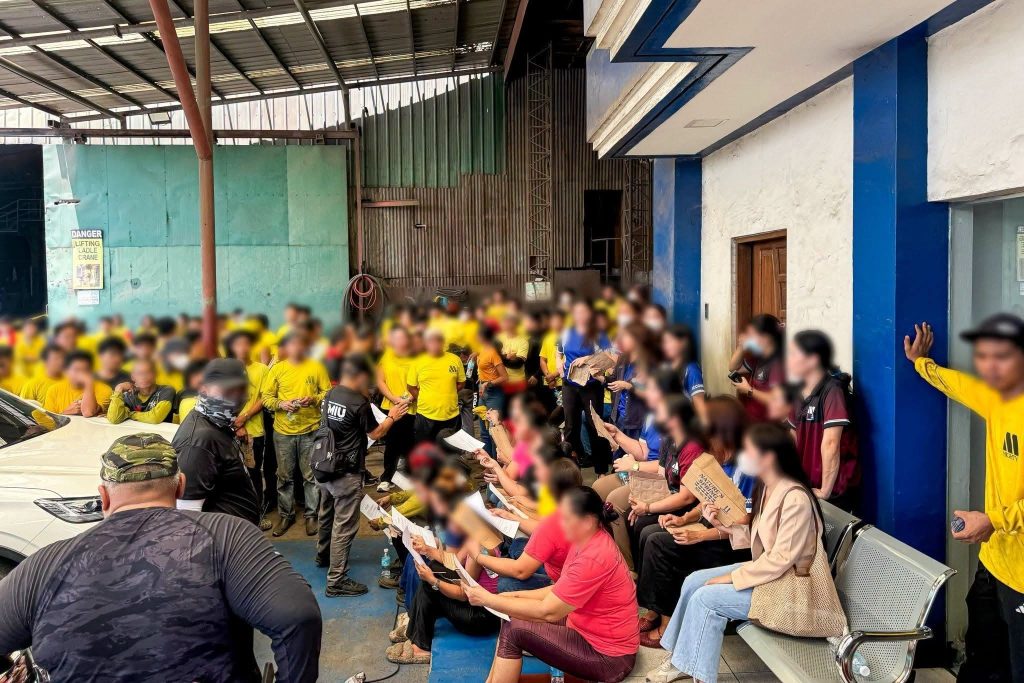
PAOCC said 174 Filipino workers were “rescued” during the operation and removed from the plant after authorities determined that the industrial environment contained radioactive-bearing materials, dust, fumes, wastes and production residues that could pose risks of continued occupational exposure.
The workers’ removal was described by authorities as a protective measure while the investigation and assessment of the facility continue.
Company allegedly had no authorization for radioactive materials
The Philippine Nuclear Research Institute (PNRI), according to PAOCC, certified that the company that owned the facility did not have the required license to acquire, receive, possess, use, store, sell, transfer, import or export nuclear or radioactive materials.
The Department of Environment and Natural Resources (DENR) also reportedly conducted an inspection of the facility.
According to PAOCC, the company’s environmental compliance certificate did not authorize it to handle, process, store or use radioactive materials at the plant.
These findings could expose the company to possible violations of laws governing nuclear safety, hazardous substances and environmental protection.
Rebars fail product-standard testing
The investigation also focused on the quality of the steel reinforcing bars produced by the company.
PAOCC said authorities recovered and subjected DMS-marked reinforcing bars to product-standard testing after NBI investigators reportedly found such rebars among the rubble of structures that collapsed during the magnitude 7.8 earthquake that struck Mindanao on June 8.
Of eight DMS rebar samples purchased from commercial hardware establishments in different parts of Mindanao, four—or 50 percent—failed the mandatory mass-variation requirement under Philippine National Standard (PNS) 49:2020, according to the commission.
PNS 49:2020 establishes standards for reinforcing steel bars under the Bureau of Philippine Standards.
The test results are expected to form part of the evidence being evaluated by investigators as they determine whether the company violated regulations governing the manufacture and sale of construction materials.
However, authorities stressed that the presence of DMS-marked rebars in collapsed structures does not, by itself, establish that the steel caused the structures to fail.
PAOCC emphasized that determining the causes of the structural collapses remains a matter for appropriate engineering assessment.
The distinction is significant as investigators examine the company’s alleged production and distribution of substandard construction materials separately from the causes of any structural failures linked to the June 8 earthquake.
Possible violations filed against company
The NBI has referred a case against the company that owned the plant for alleged violations of several laws, according to PAOCC.
These include Republic Act No. 12305, or the Philippine National Nuclear Energy Safety Act; Republic Act No. 6969, or the Toxic Substances and Hazardous and Nuclear Wastes Control Act; Presidential Decree No. 1586, or the Philippine Environmental Impact Statement System; and Republic Act No. 7394, or the Consumer Act of the Philippines.
The case referral marks a significant escalation in the government’s investigation into the company’s operations.
Authorities are expected to determine the extent of the company’s responsibility, the origin and handling of the radioactive materials, the circumstances surrounding their presence at the facility, and whether the allegedly substandard steel bars were manufactured and distributed in violation of existing standards.
Workers removed as investigation continues
The removal of 174 workers underscores another major concern arising from the operation: possible occupational exposure to hazardous materials.
PAOCC said the workers had been operating in an environment where radioactive-bearing materials, industrial dust, fumes, wastes and production residues were found.
The extent of any actual exposure or health impact on the workers was not immediately disclosed.
Authorities also did not immediately provide details on whether any individuals had been arrested during the operation or the total value of the evidence seized.
The government operation is expected to be followed by further technical examinations, regulatory assessments and legal proceedings as authorities establish the full circumstances surrounding the alleged radioactive contamination, the production of reinforcing steel bars and the company’s compliance with nuclear, environmental and consumer-safety regulations.
For now, authorities have cautioned against prematurely linking the company’s steel products to structural failures caused by the June 8 earthquake, stressing that such conclusions require proper engineering investigation and evidence.