
DAVAO REGION — The National Meat Inspection Service (NMIS) Regional Technical Operations Center (RTOC) XI has intensified its campaign against unsafe meat products after condemning illegally mishandled food animals and supervising the destruction of nearly 22 metric tons of meat products declared unfit for human consumption in separate enforcement operations across Davao Region this July.
The series of operations highlights the agency’s continuing efforts to safeguard public health, enforce national meat inspection laws, and prevent contaminated or unsafe meat from reaching consumers.
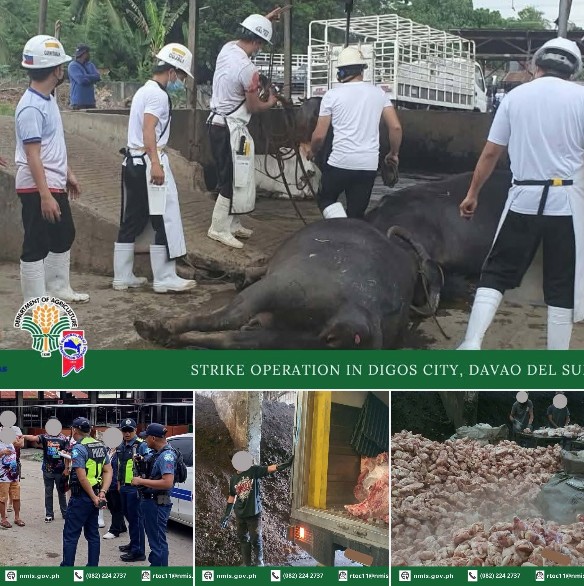
The first operation was conducted on July 1, 2026, when the NMIS XI Enforcement Team carried out a strike operation at a meat establishment in Digos City following reports of a flooding incident at the facility.
During the inspection, authorities discovered three dead food animals inside the holding pens—two carabaos transported from Mlang, Cotabato, and one head of cattle from Digos City.
Further investigation revealed that the animals had allegedly been subjected to the illegal practice locally known as “flooding,” which involves forcibly injecting excessive amounts of water into food animals shortly before slaughter in an attempt to increase their weight. The practice is prohibited under meat inspection regulations because it compromises meat quality, poses potential health risks to consumers, and constitutes animal cruelty.
Following the inspection, NMIS declared all three animals unfit for human consumption. Their carcasses were immediately condemned and disposed of in accordance with established meat inspection protocols and environmental regulations to ensure they would not enter the food supply.
The enforcement action formed part of NMIS’ continuing mandate to uphold food safety standards, ensure humane treatment of animals, and maintain public confidence in the country’s meat inspection system.
The agency’s regulatory efforts continued on July 16, when NMIS XI supervised the proper disposal of approximately 2,000 kilograms of mishandled assorted frozen meat products in Davao City.
According to the agency, the condemned meat products had already been declared unsafe for human consumption and were destroyed through an accredited waste management service under the direct supervision of NMIS personnel. The disposal was carried out in compliance with national meat inspection regulations and environmental standards to prevent any possibility of the products being illegally recovered and sold in the market.
Less than two weeks later, on July 27, NMIS XI again witnessed the destruction of an even larger volume of unsafe meat after overseeing the proper disposal of 19,740.30 kilograms of mishandled frozen chicken wings in Davao City.
During the disposal activity, members of the NMIS Enforcement Team carefully verified all required documentation, ensuring the authenticity and completeness of disposal records before confirming that the condemned chicken products were destroyed in accordance with existing NMIS regulations and food safety standards.
Combined, the July 16 and July 27 disposal operations accounted for 21,740.30 kilograms of condemned meat products, all prevented from entering the commercial food supply.
NMIS emphasized that these enforcement activities demonstrate the agency’s commitment to protecting consumers from food-borne health risks while ensuring strict compliance with meat inspection laws among meat establishments, processors, distributors, and other stakeholders in the industry.
The agency also reiterated that proper condemnation and disposal of unsafe meat products are critical components of the country’s food safety system, helping eliminate the risk of contaminated meat being diverted back into public markets.
Through intensified inspections, enforcement operations, and regulatory oversight, NMIS XI continues to strengthen food safety measures across the region by preventing unsafe meat products from reaching Filipino consumers, promoting higher standards of sanitation and animal welfare, and ensuring that only safe and wholesome meat products are made available to the public.